An ancient city, not a frozen moment
Pompeii
through time.
The eruption is only one chapter. The city had a long life before it, and a complicated life after.
01 / Before the ash
First, imagine the city in motion.
A place people lived.
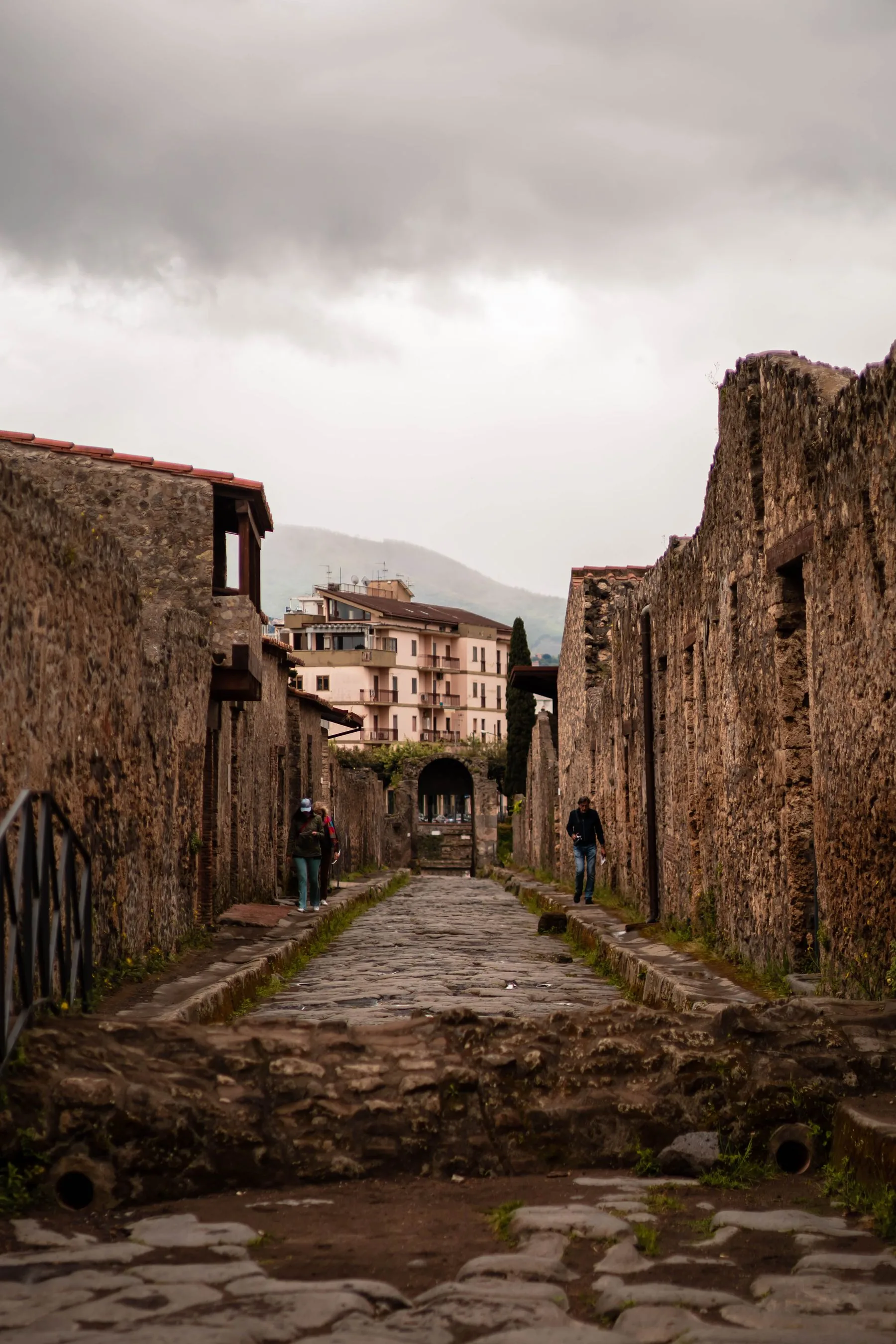
Pompeii was a thriving Roman town with a forum, workshops, public baths, theatres and homes of wildly different scales. Its streets were made for movement and exchange. The remains show not an idealised ancient world, but a city of work, commerce, worship and domestic routine.
Earthquakes had already marked the city before the eruption. Buildings were repaired and altered over time, a reminder that the Pompeii visible today is not a perfect snapshot of any single day. The Pompeii overview is a good starting point for its geography.
02 / AD 79
A city beneath
Vesuvius.
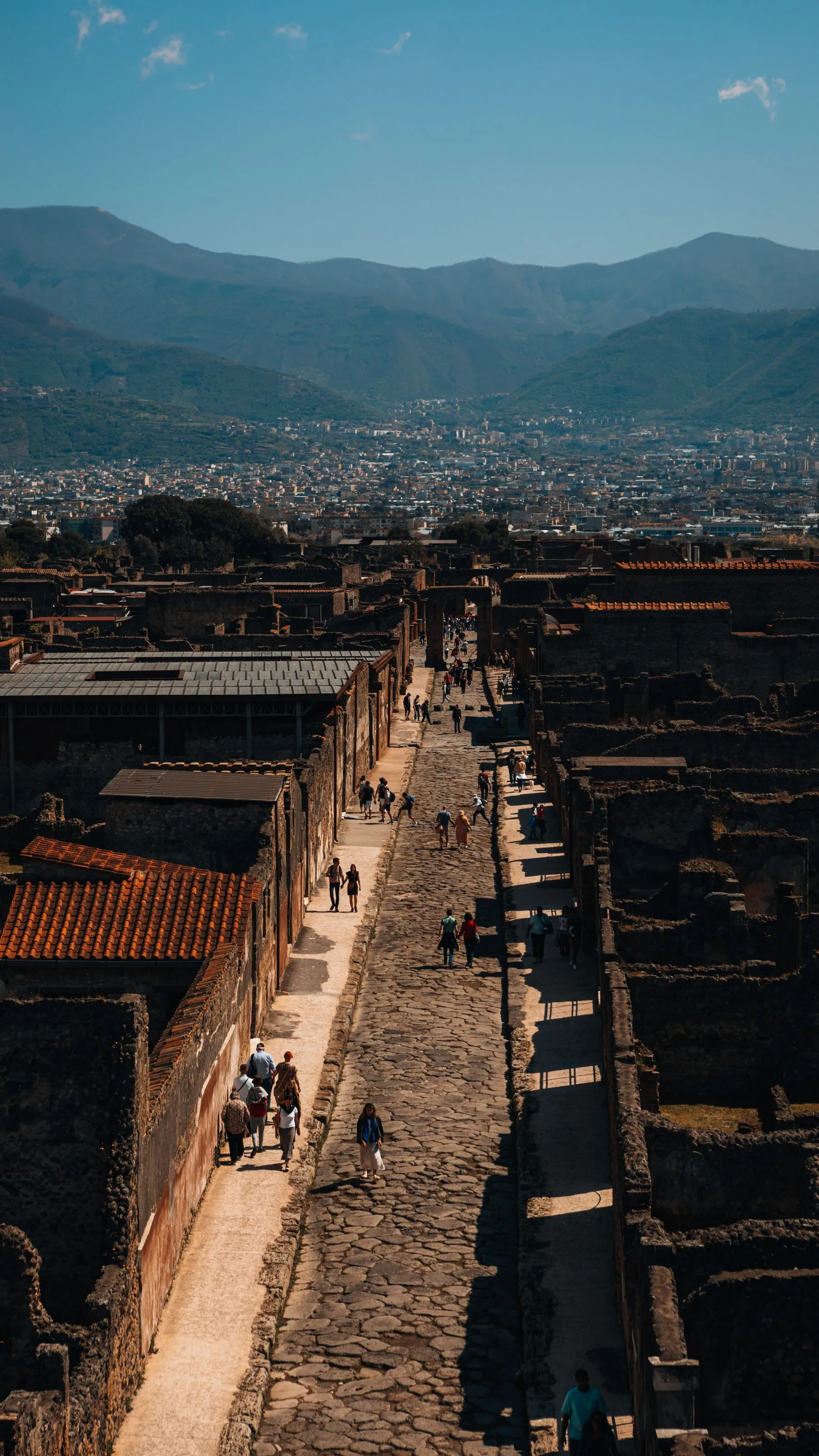
In AD 79, Mount Vesuvius erupted. Ash and volcanic material buried Pompeii, ending lives and obscuring the streets for centuries. The precise calendar day remains debated, so the year is the useful certainty here.
What survives is remarkable but partial. Preservation and destruction happened together: some interiors, painted walls and everyday objects were protected beneath the deposits; much was lost. The site asks for attention to both the people and the limits of what archaeology can recover.
03 / The long afterlife
What excavation
reveals — and changes.
Excavation beginning in the eighteenth century brought Pompeii back into public view, but each generation has approached the ruins with its own questions and methods. Conservation continues today. A house that is closed on one visit may be open on another; protecting fragile interiors matters as much as seeing them.
The story extends beyond the city walls. UNESCO lists the archaeological areas of Pompeii, Herculaneum and Torre Annunziata together . Each illuminates a different part of the Vesuvian landscape. To connect the sites in a real journey, see our Pompeii and Herculaneum itinerary.
When you are ready to turn context into a route, read our practical visitor guide.
Continue the field guide
Take the story with you.
Independent editorial guide · Updated 27 September 2026 · Source: UNESCO World Heritage Centre. Noble Voyages is not the archaeological park operator or a ticket seller.