An island written in stone
Mont Saint-Michel
Through Time.
The island was never just a view. It is a long experiment in building at the edge of land and sea.
01 / Beginnings
A sanctuary on a rock.
The Mont's religious story is traditionally traced to the early eighth century, when a sanctuary dedicated to the archangel Michael was established on the rocky island. Tradition and documentary history do not always speak with the same certainty, but both help explain why this remote-looking place became a destination of devotion.
Over time a Benedictine community and its abbey took shape above the village. Building here demanded more than ambition: the steep rock, limited space and bay environment made every addition an engineering problem. The result is not one unified design but an architecture layered over many centuries.
For a first sense of the island's geography, return to our Mont Saint-Michel overview.
The architecture
The higher you climb, the more improbable the stone becomes.
02 / The abbey above
The medieval ascent.
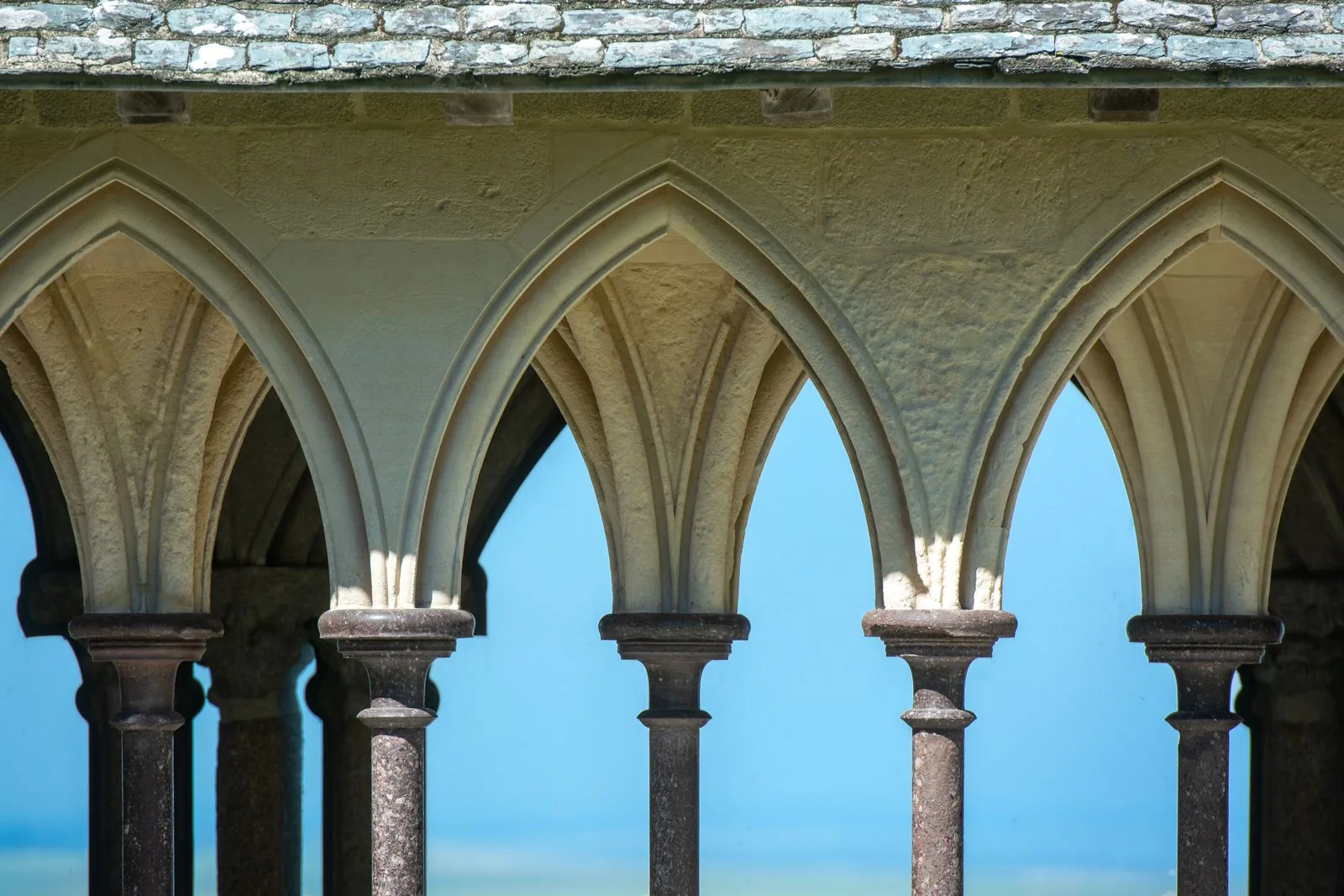
The abbey's spaces climb and overlap rather than unfolding on a level plan. Romanesque and Gothic work coexist: the church, cloister, refectory and supporting chambers express both religious purpose and the constraints of the rock. The celebrated Gothic buildings known as the Merveille are especially revealing of how builders made height and structure work together.
Move through the rooms with that vertical logic in mind. A cloister open to light feels worlds apart from the massive walls supporting it. The monastery's architectural drama comes as much from its engineering as from its ornament.
Access today is a separate practical question. The abbey operator's practical information notes the stairs and restricted mobility access. Consult our visitor information before deciding on a route.
03 / Land and water
The bay is part of the monument.
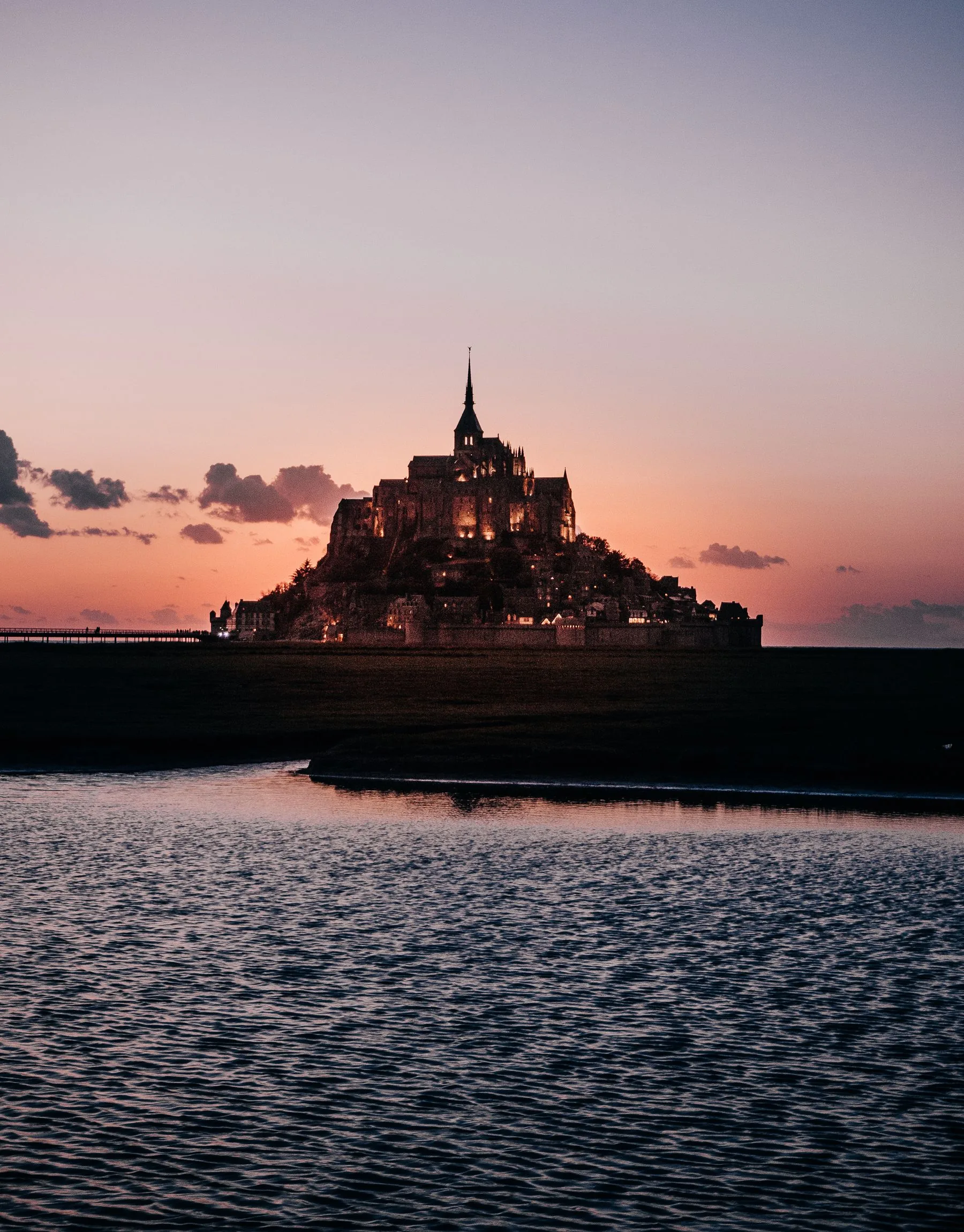
Fortifications and a village gathered around the religious buildings, and the Mont later served other roles, including as a prison. Its present identity cannot be reduced to a single medieval moment. Even from the ramparts, history is inseparable from the setting: immense flats, shifting light and a changing line between water and land.
UNESCO lists Mont-Saint-Michel and its Bay together. The bay's sands and tides also present real hazards; do not attempt an independent crossing. If exploring beyond the established visitor route, seek current local safety guidance and an appropriate qualified guide.
Wondering what the abbey adds beyond the streets? Read our abbey versus village guide.
Continue planning
Independent editorial guide · Updated 27 September 2026 · Sources: UNESCO and Centre des monuments nationaux.