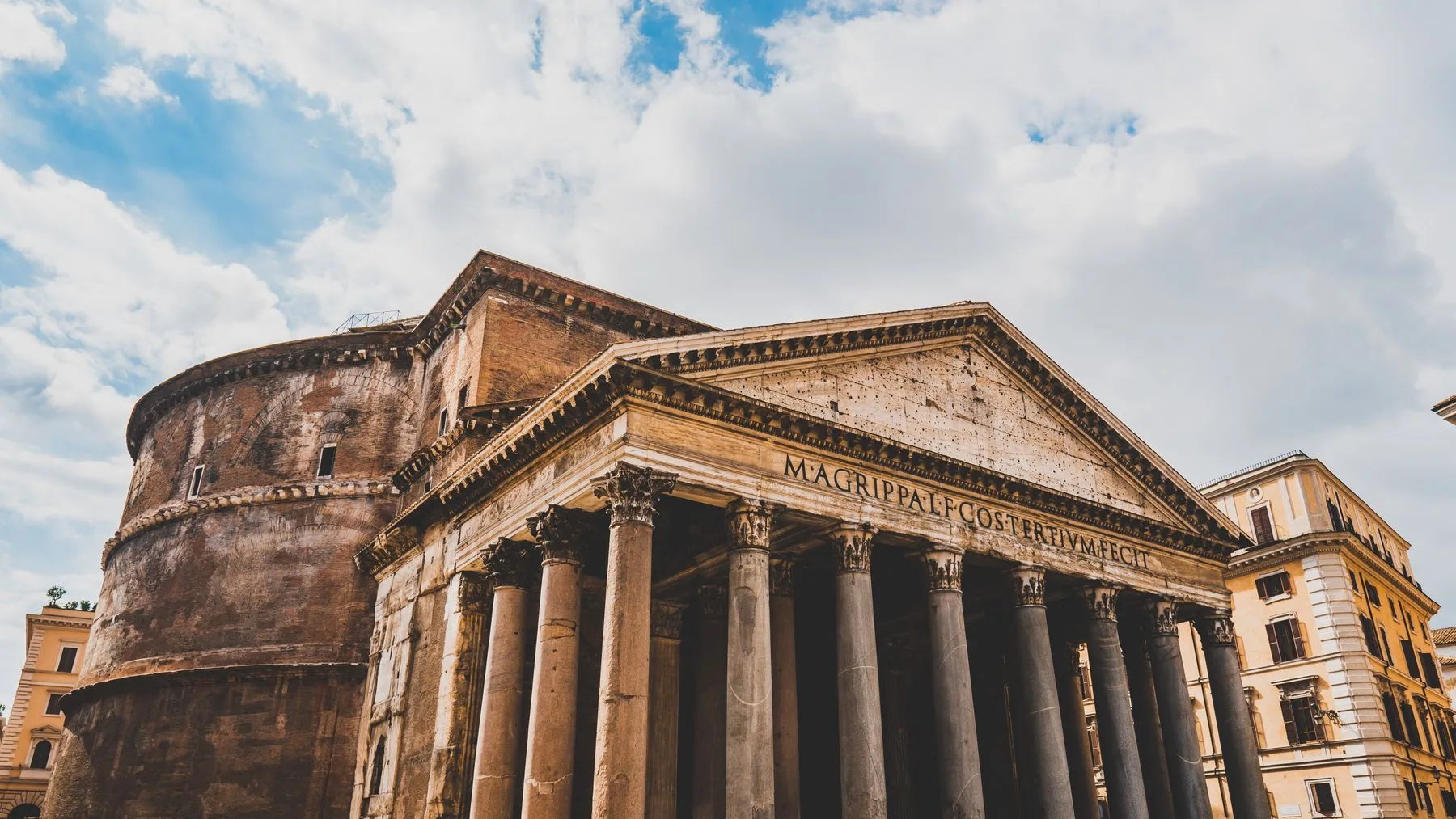
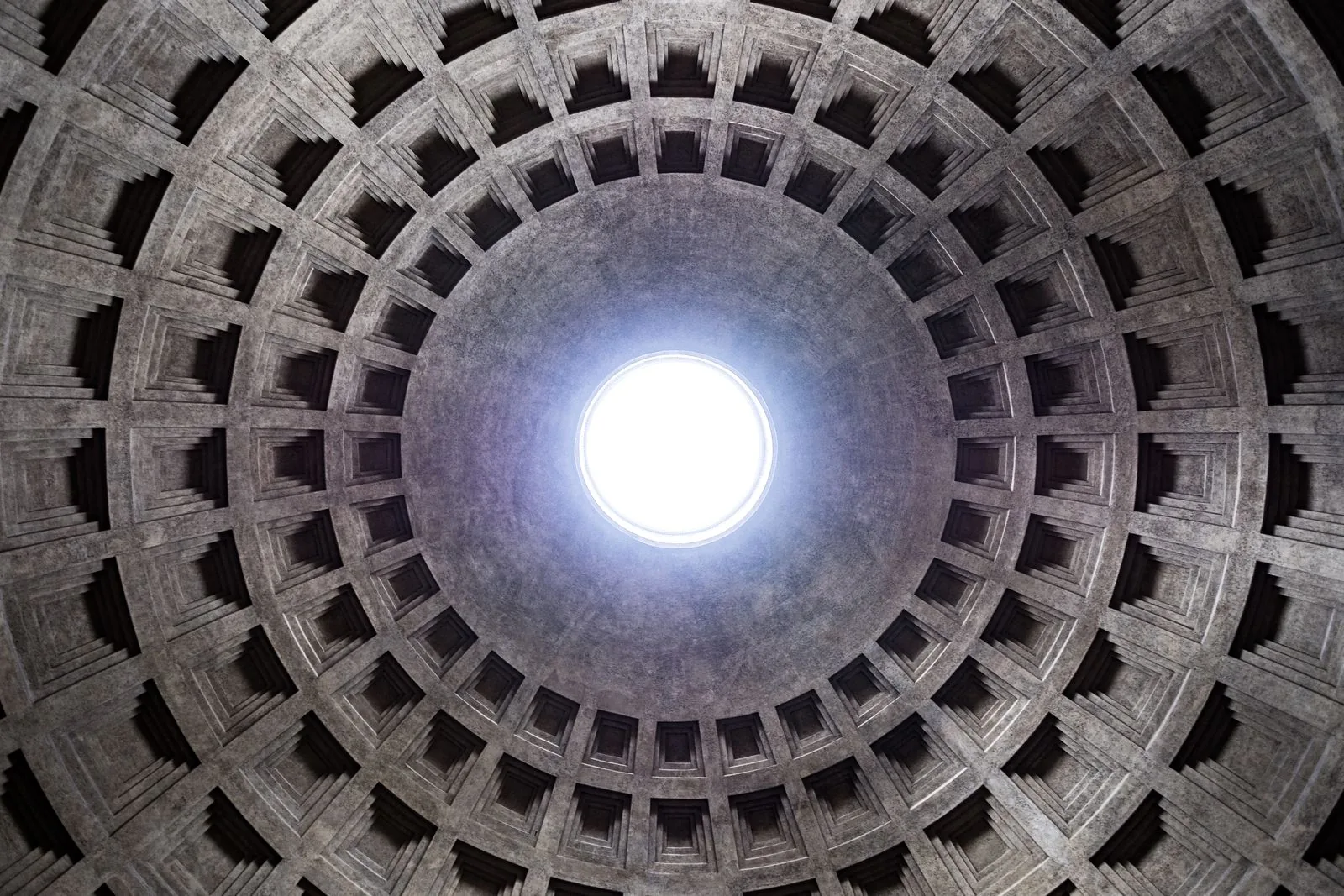
From Piazza della Rotonda, the Pantheon seems almost familiar: a columned front, an inscription, a busy Roman square. Then you pass under the portico and enter a vast circular interior. The roof is a dome; its only opening is the oculus, where daylight makes a slow, changing mark on the stone.
The building you see is principally the Roman rebuilding associated with Emperor Hadrian, though the façade preserves the name of Marcus Agrippa, who built an earlier Pantheon on this site. It has also been a Christian church for many centuries. Both histories are present at once: imperial structure, liturgical life, Renaissance tombs.
There is no need to rush toward one famous photograph. Look at the full sequence: the portico's immense granite columns, the geometry of the rotunda, and the intimate chapels set around its perimeter. For the layers behind them, read our Pantheon history and architecture guide.