Angkor Wat.

The apex of Khmer devotion, emerging from the jungle.

The Monument

A sacred metropolis carved from sandstone.

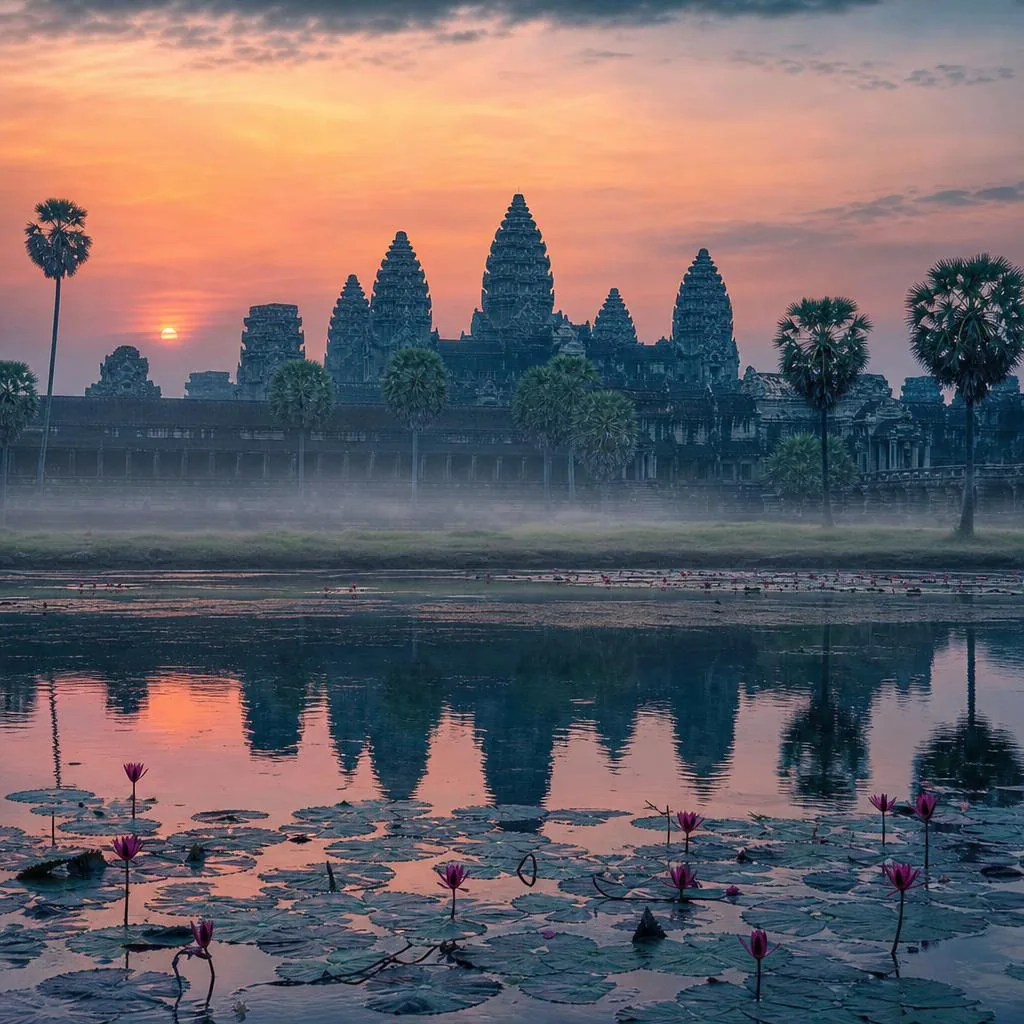
Angkor Wat is the largest religious structure in the world, serving as the crown jewel of the vast Angkor Archaeological Park in Cambodia. Originally constructed as a Hindu temple dedicated to Vishnu by King Suryavarman II in the 12th century, it gradually transitioned into a major Buddhist centre.

A visit to the park requires pacing. The scale of Angkor defies a single morning. Beyond the central towers of Angkor Wat, the surrounding forest conceals the enigmatic, smiling faces of the Bayon and the root-strangled ruins of Ta Prohm. Exploring these varied sites involves traversing a significant footprint spanning hundreds of square kilometres.

International visitors generally need an Angkor Pass for ticketed monuments. Check the current admission rules with Angkor Enterprise before setting out, and keep your pass available at checkpoints. If you are choosing between a focused morning at Angkor Wat and several days across the park, start with what you actually want to see.

Angkor Wat's galleries reward a slower walk: carved narratives, long causeways and the rising central towers reveal more when you leave room for observation. Read the Angkor Wat history and architecture guide for context on the temple's Hindu origins and continuing Buddhist life.
Essential Context

Location

Siem Reap, Cambodia. The park entrance sits just north of the city centre, requiring transport to reach and navigate.

Timing

Pace your visit. The equatorial heat demands early starts and midday breaks. Allocate at least three days to avoid exhausting yourself.

Dress Code

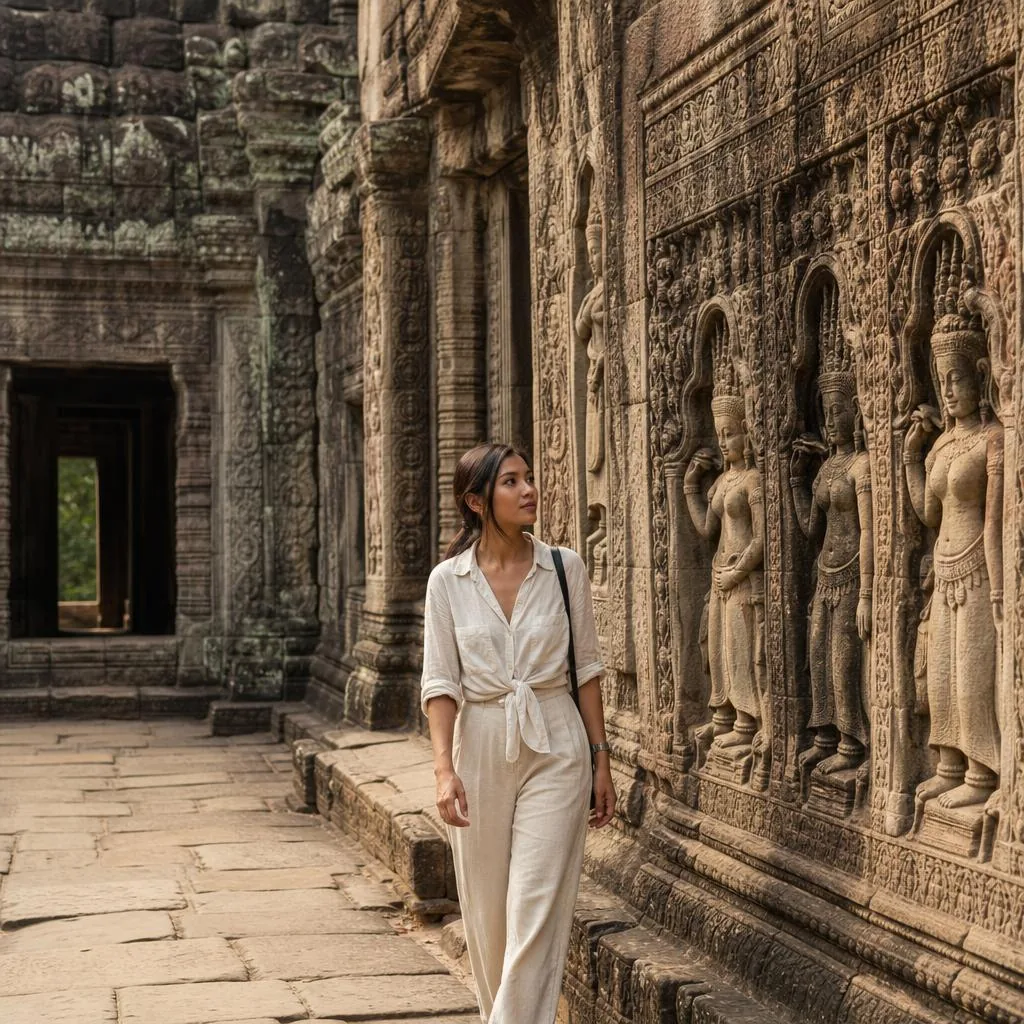
Modesty is enforced. Shoulders and knees must be covered. Guards will deny entry to the upper galleries if attire is deemed disrespectful.

APSARA National Authority

Visitor guide

What to see at Angkor Wat and beyond.

Angkor Wat is one temple within a far larger archaeological park. Separate the main temple from the wider Angkor itinerary when deciding how to spend your time. An unhurried visit to its galleries is a different experience from moving between several sites by vehicle in a single day.

01 / ANGKOR WAT

Follow the galleries

The long outer galleries hold narrative bas-reliefs, while successive levels lead toward the central towers. Some upper areas have steep stairs or restricted access; enjoy the ground-level architecture without making a climb the measure of your visit.

02 / ANGKOR THOM

See another Khmer capital

Nearby Angkor Thom and its Bayon temple show a different chapter of the Khmer Empire. Their monumental faces and spatial layout provide a useful contrast to Angkor Wat's long axial approach.

03 / TA PROHM

Make room for another setting

At Ta Prohm, trees and historic stonework share the scene. Walk only on permitted routes; preservation work and access restrictions can change. It is a distinct stop, not a wing of Angkor Wat.

Use our temple circuit comparison to decide which neighbouring sites fit your interests. For transport from Siem Reap, temple etiquette, heat and accessibility, continue to the Angkor Wat visitor information guide.

Common Questions

Planning Your Visit

A single visit to the main Angkor Wat temple often takes 2 to 3 hours to explore the galleries and central sanctuary. However, the wider archaeological park warrants multiple days to avoid fatigue and appreciate the distinct structures of Bayon, Ta Prohm, and Angkor Thom.

Do not assume admission is sold at an individual temple entrance. Check Angkor Enterprise for the current official online and in-person purchase channels before travelling to the park.

The APSARA National Authority strictly enforces a dress code. Both men and women must cover their shoulders and knees. Scarves draped over bare shoulders are often rejected at the upper levels; wear clothing with actual sleeves.

Yes. While Angkor Wat opens before dawn for the famous sunrise viewing, many other temples open later in the morning. Opening and closing times fluctuate by site and season, so verify the schedule locally.

Yes, the distances within the archaeological park are vast. Most visitors hire a remorque (Cambodian tuk-tuk) with a driver for the day, rent a bicycle, or join a guided coach tour.
Intricate stone carvings and bas-reliefs found at Angkor Wat

Independent Guidance

A note on the park.

Noble Voyages operates as an independent editorial guide. We are not affiliated with the APSARA National Authority or Angkor Enterprise.

Temple regulations, restoration closures, and ticketing terms shift periodically. We advise all travellers to check the official government portals to confirm current requirements prior to arriving in Siem Reap.

Learn about the Angkor Pass