01 / THE ROOM
Refectories in dialogue
The scene occupies a dining hall, not a neutral gallery wall. Let the real room’s long proportions frame the painted table and its measured perspective.
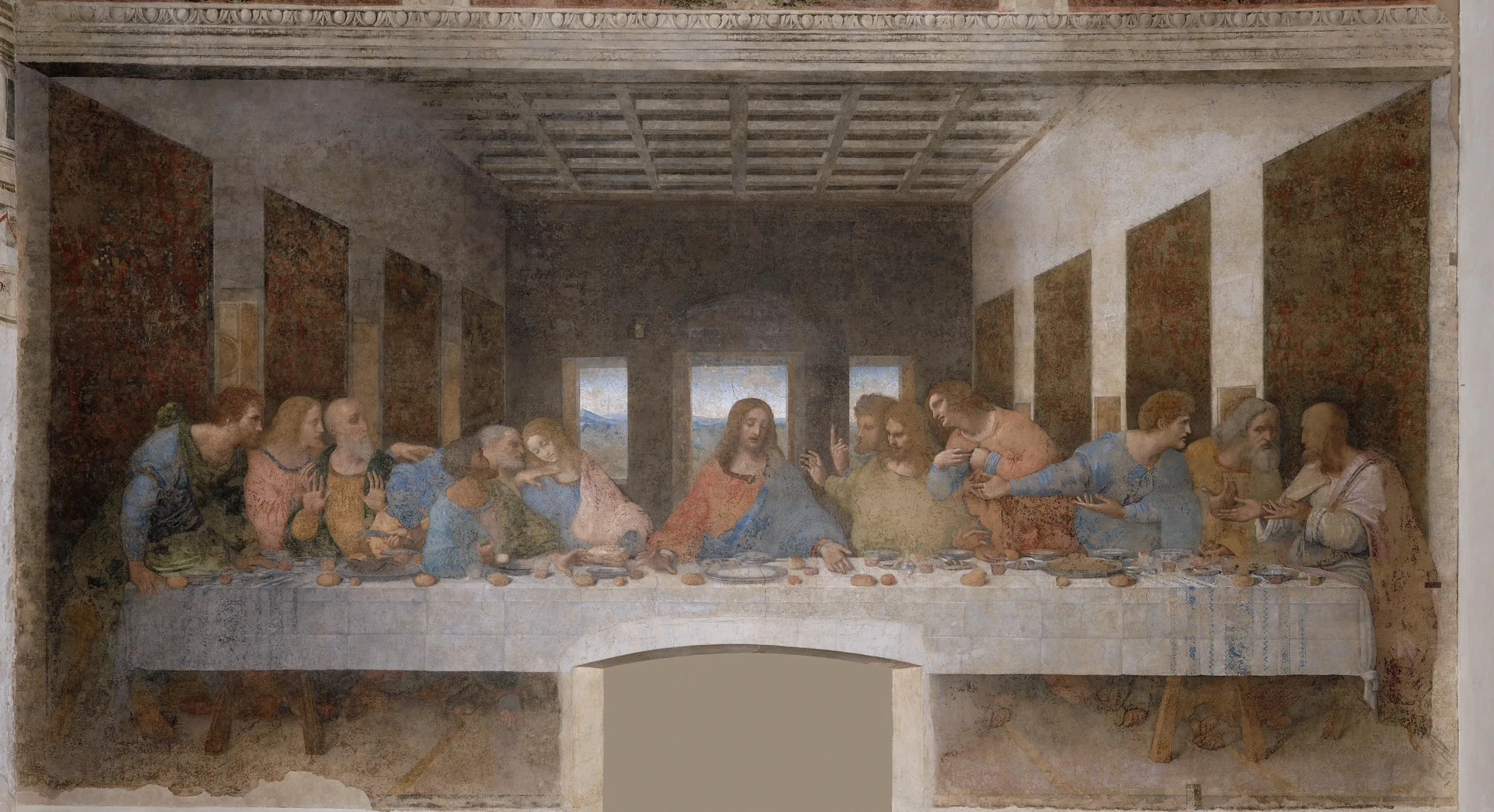
Milan · An independent field guide
Leonardo’s Last Supper, encountered in the room that first gave it meaning.
Leonardo’s Last Supper · image credits
Not a canvas in a gallery
The Cenacolo Vinciano is not a freestanding picture removed from its setting. Leonardo’s Last Supper occupies the north wall of the Dominican refectory at Santa Maria delle Grazie—the dining room where friars gathered to eat, pray and reflect. The long table in the painted scene seems to extend the real room, so the architecture and image share one visual stage.
Leonardo worked in Milan under Ludovico Sforza, whose patronage helped reshape Santa Maria delle Grazie. The mural’s experimental dry-wall technique, rather than conventional wet fresco, made subtle modelling possible but left the surface unusually vulnerable. Its fragile condition helps explain why visits are carefully controlled and brief.
That short encounter rewards attention rather than a checklist. Notice the quiet geometry around Christ, then follow the ripples of gesture through the groups of apostles. For the picture’s making and the monastery’s story, continue to our Last Supper history and art guide.
Three ways into the work
01 / THE ROOM
The scene occupies a dining hall, not a neutral gallery wall. Let the real room’s long proportions frame the painted table and its measured perspective.
02 / THE MOMENT
Leonardo arranges the apostles in four groups of three. Their contrasting movements turn the announcement at the centre into a chain of human responses.
03 / THE SURFACE
The painting’s dry-wall technique and long history of deterioration are not incidental footnotes. Conservation measures shape how the work can be experienced today.
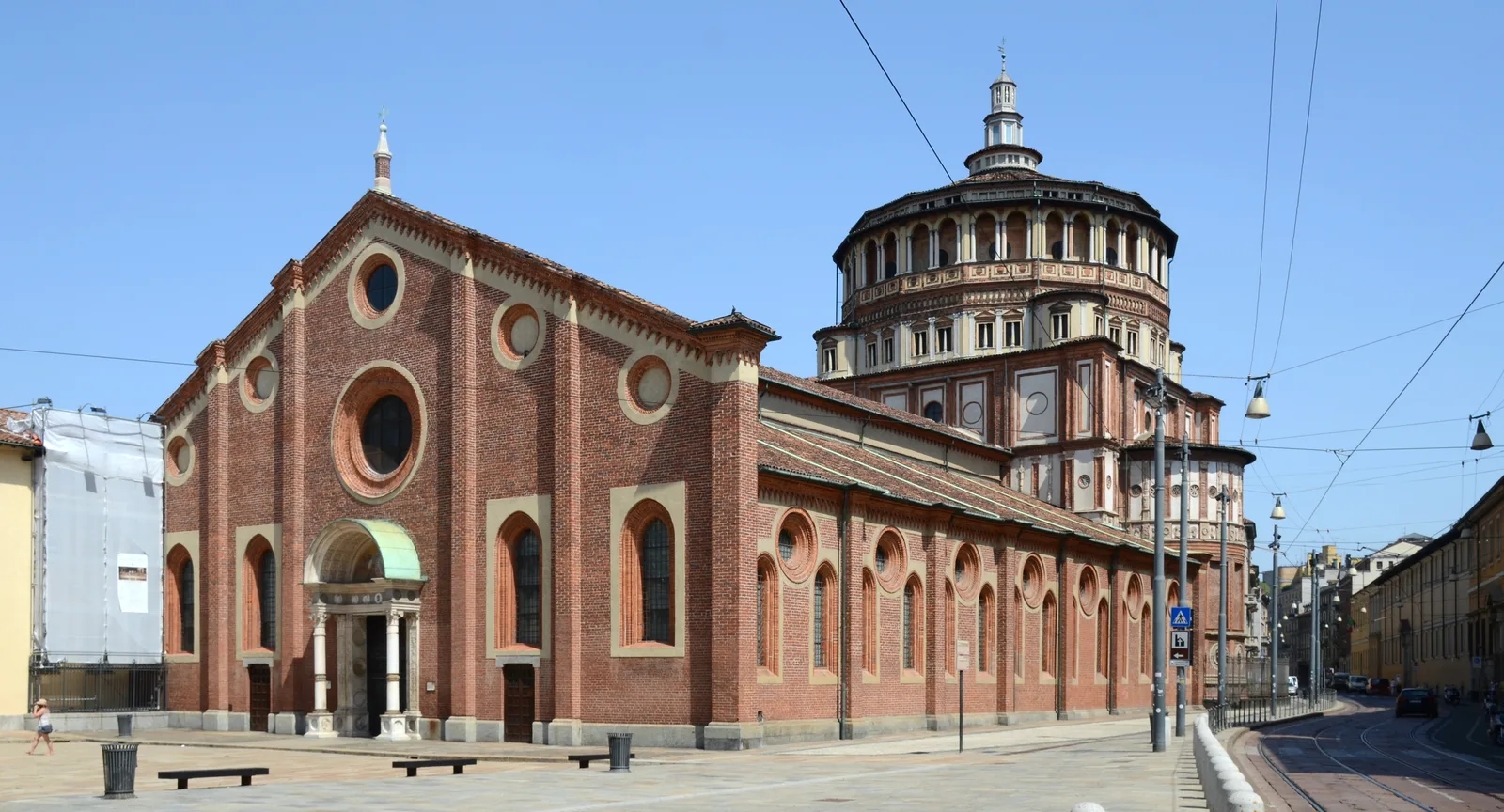 Santa Maria delle Grazie · the church, not the mural
A visit with boundaries
The Last Supper is part of Milan’s cultural landscape, but access to the Cenacolo is administered separately from sightseeing passes and general city transport. Do not assume a city card or pass provides admission; verify the Cenacolo’s own reservation rules and secure the time that works for your day.
This is Noble Voyages’ independent editorial guide, not the museum, an official ticket office or a tour operator. Use the museum’s visitor information for live practical notices and its dedicated visit-booking site for current ticket arrangements.
The Cenacolo collection
Unpack the artwork, understand the reservation, then place the appointment into your Milan day.
How Leonardo’s commission, the refectory and the painting’s vulnerable surface meet.
Where to go, when to arrive, what the timed visit means and what to leave behind.
Separate museum entry from guided add-ons, city passes and third-party packaging.