Agra, India · An independent field guide
Taj Mahal.
A monument to memory, made luminous in marble.
The place
More than a silhouette.
A world of detail.
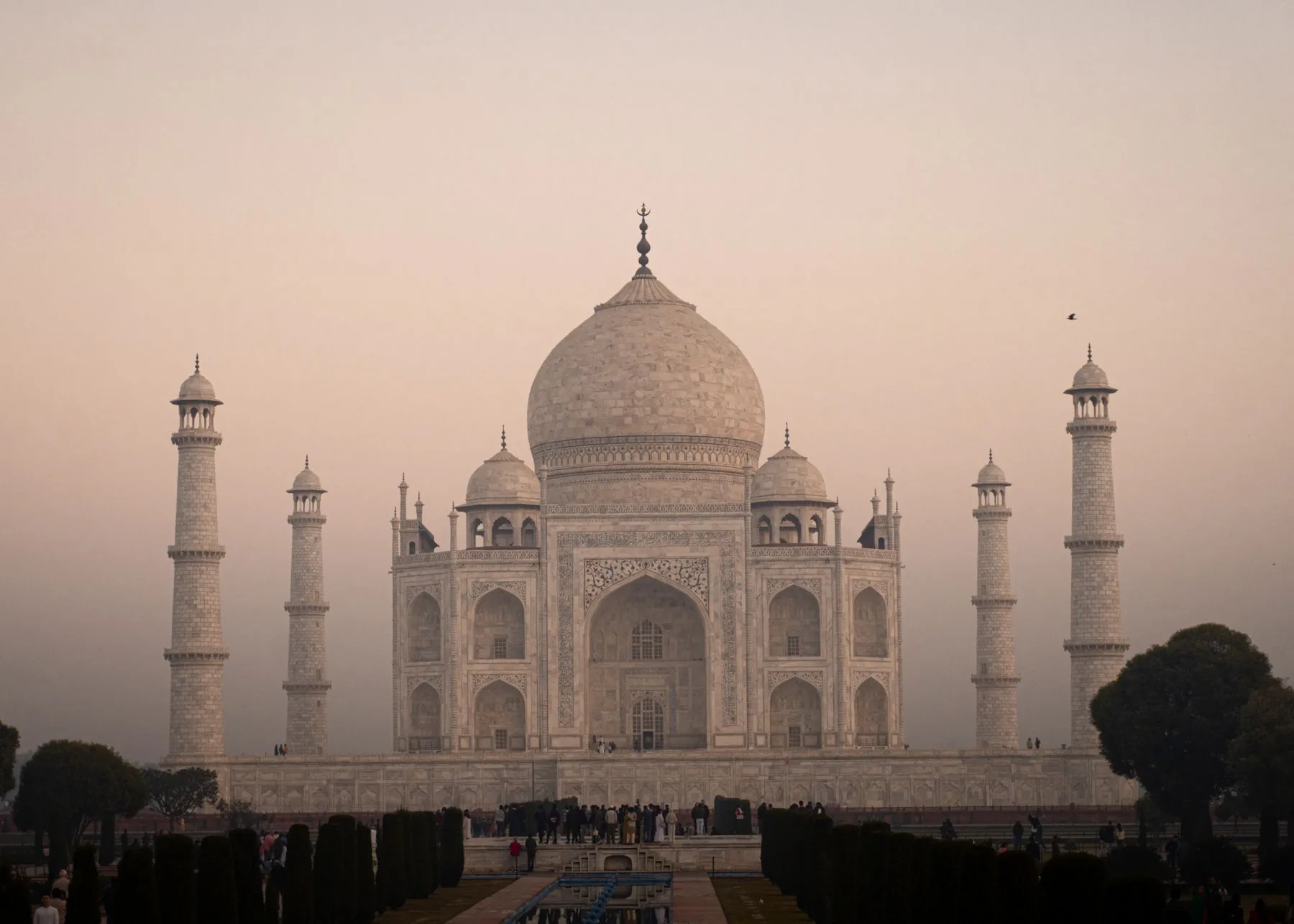
From the garden axis, the Taj Mahal feels almost impossibly balanced. Walk closer and that apparent simplicity gives way to carved marble, inlaid stone, calligraphy and shifting light across the façade.
Emperor Shah Jahan commissioned the mausoleum in memory of Mumtaz Mahal. The building belongs to a larger Mughal ensemble of gardens, gateways and riverside setting; UNESCO recognizes the Taj Mahal as a World Heritage property . Its story is richer than a single photograph.
Read our history and architecture guide for the lives and design choices behind the monument.
Look a little closer
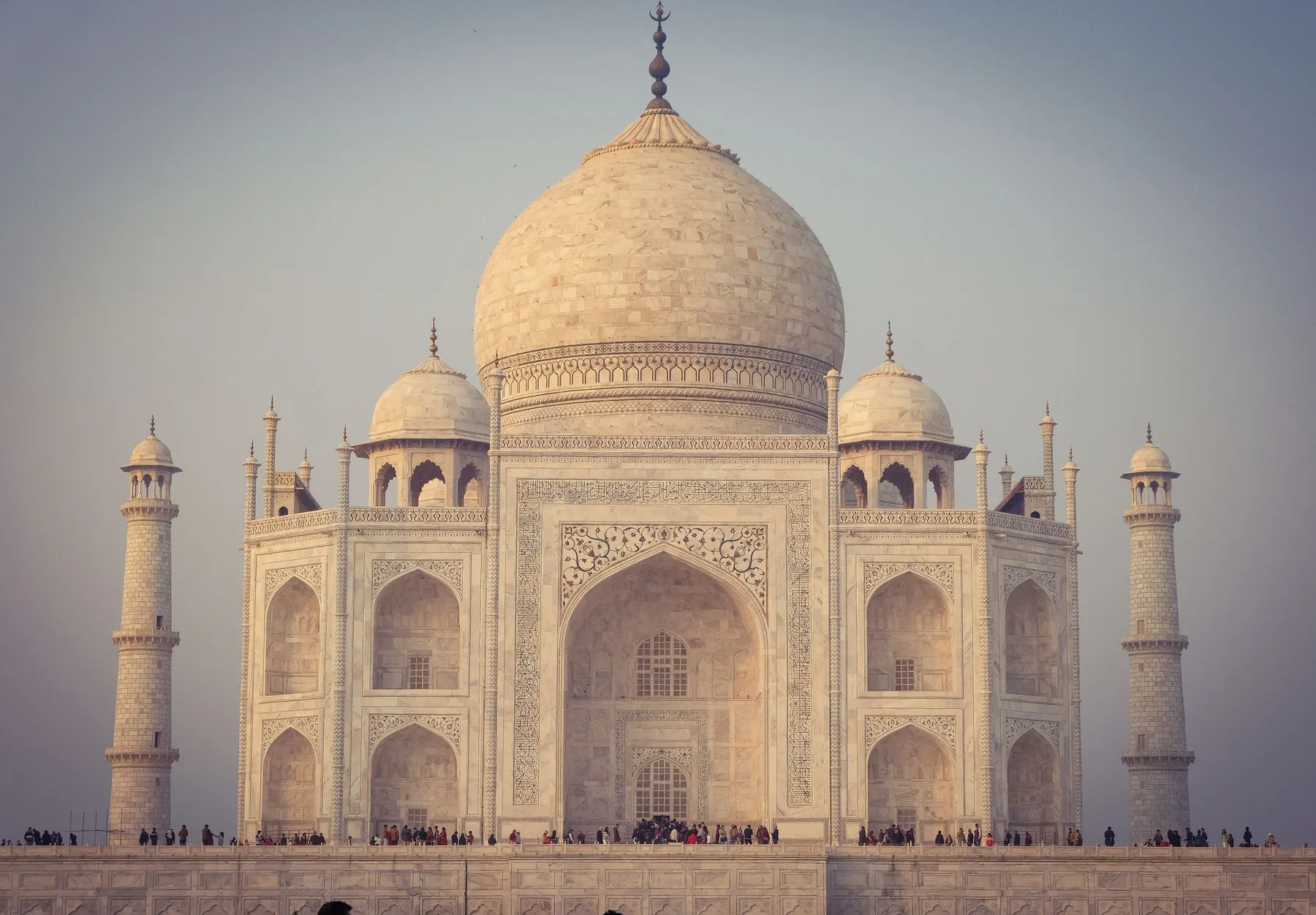
The surface tells its own story.
A first approach rewards distance; the next rewards attention. Notice how inscriptions frame the entrances and how stone decoration becomes legible as you move nearer. The geometry is deliberate, but the experience keeps changing with where you stand.
Explore the architectureA thoughtful visit
Leave room for the gardens.
The long water axis sets up the famous view, yet the garden is not merely a route to the building. Pause along the way, then allow time to look back toward the gateway. Before leaving, check the official visiting-hours and gate advice rather than relying on a fixed itinerary.
Consider the timing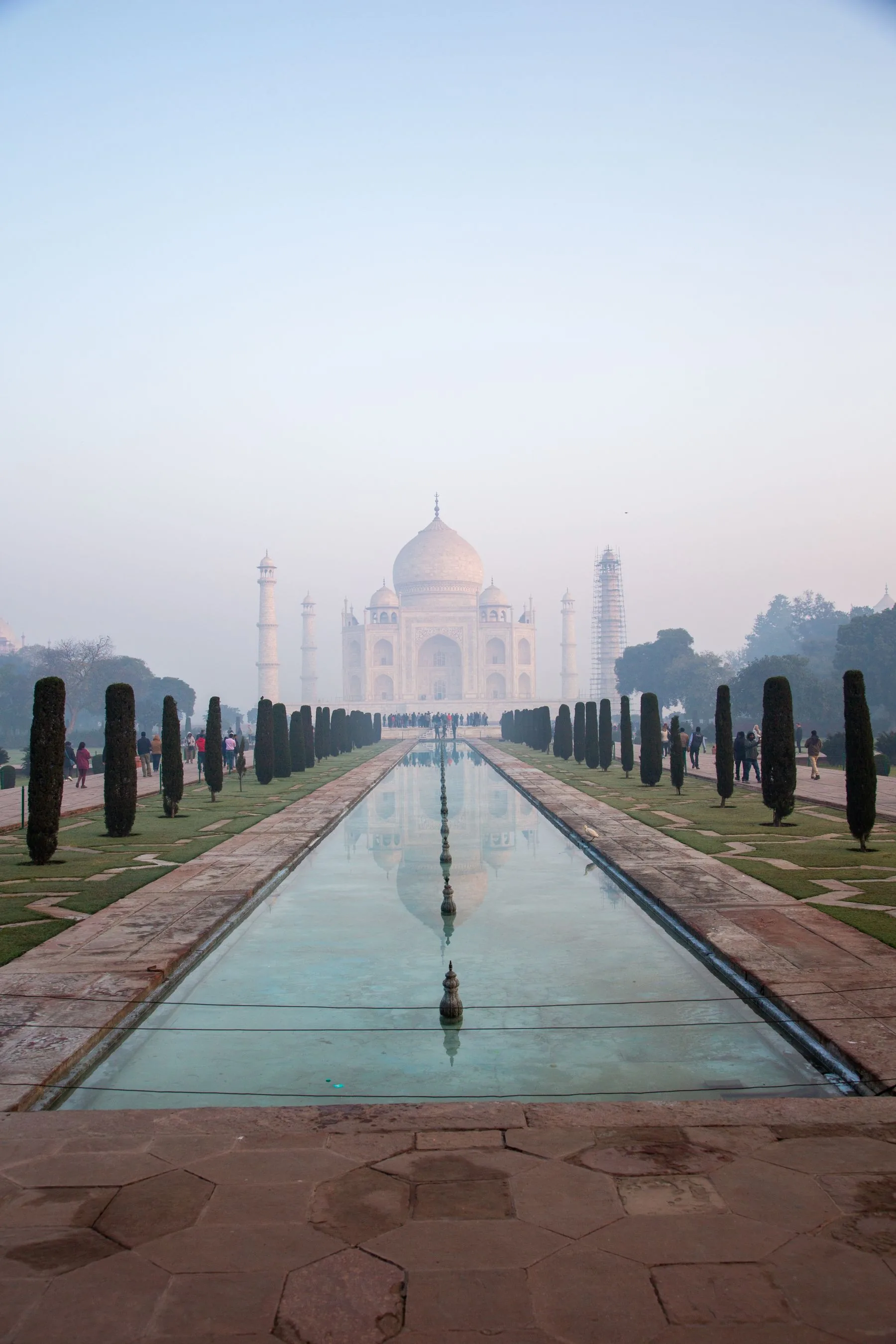
Continue the field guide
Context for the day.
History & architecture
The people, geometry and marble work behind the monument.
Visitor information
Entry, gates, Friday closure and a more considered arrival.
Compare guided visits
Understand guides, tickets, local arrangements and Delhi trips.
Guided vs independent
Decide how much interpretation you want on site.
When to visit
Light, weather and the rhythm of a day in Agra.
Agra Fort itinerary
Make room for another Mughal landmark.
Independent editorial guide · Updated 27 September 2026 · Sources: UNESCO, official ticketing and official visiting hours. Recheck live rules before travel.