01 / THE THRESHOLD
Propylaea
This monumental gateway turns ascent into arrival. Take in its scale from the approach, then notice how the passage frames the summit and regulates the movement of visitors into the sacred precinct.
Athens · An independent field guide
A city’s high ground, made legible one monument at a time.
The place
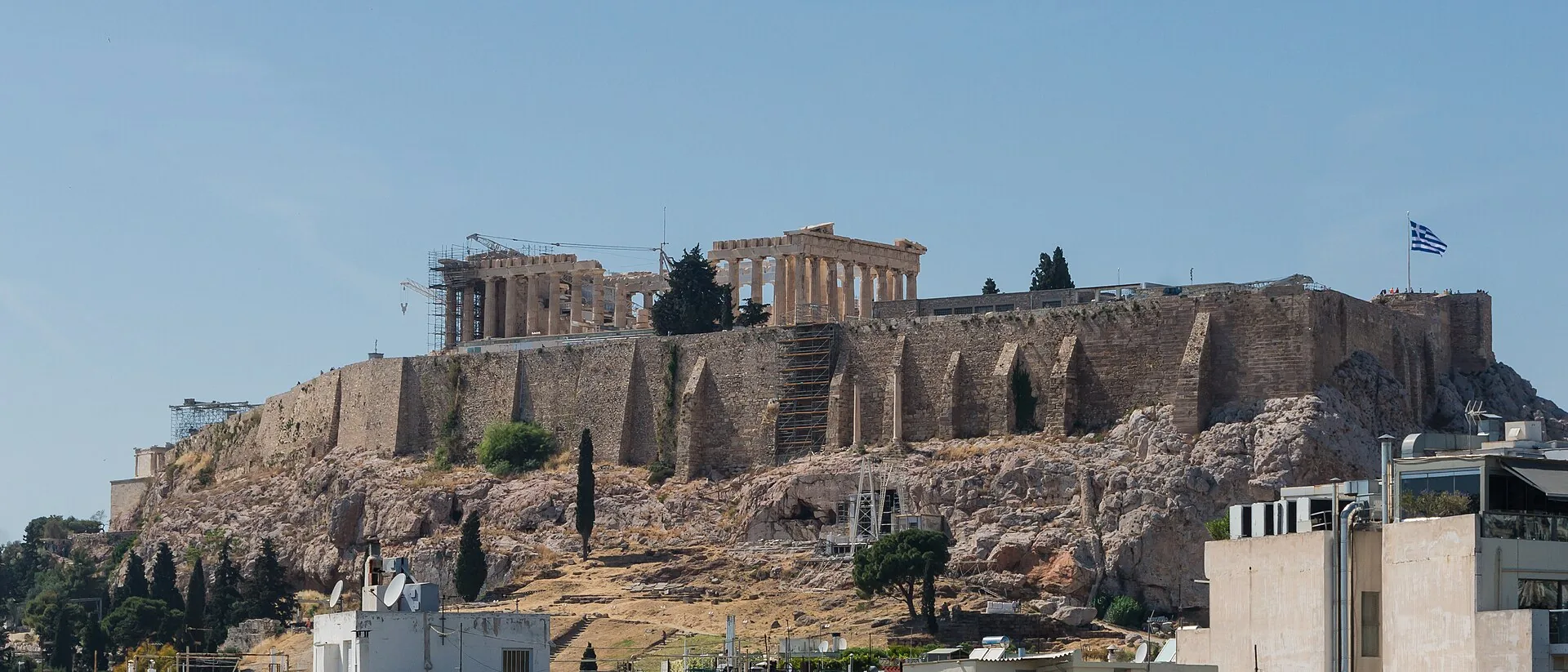
From below, the Parthenon seems to explain the Acropolis by itself. On the hill, the story becomes more intricate: a monumental approach, a sanctuary shaped over centuries, and several buildings that face one another across a working archaeological site. The rocky summit had been inhabited long before classical Athens made it a defining sacred and civic centre.
Pause at the western entrance before climbing through the Propylaea, the ceremonial gateway. The Parthenon is the commanding presence, but the Erechtheion and its Caryatid porch reward a slower look; the small Temple of Athena Nike marks a different edge of the complex. The slopes beneath the summit add theatres and sanctuaries to the experience rather than simply serving as a way up.
The monuments visible today reflect both ancient ambition and ongoing conservation. For the sequence behind the familiar silhouette, read our Acropolis history and restoration guide. Then use the practical visitor information to prepare for the hill’s terrain and timed admission.
Four landmarks, one hill
01 / THE THRESHOLD
This monumental gateway turns ascent into arrival. Take in its scale from the approach, then notice how the passage frames the summit and regulates the movement of visitors into the sacred precinct.
02 / THE ICON
Dedicated to Athena, the temple is the most recognisable of the hilltop monuments. Look beyond the familiar colonnade to the building’s changing uses, sculpture, repairs and the active conservation work that shapes its present appearance.
03 / MANY CULTS
An asymmetrical plan and the celebrated Caryatid porch distinguish this sanctuary. Its details recall that the hill gathered more than a single story or dedication; approach its railings respectfully and follow the signed visitor route.
04 / A SMALL TEMPLE
Set beside the entrance works, the Temple of Athena Nike is smaller than the Parthenon but integral to the composition. Its elevated position asks you to look outward—to the city as well as back across the Acropolis.
A monument still being cared for
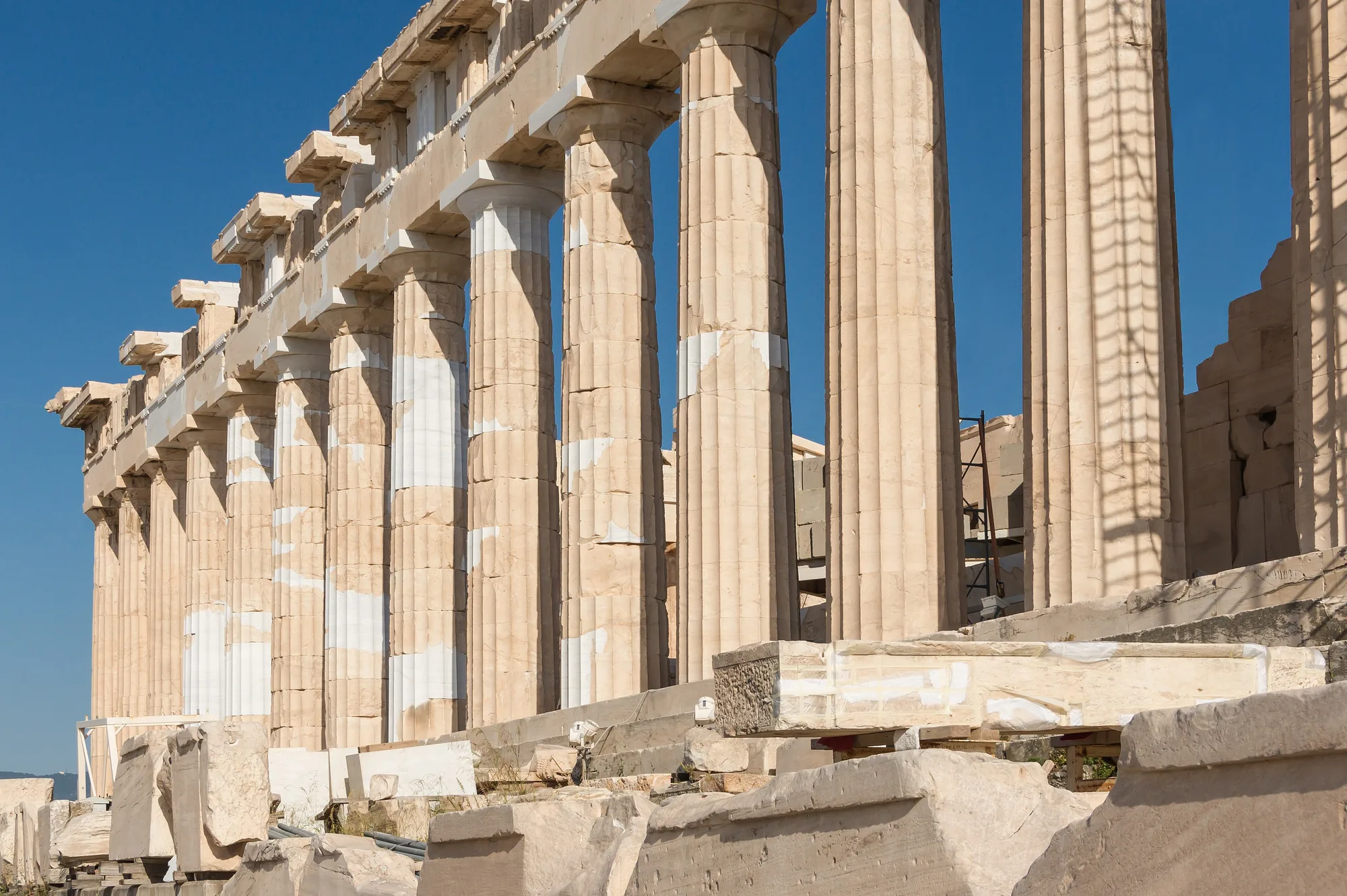
The Acropolis is not a frozen stage set. Greece’s Acropolis Restoration Service and the Committee for the Conservation of the Acropolis Monuments coordinate research-led work intended to protect the buildings and make their architectural form more legible. Modern supports, replaced blocks and active worksites are part of that continuing story.
A photograph rarely shows the practical reality: an exposed hill, uneven ancient surfaces and visitor routes that may change as conditions or conservation require. Leave space in the plan for looking carefully rather than trying to match an exact image.
Read the official site guidanceThe Acropolis collection
Move from the long view of Athenian history to the practical details that make the climb more considered.
From a Mycenaean hilltop to the classical monuments and present-day conservation.
Timed entry, the hill’s terrain, accessibility and the distinct museum visit.
Find the official booking source and understand what a timed ticket does—and does not—mean.
Common questions