Ephesus Archaeological Site: How to Visit and What to See
Plan your visit to the Ephesus archaeological site in Turkey: what survives, the Terrace Houses, the Great Theatre, timing, tickets and a calm route.
Published
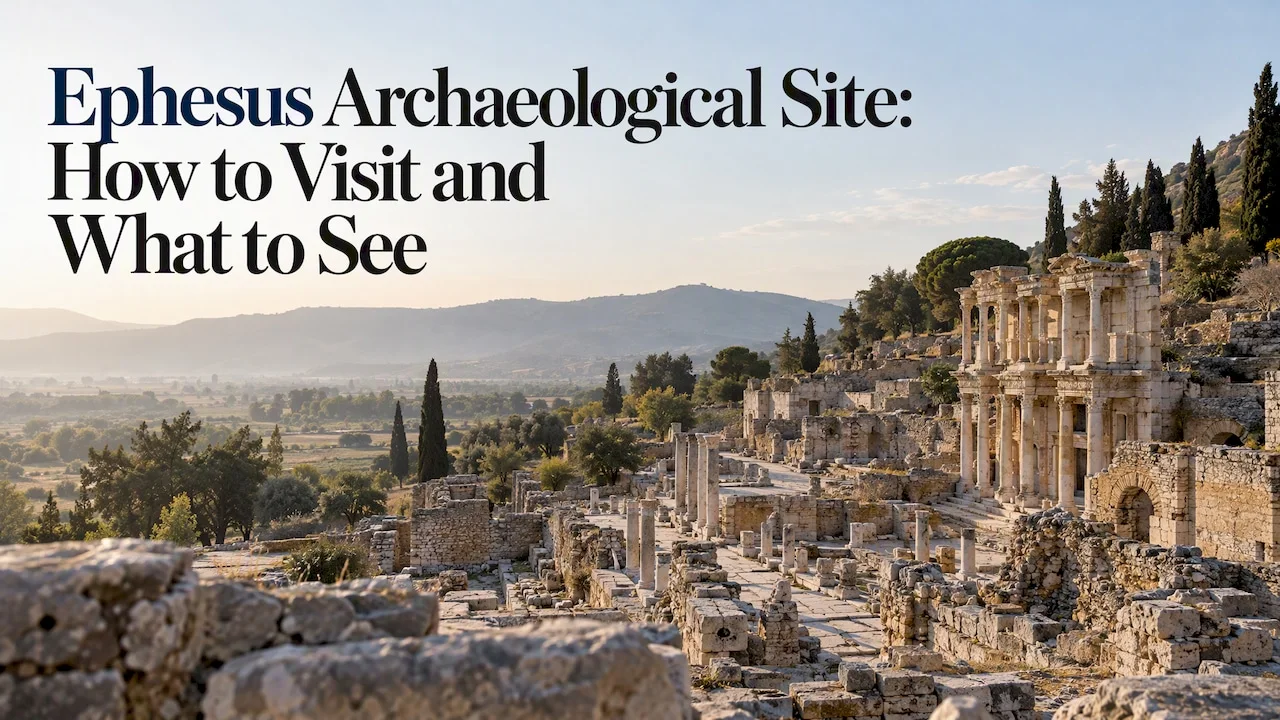
The Ephesus archaeological site sits in the Selçuk district of İzmir Province, on Turkey’s Aegean coast. It is a Greco-Roman city, a World Heritage Site and the country’s most visited ancient site. Go early, pay for the Terrace Houses, and read a little about the city before you arrive. That turns a long walk past marble into a visit to a working port city. This guide covers what you are looking at, how to pace the day and how to avoid the worst of the crowds.
Key takeaways
- Ephesus is a layered site. UNESCO describes successive Hellenistic and Roman settlements that followed the coastline as it retreated westward.
- The Terrace Houses need a separate ticket and about 30 to 45 minutes. They are the part of the site where daily life is easiest to picture.
- Timing matters more than route. Early morning or late afternoon is calmer than midday, especially on cruise days.
- Only a fraction of the city has been excavated, so sections can be closed for conservation from one season to the next. Check the official hours and ticket pages before you go.
- Allow a half day at minimum. A full day with a break in Selçuk is better.
What the Ephesus archaeological site actually is
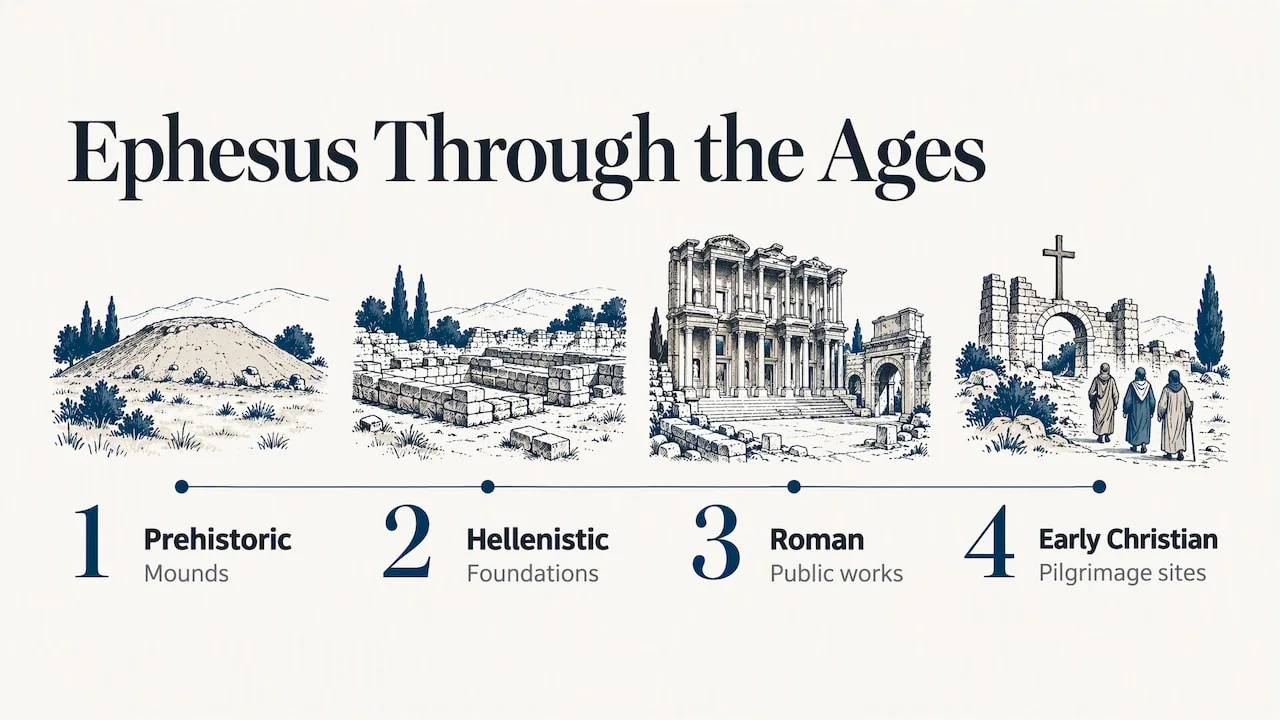
Ephesus is not one monument. It is several cities stacked in the same valley. The harbor silted up over the centuries, and each new settlement moved toward the retreating sea. UNESCO’s inscription record ties the site’s value to this long sequence: prehistoric mounds, Hellenistic foundations, Roman public works and early Christian pilgrimage sites.
This explains why the ruins feel so different from a single preserved town like Pompeii. You walk a Roman marble street, but beneath and around it are older and later layers. Excavation began in the nineteenth century. According to a report summarized on a travel blog, work might continue for centuries. That blog also puts the excavated share at roughly 15 to 25 percent, an estimate and not an official figure.
The Turkish Ministry of Culture and Tourism says the site welcomes around 2 million visitors a year. The address on that official sheet is Efes Örenyeri, Selçuk/İzmir.
Ephesus in Paul’s day
In the first century CE, Ephesus was the capital of the Roman province of Asia. The UNESCO nomination file describes a major intellectual and political center, famous for the Temple of Artemis and a busy harbor. It records that St. Paul visited the city on his missionary journeys, and that the Great Theatre held 25,000 spectators. This is where the riot in Acts 19 is set.
A useful way to read that story is as a commercial one. A Biblical Archaeology Society article examines how inscriptions and excavations give the riot a concrete setting. Artemis was not only a spiritual figure. Her cult supported crafts, trade and civic pride. Stand in the Great Theatre with that in mind and the ruins stop looking like anonymous marble. They look like a city defending its income.
If you want the longer arc from Hellenistic foundation through Roman prosperity to decline, our history of Ephesus and its monuments covers it monument by monument.
What to see, in a sensible order
Most visitors enter at the upper gate and walk downhill toward the theatre and the old harbor road. That keeps the walk mostly downhill and puts the best-known buildings in a natural sequence. Here is the order we suggest.
The upper city and civic buildings
The upper end holds the public buildings that ran the city: the council chamber area, fountains and administrative spaces. These are quieter than the famous façade below. Take them slowly. Look for how water was brought in and distributed, because water engineering explains much of Roman urban life.
The Terrace Houses
This is the add-on we would never skip. The Terrace Houses are covered Roman residences with preserved frescoes and mosaics. They require a separate ticket, and a cruise port guide reports a visit adds about 30 to 45 minutes to a standard walk. Most of Ephesus shows you public life: temples, baths, the street. Here you see how wealthy citizens lived, with painted walls, courtyards and floors laid out room by room.
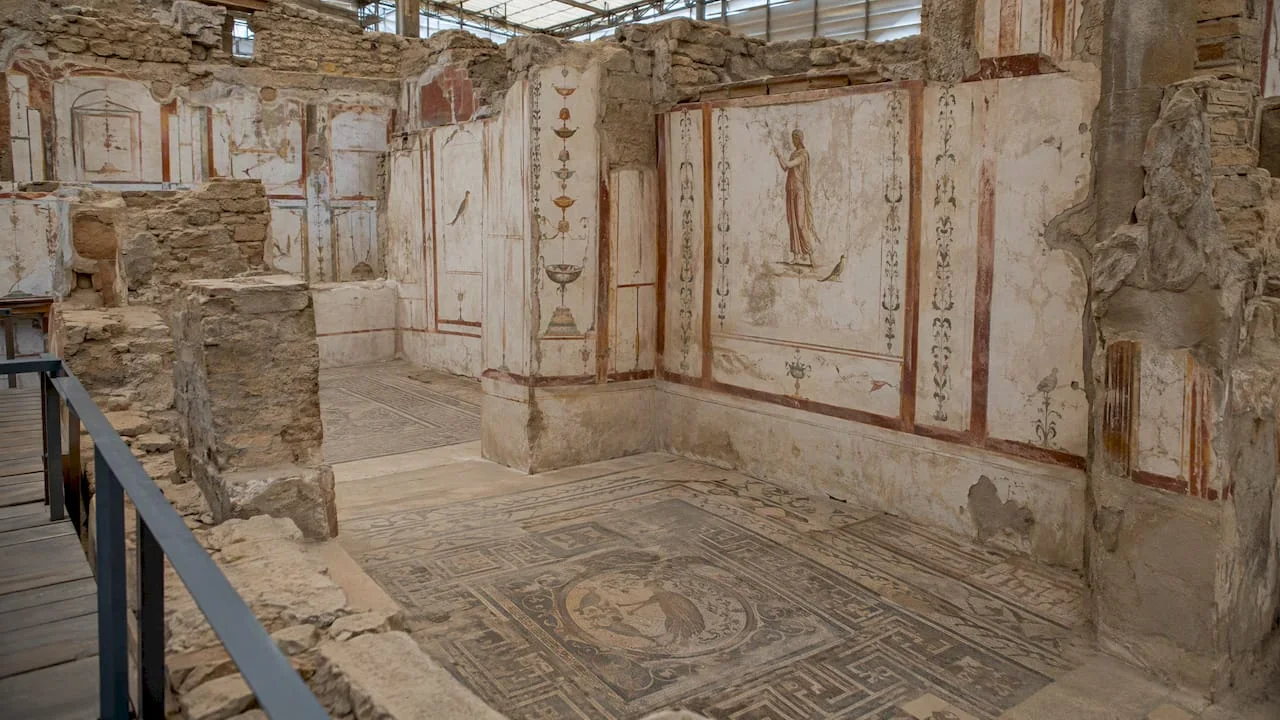
Because the houses are roofed and walkways are narrow, they fill quickly. Visit them early in your route, before tour groups arrive in numbers.
The Library of Celsus and Marble Road
The library façade is the image on every postcard. It is worth seeing, but it is also where crowds peak. Take your photograph, then look at the streets around it. The paving, the carved drainage and the worn grooves tell you more about movement through the city than the façade does.
The Great Theatre
The theatre is the emotional end of the walk. At the capacity UNESCO records, 25,000 spectators, it was one of the largest gathering places in the region. Sit on the upper rows and look down the road toward where the harbor used to be. That line of sight is the easiest way to feel the city’s geography.
The museum in Selçuk
The Ephesus Archaeological Museum in Selçuk holds finds from the excavations. Seeing objects after the site, not before, gives them context. The ministry also offers a combined ticket product for the site and the Ephesus Experience Museum. Check that page for what is included and the current price, because fees can change.
Planning the day: timing, heat and crowds
The site is open-air and has little shade. In summer, the middle of the day is hot and crowded at once. Spring and autumn are gentler, and early and late hours are better in any season. Our guide to the best time to visit Ephesus goes into light, weather and pace by season.
Opening hours change by season. The Ministry’s İzmir office publishes a table of visiting hours for museums and ancient cities, with separate summer and winter periods. Check the period that matches your date, and note the closing time for the ticket booth, which is earlier than the site closing time.
If you arrive from a cruise ship
The cruise question comes up often. Ships dock at Kuşadası, and the drive to the site is short. One port guide puts the distance at about 19 km, a 20 to 30 minute drive. Local advice, which we find consistent with what we hear from travelers, is that cruise congestion is the main obstacle to an enjoyable visit. When several ships are in port, the main street fills by mid-morning.
The practical answer is to enter before the crowd or to come late. If your ship’s schedule leaves no choice, start at the far end and walk against the usual flow, or begin with the Terrace Houses and the upper city, and leave the library and theatre for last, when the first wave has passed.
If you stay in Selçuk
Staying in Selçuk is the calmer option. The town has a bus and a train station, and the site is close. You can walk in at opening, finish before the heat and return to town for lunch. Our one-day plan from Selçuk lays this out hour by hour.
A suggested half-day route
- Arrive at opening and enter by the upper gate.
- Walk the upper city slowly, with water and a hat.
- Buy or use your Terrace Houses ticket and spend 45 minutes inside.
- Walk down the Marble Road to the library and photograph it from the side to avoid the crowd.
- Finish at the Great Theatre, then take the lower exit.
- Eat in Selçuk, then visit the museum in the afternoon.
Tickets and entry
Advance purchase is not always required, particularly if you travel with a guide, but buying online can save time at the gate. The ministry’s own ticket page is the primary source for what the combined ticket covers. For the differences between site, houses and museums, see our guide to Ephesus entry options, and for what different tours include, our page on Ephesus tickets and tours.
Two cautions. Prices and ticket structures change, so confirm on the official page rather than on any third-party list. And since parts of the site rotate through conservation work, a feature you read about may be closed on your day.
Our perspective
We write about Ephesus as a place to be read, not ticked off. Most visits fail for the same reasons: the wrong hour, no context and too little time. The site rewards restraint. Choose fewer stops, spend longer at each and let one or two places carry the day. The Terrace Houses and the theatre do that better than the façade everyone photographs.
We also believe the best planning is invisible. A well-built day has the right entry time, a driver who knows when the gates are quiet and a guide who explains the commerce behind the myth. That is the kind of quiet coordination we aim for with travelers who want depth, not volume. We keep our own guide to the site independent of any tour seller, and you can read it as an independent guide to the ancient city.
— Sami
Getting there and getting around
The site is outside the town of Selçuk. From Selçuk, a short taxi ride or a walk reaches the lower gate and the upper gate is a little further. For practical details on access, facilities and accessibility, our visitor information page is the best starting point.
Wear shoes with grip. The marble is worn and slick, and the surfaces are uneven. Carry water, because the shade is limited. A hat and sunscreen are not optional in summer. If mobility is a concern, ask before you go which sections are currently accessible, since conservation work can change routes.
When you want it arranged for you
If your trip includes Ephesus alongside other complex stops, we can design it. Our travel design and quiet coordination services build the itinerary, time the entries and give you a single point of contact. Start with our travel design service. We do not publish prices for these services, so the first step is a conversation.
If you are comparing Ephesus with other great ancient sites, our guides to the best time to visit the Acropolis in Athens and Stonehenge use the same approach to light and crowds.
FAQ
Which country is the ancient city of Ephesus in?
Ephesus is in Turkey, in the Selçuk district of İzmir Province on the Aegean coast. The Ministry of Culture and Tourism lists the address as Efes Örenyeri, Selçuk/İzmir. It is a UNESCO World Heritage Site.
How much of Ephesus has been excavated?
Only a minority. One blog summarizing Turkish press reports suggests the work could continue for centuries, and estimates of the excavated share run around 15 to 25 percent. Treat that as an estimate, not an official figure.
What was Ephesus like in Paul’s day?
It was the capital of the Roman province of Asia and a major commercial, intellectual and religious center, according to the UNESCO nomination file. The Temple of Artemis anchored its economy, and the Great Theatre, which held 25,000, is the setting of the riot in Acts 19.
How long do I need at Ephesus?
Plan at least a half day for the site, and add 30 to 45 minutes if you enter the Terrace Houses. If you also want the museum in Selçuk, a full day is more comfortable, particularly in warm months.
Is Ephesus worth visiting from a cruise ship?
Yes, if you manage the timing. The drive from Kuşadası is short, but crowds are the main issue. Enter as early as your schedule allows, start with the quieter upper areas and leave the library and theatre for later.
Sources
- Ephesus, UNESCO World Heritage Centre
- Ephesus (Turkey) No 1018rev, UNESCO nomination file
- Ephesus, Ministry of Culture and Tourism (PDF)
- Ephesus Archaeological Site + Ephesus Experience Museum, Ministry of Culture and Tourism
- İzmir Province visiting hours for museums and ancient cities
- Archaeology Gives New Reality to Paul’s Ephesus Riot, BAS Library
- Archaeological work at Ephesus might take centuries, Ferrell’s Travel Blog
- Ephesus from Your Cruise Ship, Kusadasi Port Guide