Editorial Guide
Stonehenge
History.
Stonehenge is not a single event but a long, slow accumulation of human effort over millennia.
A Phased Creation
The silhouette we recognise today is the result of a site that changed over thousands of years. Mesolithic activity in the area predates the monument, while the first major Stonehenge earthwork—its circular ditch and bank—was created around 3000 BC. The site then served as an early cremation cemetery before the great stone settings took shape.
This first phase did not resemble the familiar ring of standing stones. Archaeologists have identified pits, burial deposits and alterations made across generations. Seeing Stonehenge as a sequence of choices, rather than a monument completed in one campaign, helps explain why different parts of the site reflect different practices and building techniques.
The Bluestones & The Sarsens
Centuries later, the site underwent a radical transformation. The smaller 'bluestones' were brought to the plain. Modern analysis links many of them to western Wales, more than 200 kilometres away. Their exact routes remain debated, but archaeological interpretations generally centre on deliberate human transport by land and possibly water.
Following the bluestones came the colossal sarsens. These immense sandstone blocks, weighing up to 30 tons, were hauled from the Marlborough Downs, about 30 kilometres to the north. It is the sarsens, carved with precise mortice-and-tenon joints to hold their massive lintels, that form the iconic trilithon horseshoe and outer circle.
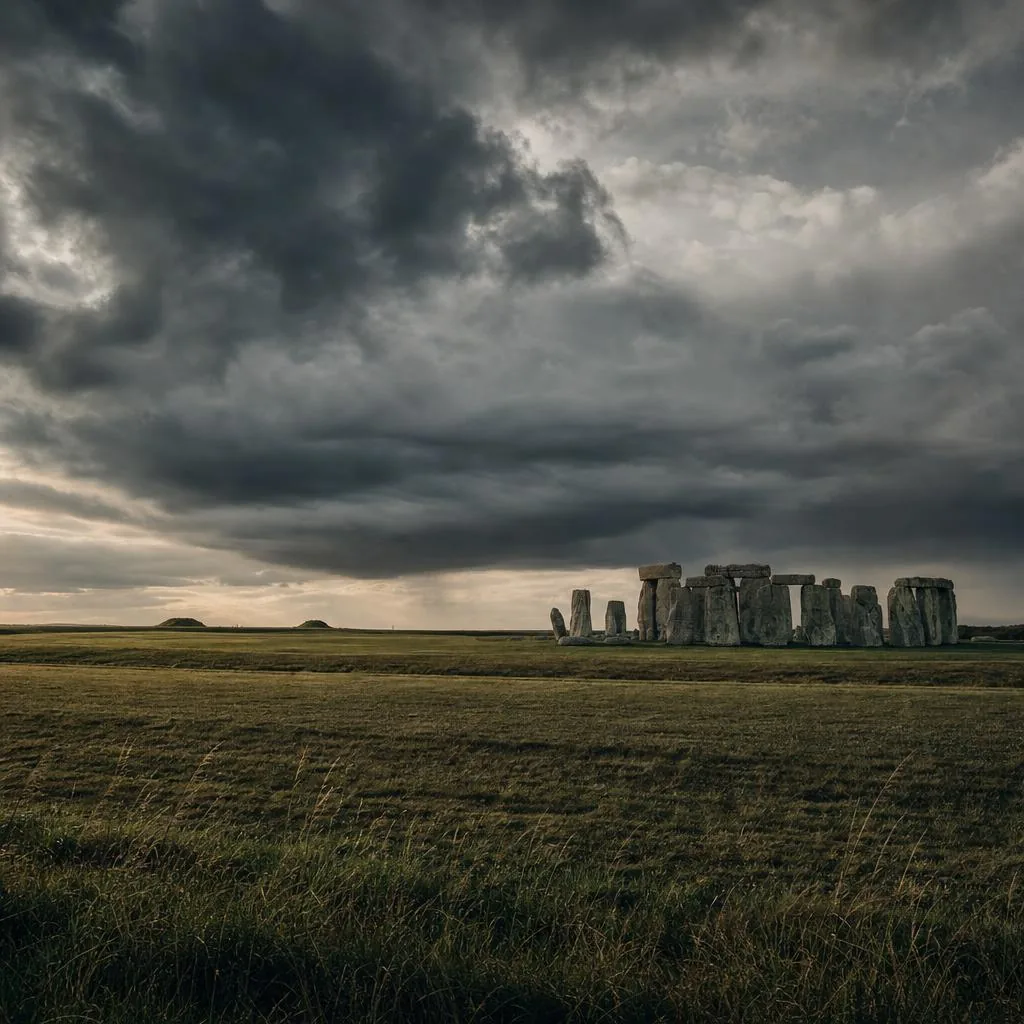
The dressed lintels also fit together with tongue-and-groove joints. The surviving uprights and crosspieces show both the ambition of the design and the skill needed to raise it. Their present arrangement is incomplete: fallen and missing stones mean the circle visitors see today is not the same as the one its builders saw.
The Ritual Landscape
Stonehenge does not stand in isolation. It belongs to a vast ceremonial landscape of burial mounds, cursus monuments, Woodhenge's timber circles, and the large henge at Durrington Walls. Evidence of houses at Durrington Walls suggests that people gathered in significant numbers, perhaps for seasonal feasts and ceremonies. Interpretations connecting these places with the living, the dead, and the River Avon remain influential, but not final.
This broader landscape matters when you visit. The Avenue links the stone circle towards the River Avon, while nearby earthworks and burial mounds show that the plain remained important over a long period. Allowing time for the exhibition and the approach to the stones gives more context than viewing the circle in isolation. Our Stonehenge visitor guide covers how to pace that part of the day.
Solstices and Changing Interpretations
The monument's axis relates to the midsummer sunrise and midwinter sunset. These alignments are strong evidence that seasonal light mattered to its builders, but they cannot tell us exactly what ceremonies took place or whether every construction phase had the same purpose. The surrounding archaeological record is essential to interpretation; a single dramatic sunrise is not the whole story.
Solstice gatherings also affect modern access differently from an ordinary visit. If seeing the monument in seasonal light is important to you, our guide to the best time to visit Stonehenge explains how daylight, weather and event arrangements can shape a trip.
What Remains Uncertain
The precise function of Stonehenge eludes absolute definition. Its alignment with the solstices—the rising sun on the midsummer solstice and the setting sun on the midwinter solstice—confirms an acute awareness of the cosmos. Was it an astronomical observatory, a site of healing, or a grand ancestral temple? We possess the evidence of their engineering, but their beliefs remain silent. The stones offer no final answers, only enduring questions.
For a fuller account of the evidence and how it is interpreted, read English Heritage's Stonehenge history and stories. This historical guide is independent editorial context; for admission and current access, use our separate Stonehenge ticket comparison.