Inside the Abbey
and the Village
They occupy the same remarkable island, but they are different experiences: one is a monumental, ticketed abbey visit; the other is a living village whose lanes can be explored without an abbey ticket.
Mont-Saint-Michel is not just an abbey perched above a single street. It is a compact village of steep lanes and old buildings, crowned by a religious complex that developed across the rocky summit. The village streets and the abbey have different access arrangements, atmospheres and demands on your time.
The distinction matters when you picture the day. The village is freely accessible; entering the abbey requires a separate admission ticket. You can appreciate the island’s approach, lanes and outward views without entering the monument, while the abbey takes you into a layered sequence of interiors, terraces and architectural spaces. This is a guide to those experiences, not a shopping guide. For practical access and current official conditions, start with visitor information.
The village: a route through lived-in lanes
The village begins at the lower approach and climbs towards the summit through narrow, winding streets. Along the way are historic façades, small squares, places to pause and viewpoints that open back across the bay. The atmosphere changes as you gain height: the entry area can feel lively, while a quieter moment may appear around a turn or in a less-travelled corner.
Freely accessible does not mean flat or empty. The route rises steeply, passages can be crowded, and some surfaces are uneven. Take your time, leave space for people moving in both directions and be considerate of residents and businesses. You can explore at your own pace, return to a view or simply follow the lanes upward without committing to the abbey visit.
The village is also where the island’s everyday character sits alongside its monumental image. Shopfronts and visitor services are part of that reality, but they do not define the whole experience. Look above the busiest stretch to notice the changing rooflines, gateways and glimpses of the abbey that gradually draw the eye uphill.
The abbey: architecture, rooms and vertical movement
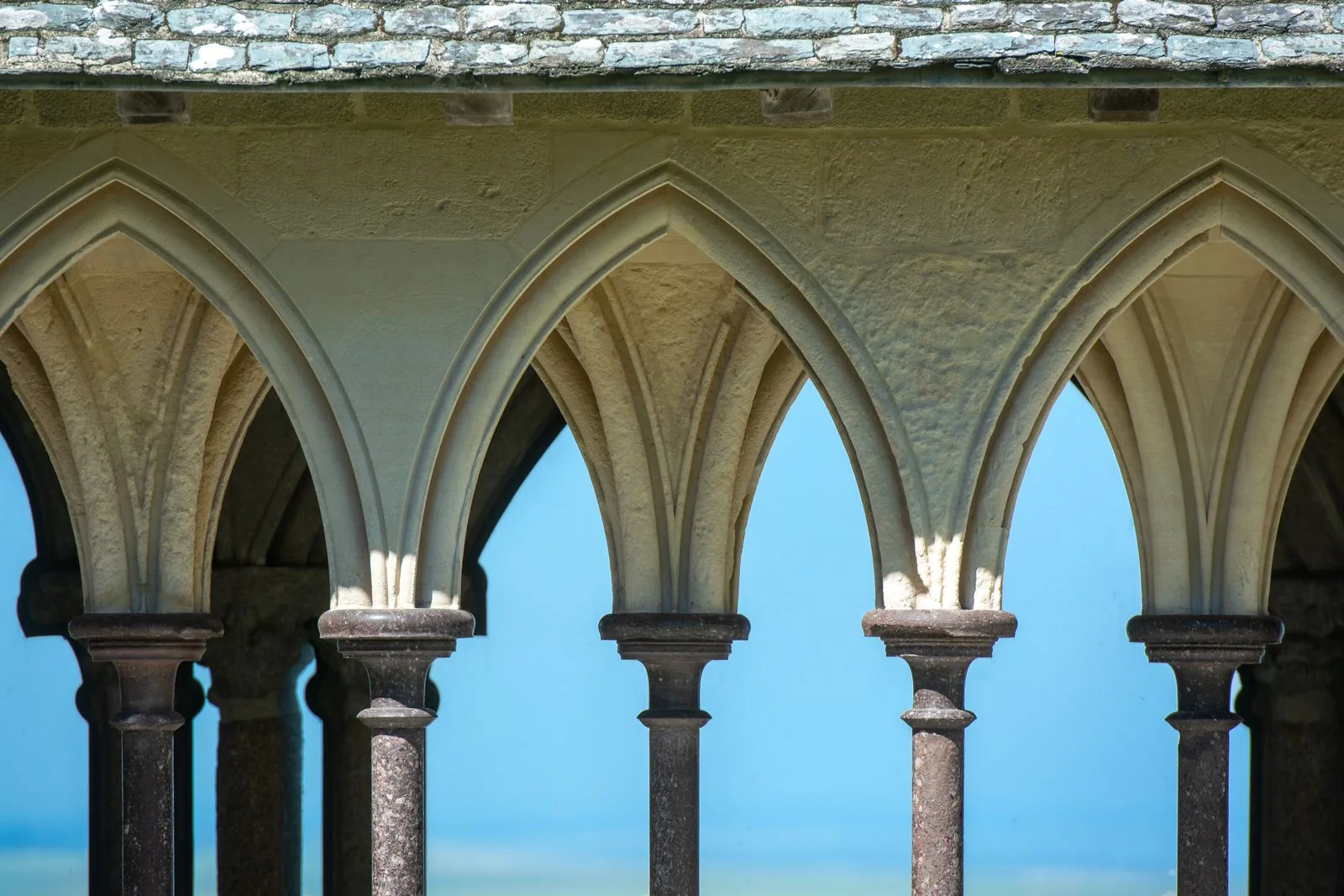
Beyond the abbey entrance, the visit shifts from public village lanes to a managed historic monument. Its spaces reveal how generations built, adapted and used a complex religious community on a confined rocky site. The cloister’s repeating arches create a measured, inward-looking pause; elsewhere, large halls, stairways and terraces make the structure’s scale and position easier to understand.
This is an architectural experience as much as a collection of rooms. The building moves vertically, and a visit involves stairs and sustained walking. Its route and any temporary access arrangements can change, so check official information if mobility, fatigue or a particular area is important to your plans. The ticketed abbey visit is distinct from strolling the village, and an outside tour or transport service should not be assumed to include admission unless its own terms say so.
For a deeper historical frame, read our Mont-Saint-Michel history guide before or after you go. It helps make sense of the abbey not as one finished design, but as a site shaped by religious life, building campaigns and its dramatic setting.
Two experiences, one island
- Village lanes: freely accessible streets, outward views and a flexible, self-paced climb.
- Abbey rooms: a ticketed monument visit with architectural interiors, terraces and stairs.
- Both together: allow time for the uphill walk and do not treat the abbey slot as the whole island visit.
How to combine them without rushing
Many visitors walk through part of the village before reaching the abbey entrance, but the order does not have to feel like a checklist. If you have a timed abbey entry, allow a margin to cross the approach, use the shuttle if appropriate, and climb the village lanes. Once inside, the monument’s stairs and rooms take concentration; afterward you may want a slower descent, a meal or another look at the bay-facing views.
If you do not enter the abbey, the village still offers a complete visit of its own. Enjoying the exterior and the streets is not a lesser version of the experience—it is simply a different one. Nor does an island visit guarantee a particular view of the water: bay conditions and tide change, and the scene depends on the moment.
The official abbey authority confirms that the village is freely accessible without a ticket while entry to the abbey is ticketed. Its practical information also describes paid parking and a free shuttle serving the approach. Check the current official details before setting out, and use our Mont-Saint-Michel overview to orient yourself. For timed entry details, see the official abbey admission information.
Choose by the experience you want
Choose the abbey if you are drawn to monumental interiors, the cloister and the story of a religious complex built into the summit—and are comfortable with stairs. Focus on the village if you want a flexible walk through the island’s lanes, its setting and outward views. If both appeal, give each enough room rather than hurrying through the village to reach a slot and immediately hurrying back down.
These pages approach different questions: compare the atmosphere of the island across the best time to visit, or use the practical day-trip outline to think through transport and pacing. The choice between village and abbey is about what you want to see, not a claim that one ticket or tour is right for everyone.
Plan for both settings
Check the current practical information, then decide how much time you want for the monument and the village streets.
Visitor InformationSources & Verification
Access distinction, stairs, parking and shuttle information should be checked against the official site before travel. This article gives no prices or fixed opening hours and does not imply that a tour includes abbey admission.
- Practical information — Mont-Saint-Michel Abbey
- Official abbey ticket service
- The Abbey of Mont-Saint-Michel — local tourism office
Last Reviewed: 27 September 2026