Family Private Tours: How to Plan One That Works
How to plan a private tour for your family: tailoring pace and ages, vetting guides, coordinating logistics, and what to check before a private-island stay.
Published
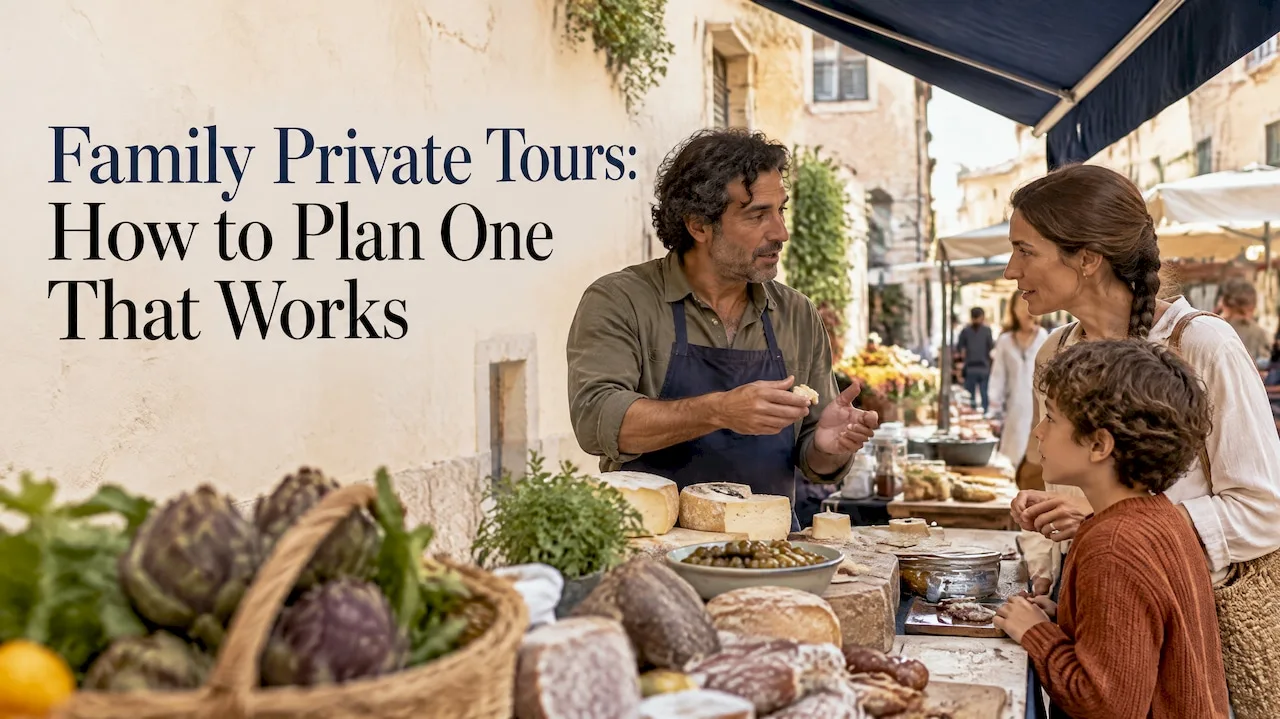
A private tour works for a family when the day is built around your children, not around a coach schedule. You set the start time, the pace, the snack stops and the level of detail. A guide who knows how to work with children makes the difference between a museum visit that ends in tears and one your kids talk about for years. Below we explain how to tailor a tour, what to ask a guide, how to coordinate the moving parts, and what to check if a private-island retreat is part of the plan.
Key Takeaways
- A private tour runs on your family’s clock, so naps, meals and attention spans shape the day instead of fighting it.
- The guide matters more than the landmark: look for someone who can engage children, not only recite dates.
- Decide the hard constraints first (ages, mobility, sleep, dietary needs), then let a planner build around them.
- Private-island retreats usually mean low room counts and high prices, so confirm transfers, season and included services before you commit.
- One point of contact for transport, lodging and access removes most of the friction on a complex trip.
What a private tour does differently for families
Group tours depend on fixed schedules. A private guide works to the family’s timetable and adapts the experience to what the children actually need that day. That sounds small. In practice it decides whether you see the cathedral at nine in the morning, when everyone is fresh, or at two, when a seven-year-old is done.
Three things change when the tour is yours alone:
- Timing. You can start late after a long flight, break at noon for a proper lunch, and end early without apologizing to a group of strangers.
- Content. The guide can skip what bores your children and linger on what grabs them: the gladiator tunnels, the hidden door, the story of the mason who carved a grotesque face.
- Logistics. A private tour takes over the planning of transportation, sightseeing, meals and other logistics, so the adults are not reading maps while the children melt down.
None of this requires a luxury budget to understand, but it does reward a little preparation. The rest of this guide is that preparation.
How to tailor a tour to your family
Before you speak to anyone, write down five things. They become the brief your guide or planner works from.
Ages and attention spans
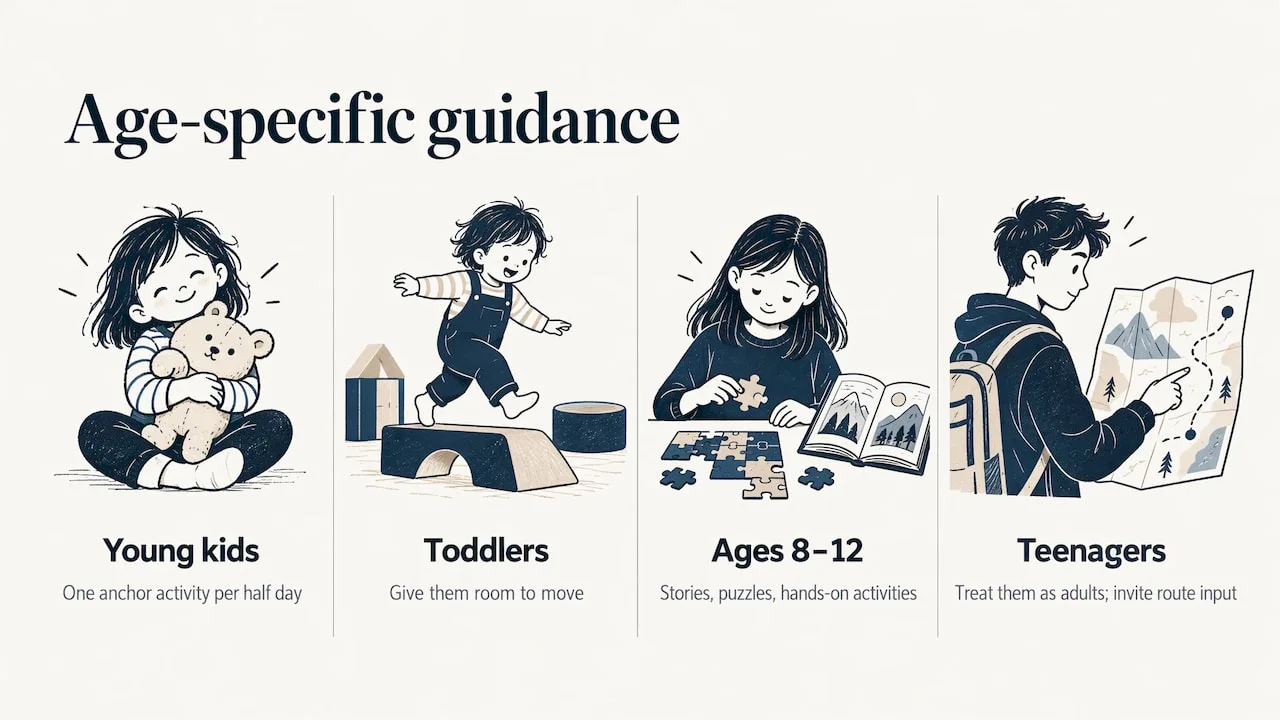
A reasonable rule of thumb from our own planning experience: young children do well with one anchor activity per half day, not three. Toddlers need space to move. Eight to twelve year olds respond to stories, puzzles and anything hands-on. Teenagers want to be treated as adults and, often, to have a say in the route. Tell the guide every child’s age and one thing each of them loves or hates.
Interests
If one child loves ancient Egypt and another loves food, a day can serve both: a morning among the monuments, then a market lunch where the guide explains what you are eating. Our destination pages for Egypt and Italy show the kind of cultural sites we plan around.
Pace
Decide how many hours of guided time a day is realistic. Many families land on three to four, with the afternoon left open. Build in a day with nothing scheduled after every two or three busy ones.
Accessibility and comfort
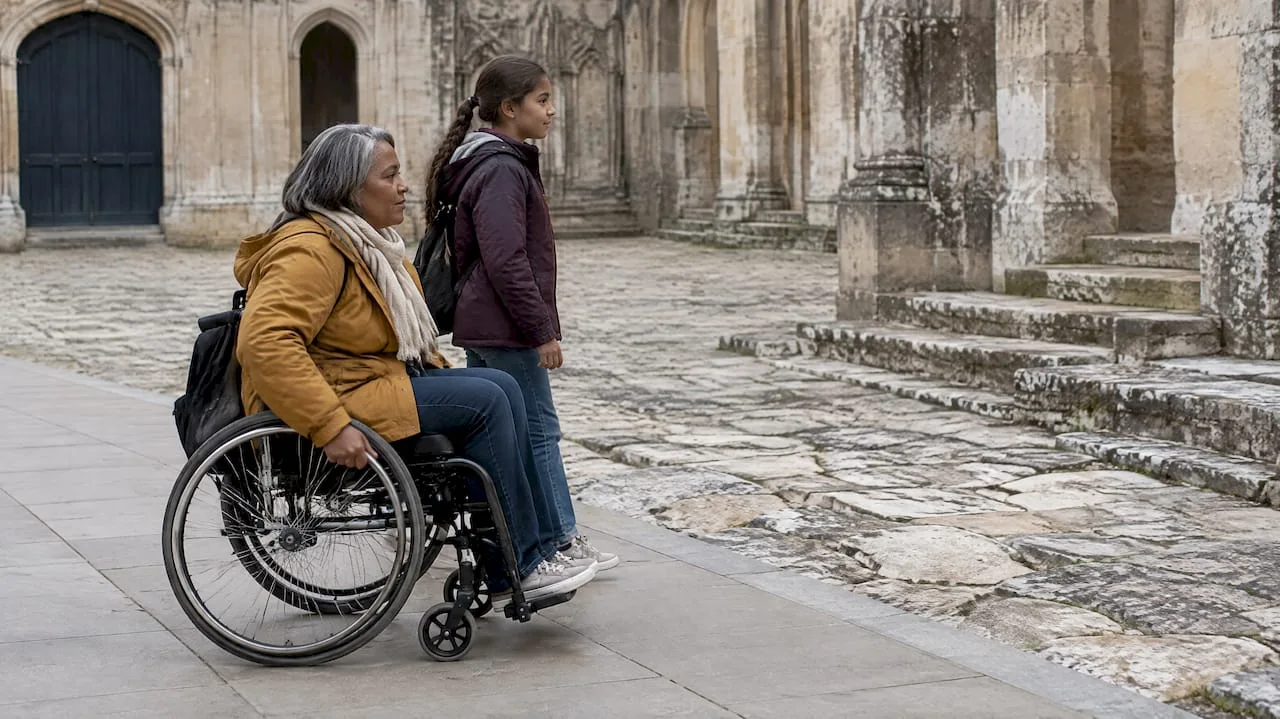
Name any mobility needs, stroller use, sensory sensitivities, allergies or medical requirements up front. A good planner checks step-free routes, seating, restrooms and quiet corners in advance, and arranges vehicles that fit car seats where you need them. If a family member uses a wheelchair, confirm access at each site directly before the day, because older monuments often have uneven ground.
Non-negotiables
Bedtimes, nap windows, a vegetarian diet, a child who gets carsick: list them. A private itinerary can honor all of these. A group itinerary cannot.
Choosing the guide: what to ask
A kid-friendly guide can make a huge difference to your child’s experience of a place: the best know how to bring museums to life, where to find engaging activities, and how to handle the small annoying details so you can spend meaningful time together. Use that as your standard. Questions worth asking:
- Have you guided families with children of these ages? Ask for an example of how they kept a nine-year-old interested in a major site.
- What would you do if the kids lose interest at stop two? A strong guide has a plan B ready: a courtyard, a shorter route, a game.
- What access do you arrange in advance? Timed entry, skip-the-line slots and early or after-hours openings change a day. Our guide on behind-the-scenes tours explains how to choose and book them.
- What is included? Entry tickets, transport, water and snacks, gratuities and a replacement guide if yours is ill should all be spelled out in writing.
- How flexible is the day? You should be able to change the route on the spot without a fee for rearranging.
One point on language and tone: ask the guide to speak to the children, not over them. Within the first ten minutes you will know if they can.
Coordinating transport, lodging and activities
The more locations, the more points where a trip can fray. Complex family itineraries fail at the seams: a transfer arrives late, a hotel check-in clashes with a morning tour, a booked entry slot falls in nap time.
A sound approach:
- Fix the anchors. Flights, the one or two must-see sites and any timed entries.
- Build the days around them. Add transfers with realistic buffers, and keep the same driver where possible so the children see a familiar face.
- Choose lodging for the family, not the photograph. Connecting rooms, a kitchenette, a pool, or a quiet suite where children can sleep while adults sit up.
- Assign one contact. When something slips, one person should be able to rearrange guides, cars and tickets in a single call.
We go deeper on this in our piece on luxury trip planning, which covers how to design a journey that runs itself.
Lodging deserves its own checklist. If your route passes through a mountain town, a private lodging with a hot tub is a welcome end to a day on the move. For one example of what to confirm before booking that kind of stay, see this private hot tub rental checklist.
A sample day: a family of four in a historic city
Here is how a well-built day can look for parents with a six-year-old and a twelve-year-old. It is an illustration of structure, not a fixed itinerary.
| Time | Activity | Why it works |
|---|---|---|
| 8:30 | Private vehicle from hotel | No waiting at a meeting point |
| 9:00 | Early entry to the main landmark, with the guide telling stories | Quiet site, fresh children |
| 10:30 | Pastry and hot chocolate stop | Built-in reset |
| 11:00 | Hands-on activity: sketching a detail, a treasure hunt | Gives the younger child a role |
| 12:30 | Long lunch at a family-run restaurant | Local food, no rush |
| 2:00 | Return to the hotel, pool or rest | Protects the afternoon |
| 5:00 | Optional short evening walk | Only if energy allows |
For a Spanish example of pacing a single landmark, our Sagrada Família walking route shows how to approach a crowded site in a sensible order.
Perspective
We design family journeys on a simple belief: the best itinerary is the one you barely notice. Children are honest critics. They tell you in minutes if a day is too long or a guide is dull, and they should not have to sit through either.
That is why our approach is personal and restrained. We prefer fewer, better-chosen experiences, access arranged quietly in advance, and one trusted point of contact who holds the whole plan. When a family tells us the youngest needs a long lunch, we do not treat it as a problem to be solved. It becomes the organizing principle of the day.
Our work centers on cultural and historical sites, where a thoughtful guide and the right access turn a famous landmark into a story a child remembers. We think parents deserve to be present at those moments, not managing them.
Sam
Private-island retreats for families
Some readers who search for private tours are also weighing a private-island stay. It is a different product, so judge it on different terms.
What it is
Luxury private islands may still carry hefty price tags, but they are more accessible than ever, with some independently owned and others part of larger brands. According to Condé Nast Traveller Middle East, the best of these resorts keep room inventory low and prices high, and most operate as all-inclusive enclaves with dining, drinks and spa treatments included.
For a family, that can mean a contained, safe setting where children roam freely. It can also mean fewer activities beyond the beach, which suits some ages better than others.
What to check before you book
- Transfers. Ask how you reach the island (boat, seaplane, small aircraft or a combination), how long it takes, what the luggage and weight limits are, and what the operator’s rules are for infants and car seats on the transfer. Ask what happens if weather delays a crossing.
- Season. Weather, water conditions and sea life vary by month. Ask the resort what the island is like in the specific weeks you plan to travel.
- Children’s policies. Minimum ages, kids’ clubs, babysitting, child-sized water gear and pool fencing differ widely.
- What is included. Confirm meals, non-motorized water sports, excursions and transfers, and whether anything is charged separately.
- Practical access. Check medical support on the island, how far the nearest hospital is, and how quickly you could leave in an emergency. Ask your pediatrician about any vaccines or medication needed for your destination.
- Privacy model. Some islands are rented in full to one party. Others are resorts with limited rooms. Know which one you are booking.
These are questions we put to every resort on a family’s behalf, so the answers sit in the plan before anyone packs.
Where to start: choosing a destination
Pick the place first, then the pace. A few directions we plan for:
- Italy and Spain: compact cities, strong food culture, and landmarks that reward a guide’s stories. See Italy and Spain.
- France: museums and gardens where children can move. See France.
- Egypt and the UAE: monuments that hold children’s imaginations and hotels built for families. See Egypt and the UAE.
- Mexico: archaeological sites paired with beaches and slower days. See Mexico.
For more cultural attraction guides to browse before you decide, visit our Travel Journal.
Plan your family journey with us
If you want one person to hold the whole plan, that is what our travel design and quiet coordination services are for. We shape the itinerary around your family, arrange access and guides, and stay reachable while you travel. Tell us your children’s ages, the places you are drawn to and the pace you want, and we will start from there.
Start a conversation through the Noble Voyages travel office.
Frequently asked questions
Are private tours worth it for families with young children?
For many families, yes, because the day follows your children’s rhythm: naps, meals and short attention spans. A private guide can also adapt on the spot, shortening a route or changing the activity. Group tours cannot easily do either.
How long should a private guided tour be for kids?
Three to four hours of guided time a day is a sensible starting point for school-age children, and less for toddlers. Split the time with a break, and leave the afternoon open. Your guide can adjust once they see how the children respond.
What should I tell a guide before the tour?
Share each child’s age, interests, allergies, mobility needs, nap and meal times, and anything that tends to upset them. Also say what you most want to see. The more specific the brief, the better the guide can prepare activities and stops.
What should I check before booking a private-island retreat?
Confirm how you get there and what happens in bad weather, the best season, children’s policies, what is included, and medical access on the island. Ask your pediatrician about health precautions for the destination.
Sources
- Family Travel Without the Meltdowns: The Private Tour Advantage
- Private tours 101: Could a private tour be right for you?
- How to Get the Best Private Guide For a Trip With Kids
- The World’s Most Spectacular Private Island Escapes
- The 16 best private island resorts in the world
- Private Hot Tub Rental in Vail: What to Check Before You Book