Behind-the-Scenes Tours: How to Choose and Book the Right One
What behind-the-scenes tours really include, from Stonehenge to Monticello to opera backstage, plus the rules, group sizes and checks that decide which one suits you.
Published
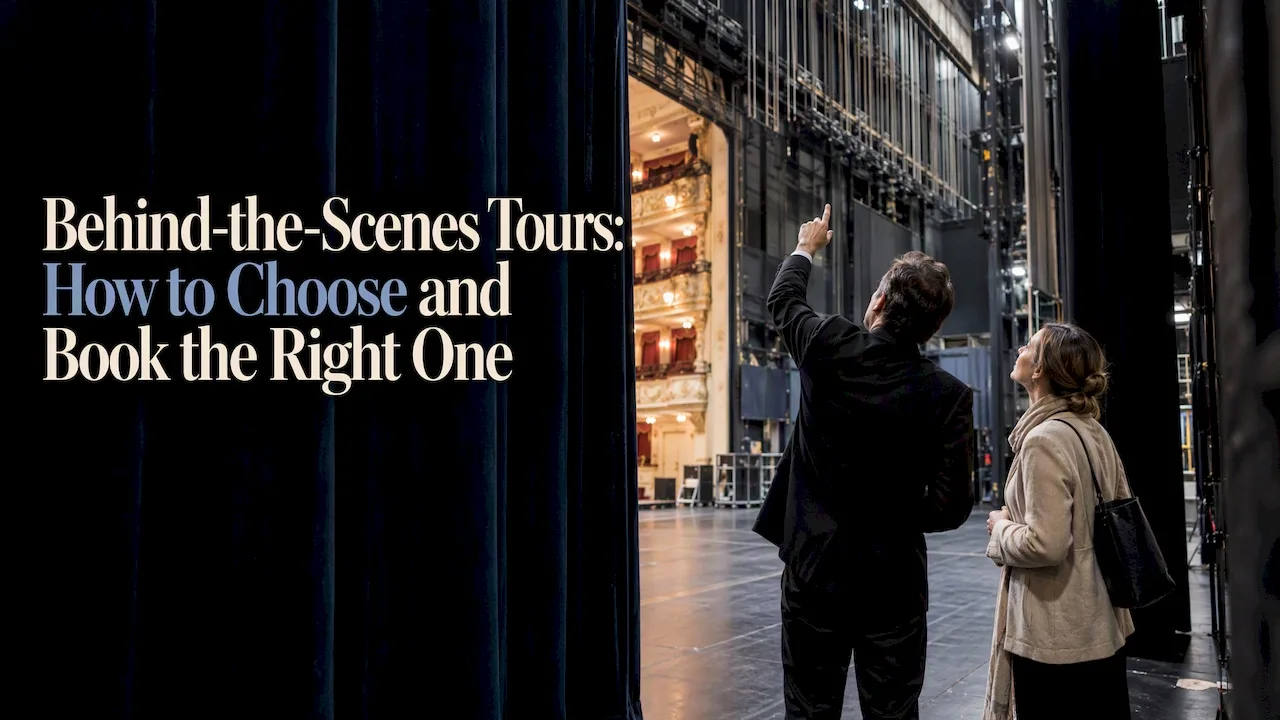
A behind-the-scenes tour takes you into places and activities a normal public visit never reaches: backstage areas, restricted rooms, working departments, even conservation work in progress. The best ones are small, led by someone who knows the place deeply, and built around one clear story. The weaker ones simply add a few extra doors. This guide shows what these tours include at real landmarks, what rules to expect, and how to pick one that fits your trip.
Key Takeaways
- A true behind-the-scenes tour shows how a place works, not just how it looks: staff areas, collections, technical spaces or maintenance routines.
- Group size, route and duration vary widely. Stonehenge’s Explorer Tour is capped at five guests, while backstage tours elsewhere can run to about 30 people.
- Eligibility rules are strict. Age limits, stair climbs and limited accessibility are common, so check before you book.
- The value comes from a focused story and a good guide, not from the number of rooms you see.
- For complex trips, confirm duration, meeting point, route, capacity and access needs in writing before you commit.
What makes a tour “behind the scenes”
An ordinary guided visit follows the public route and explains what everyone can see. A behind-the-scenes visit goes further. MuseumNext contrasts the two by noting that these visits reveal how an institution actually works and allow more personal interaction with staff.
The clearest example is Stonehenge. English Heritage describes its Explorer Tour as an exclusive, more personal visit that takes in the monument field, the inner circle, the exhibition, Woodhenge and Durrington Walls. The standard Stone Circle Experience, by contrast, covers the monument field only. Same site, different depth.
That difference is the test to apply anywhere. Ask what you will see that the person next to you in the regular queue will not, and whether the guide will explain why it matters.
The main types of behind-the-scenes access
The phrase covers several quite different experiences. Matching the type to your interest is the biggest decision you will make.
| Type | What you get | Real example |
|---|---|---|
| Historic house, private rooms | Restored upper floors and quarters closed to general visitors | Monticello’s 90-minute tour |
| Performing arts backstage | Stage, props, wardrobe, workshops, dressing rooms | Zurich Opera House, the Grand Ole Opry |
| Studio and backlot | Soundstages, prop warehouses, archives | Paramount’s studio tours |
| Monument access and conservation | Inner areas of an ancient site, staff at work | Stonehenge Explorer Tour |
| Technical and operations | Restricted areas, mechanics, ride operations | Alton Towers Behind the Scenes Experience |
| Themed variants | Architecture, food or accessibility focus | Sydney Opera House |
Historic houses and private quarters
Monticello’s Behind the Scenes Tour lasts 90 minutes and reaches private second- and third-floor quarters, including the Dome Room, by a narrow staircase. Monticello says the tour uses restored spaces and architectural features to discuss the Jefferson, Hemings and Randolph families and other free and enslaved people who lived and worked there. The rooms are the draw, but the people are the point.
Theaters and opera houses
The Zurich Opera House runs a 60-minute public backstage tour covering the stage, props, make-up and dressmaking departments, the costume depository, and the furniture and stage-set warehouses. It also offers a 75-minute stage-technology tour below, on and above the stage, plus one-hour tours focused on wig-making, make-up artistry and costume creation.
In Nashville, the Grand Ole Opry offers daytime, VIP, post-show and Women of Country backstage formats ranging from 45 to 90 minutes, generally for about six to 30 people. Published inclusions can feature backstage areas, dressing rooms, the Opry stage, memorabilia, the WSM radio studio and the Opry Legends exhibit, with stage access subject to availability.
The Sydney Opera House shows how flexible the idea is. It offers guided, mobility-access, backstage, architectural and food-focused tours, so you can choose the lens that suits you.
Film and television studios
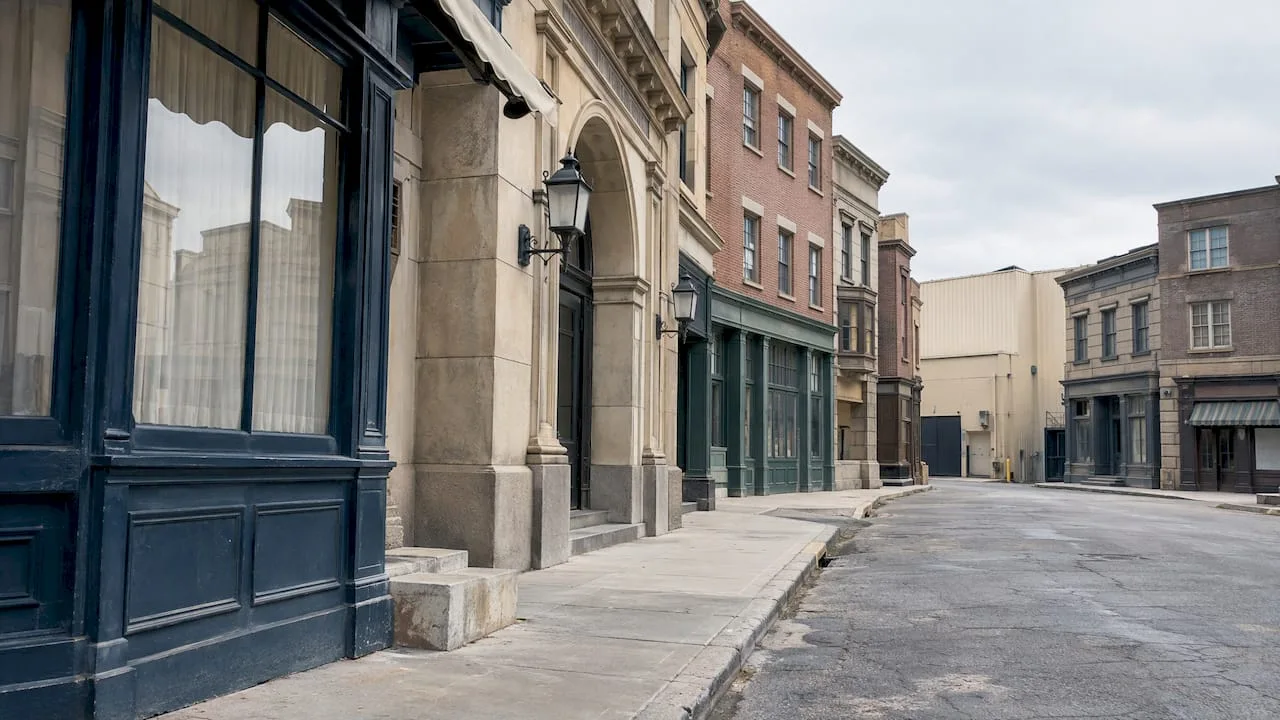
Paramount’s standard studio tour is advertised as a two-hour visit covering the Tour Center, Prop Warehouse, New York Backlot, Bronson Gate, soundstages and other filming locations. Its VIP formats add access to archives and the backlot, meetings with archivists and backlot tradespeople, and private meals, with listed formats running three hours or four and a half hours on weekdays.
Operations and technical tours
Alton Towers says its Behind the Scenes Experience takes guests through restricted areas with expert hosts who explain ride operations, history and technical elements hidden from other guests. It is a useful reminder that the genre is not limited to museums and monuments.
What you actually see and learn
The strongest tours turn access into understanding. Three patterns come up again and again.
You see the work, not only the result. On the Stonehenge Explorer Tour, guests spend 10 to 15 minutes inside the inner circle and watch staff carry out a monument-care “stone check”, according to English Heritage. Watching that check explains how a historic monument is kept standing today, not only how it was built.
You get the fuller story. Restricted rooms mean more when the guide addresses everyone who lived and worked there, as Monticello’s tour does. Access without interpretation is just a closed door opened.
You understand why things are the way they are. MuseumNext argues that showing collection care and non-public work helps visitors appreciate why museums cannot display every object at once.
There is also research behind the idea. A peer-reviewed paper in Curator: The Museum Journal reports exploratory work across six museums and frames behind-the-scenes tours as a promising learning environment for helping visitors understand museum research. Its authors also note the subject is still under-researched, which is a fair reason to judge any tour on its own specifics rather than on its label.
Who leads the tour matters as much as where it goes
A restricted area explained badly is a wasted ticket. Guides on these tours come from different backgrounds. National Geographic notes that local guides may be professional historians, passionate foodies or residents deeply connected to their hometowns, and that some places require special training or certification. It adds that local guides can offer deeper connections, family knowledge, destination context and access that ordinary sightseeing does not.
Staffing and group size shape the experience too. The Stonehenge Explorer Tour is limited to five guests, led by two experienced hosts, and uses a private English Heritage vehicle between locations. Imperial College London’s guidance on running such tours recommends one lead guide for continuity and rapport, with extra demonstrators when live demonstrations need specialist staff.
When you compare options, look for one clear lead guide, a named expertise, and a group small enough to ask questions.
Rules, eligibility and access to expect
Exclusive access comes with conditions. Read them before you plan a day around one.
- Age limits. The Stonehenge Explorer Tour is not suitable for children under 12, and Monticello recommends its tour for visitors aged seven and older.
- Physical demands. English Heritage recommends good mobility because of uneven ground. Monticello warns that participants must climb and descend as many as 75 stairs without adult assistance.
- Accessibility. Monticello lists its tour as not wheelchair accessible. Zurich Opera House says the building is not fully accessible and that backstage visits for disabled visitors are available only on a limited basis and in a private setting.
- Group limits and advance booking. Zurich limits participant numbers and sells advance tickets. Stonehenge caps the Explorer Tour at five.
- Time limits. Time inside the most restricted areas is often short, such as the 10 to 15 minutes in the stone circle.
None of this is a reason to skip these tours. It is the reason to book the right one, for the right people, with the details confirmed.
How to decide if a tour suits you
Imperial College London’s guidance offers a useful frame. A behind-the-scenes tour suits people who want exclusive access, large equipment, demonstrations or historical and place-based stories, especially in a smaller group. It suits large groups or lengthy debate less well. Its broader point is that value comes from a coherent narrative and a focused message, not from trying to show every room or object.
Use these questions to test any tour:
- What is the story? A good tour can be summed up in one sentence: how the opera is built, how the monument is cared for, who lived on the upper floors.
- What is genuinely closed to others? If the answer is vague, the access may be too.
- How many people? Five guests and thirty guests are different experiences.
- How long and how physical? Tours commonly run from 15 to 120 minutes, according to Imperial College London, and may be walking or static.
- Does it fit your itinerary? A 90-minute tour with a long transfer on either side can quietly consume half a day.
Practical details to confirm before booking
The Imperial guidance lists what a well-run tour should make clear, and it doubles as your checklist: the duration, the pick-up or meeting point and route, group capacity, access needs and rules, plus clear directions and notice of any refreshment or bathroom breaks.
Add these for travel planning:
- Whether the experience is sold directly by the site or through an intermediary, and who to contact if your plans shift.
- Whether stage or room access is guaranteed. The Opry, for example, states stage access is subject to availability.
- Whether a private vehicle or transfer is included, as at Stonehenge.
- What the ticket type allows. Our guide to Stonehenge ticket types explains the difference between general admission and circle access, and our page on Stonehenge tickets and tours compares the options side by side.
- When to go. Light and crowds change the experience at open-air sites, which is why we wrote about the best time to visit Stonehenge.
If you are building a wider trip around a Stonehenge visit, the day trip from London guide covers train and coach logistics, and our visitor information page covers on-site practicalities.
Where behind-the-scenes access is strongest
The pattern across the examples is consistent. Access works best where a place has a living function: a working stage, an active conservation program, a studio still producing, a house with a deep human history. In those places, staff have something real to show and a reason to explain it.
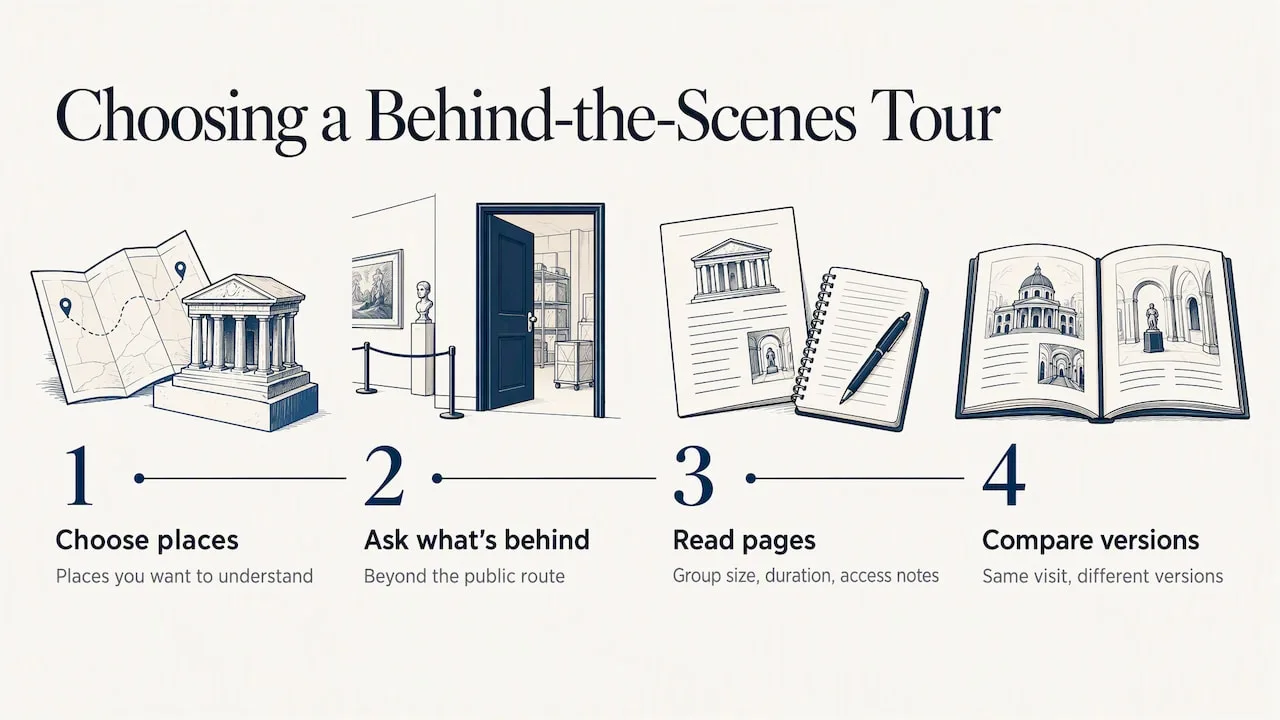
For travelers, that suggests a simple approach. Start with the places you already want to understand, then ask what sits behind the public route. Monuments, opera houses, historic homes and studios all have an answer, and many of them publish the details on their own tour pages. Read those pages for group size, duration and access notes before comparing anyone else’s version of the same visit.
Our perspective
We design trips around places that reward attention, and in our experience the best behind-the-scenes access is never about novelty. It is about restraint: a small group, one knowledgeable guide, a clear story, and enough time to take it in.
That is why we pay as much attention to the logistics as to the access itself. A private visit to a monument means little if the transfer runs late, the ticket type is wrong, or someone in the party cannot manage the stairs. Quiet coordination is how we think about it: one point of contact who checks the duration, the route, the group limits and the access needs before you ever leave home.
Our approach is editorial and independent. We would rather explain what a particular tour includes, and who it suits, than sell you the longest list of rooms. For discerning travelers, the right tour is the one that fits your interests and your pace, and arranging that fit is exactly what travel design is for.
Sam
Let us arrange the access for you
If you would rather not piece together tickets, timings and group rules yourself, our private travel office designs itineraries around the cultural and historic sites you care about, and coordinates the details quietly in the background. Tell us where you are heading and what you want to understand, and we will shape the visit around it.
Start with our travel design and quiet coordination, or browse destinations such as Italy, Spain and Egypt. You can also explore our world attractions and landmarks for site guides.
FAQ
What is a behind-the-scenes tour?
It is a guided visit to areas or activities not open on a normal public visit, such as backstage spaces, private rooms, collections or staff operations. It usually shows how a place works, with more direct contact with staff and guides.
How long do behind-the-scenes tours last?
They vary. Imperial College London says such tours commonly run 15 to 120 minutes. Published examples include 45 to 90 minutes at the Grand Ole Opry, 60 and 75 minutes at Zurich Opera House, 90 minutes at Monticello and two hours for Paramount’s standard studio tour.
Are behind-the-scenes tours suitable for children and people with limited mobility?
Often not fully. Stonehenge’s Explorer Tour is not suitable for children under 12, Monticello recommends its tour for ages seven and older and is not wheelchair accessible, and Zurich Opera House offers backstage visits for disabled visitors only on a limited, private basis. Check each venue’s access notes before booking.
How small are the groups?
The Stonehenge Explorer Tour takes a maximum of five guests. The Grand Ole Opry’s backstage formats generally accommodate about six to 30 people. Smaller groups usually mean more time with the guide and more chance to ask questions.
What should I confirm before I book?
Confirm the duration, meeting point and route, group capacity, access needs and rules, and whether any access is subject to availability. Also check how the tour fits with your transfers and the rest of your day.
Sources
- The Changing Face of Museum Tours, MuseumNext
- Explorer Tour FAQs, English Heritage
- Monticello Behind the Scenes Tour
- Guided Tours: Backstage, Opernhaus Zürich
- Tour the Opry, Grand Ole Opry
- Tours, Sydney Opera House
- Studio Tours, Paramount
- What happens during a Behind the Scenes Experience, Alton Towers
- Understanding the Effects of Behind-the-Scenes Tours, Curator
- Locals can be excellent tour guides, National Geographic
- How do I organise a behind-the-scenes tour, Imperial College London