Luxury Trip Planning: How to Design a Journey That Runs Itself
How luxury trip planning works: set a realistic budget, build a paced itinerary, arrange expert-led access and coordinate changes, so every detail is handled.
Published
Luxury trip planning is the work of designing every touchpoint of a journey, from the first questionnaire to the last airport transfer, so that nothing asks for your attention while you are away. Done well, it starts with who you are as a traveler, sets a budget with real contingency, paces the route so each stop feels different from the last, and puts one person in charge of coordination. This guide walks through each step, with the numbers and checks that matter.
Key Takeaways
- Luxury planning is about the whole journey, including transfers and the time between destinations, not only the hotel and the headline sights.
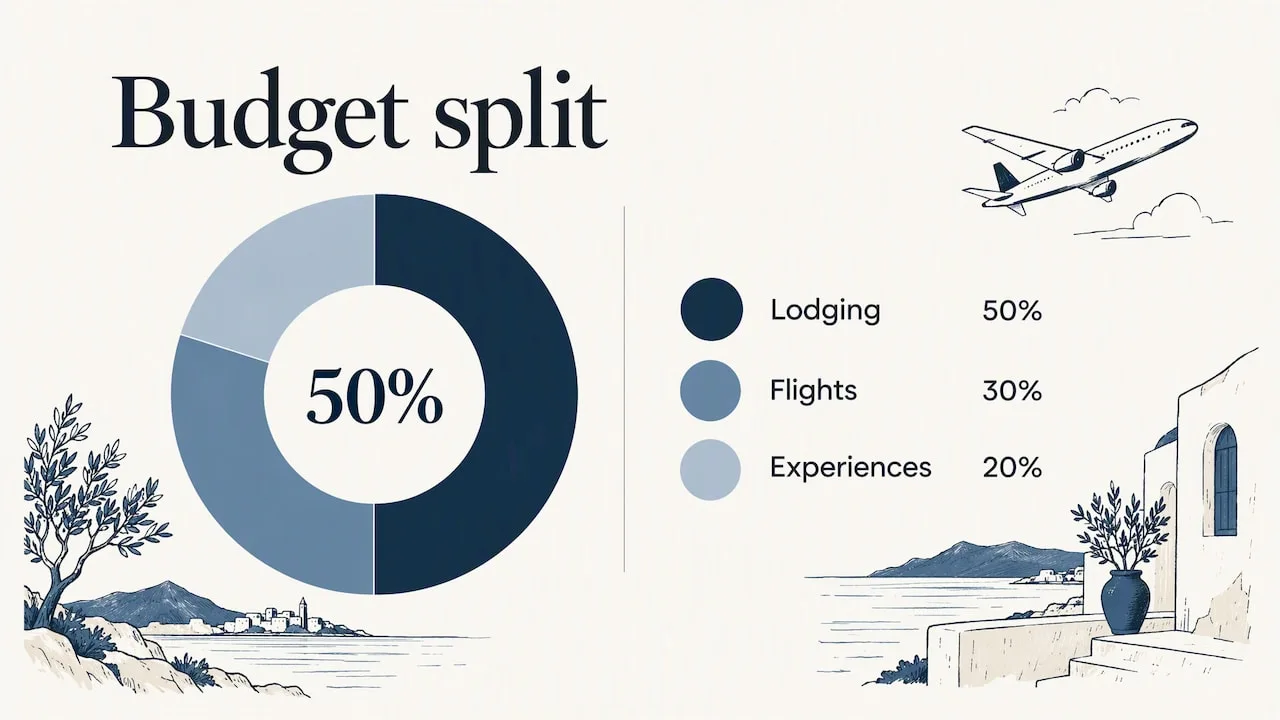
- A workable budget splits roughly 50% lodging, 30% flights and 20% experiences, with a 10 to 15% contingency on top.
- Strong itineraries make each destination clearly different from the last and leave genuine room to rest.
- Private and after-hours access at cultural landmarks comes from advisers with direct relationships on the ground, so ask who holds those relationships.
- One central point of contact who monitors reservations and can rebook in real time is the clearest sign a complex trip is well coordinated.
What luxury trip planning actually involves
A standard vacation is usually assembled from separate bookings: a flight here, a hotel there, a tour added later. Each piece works on its own, and the traveler is the one who joins them up. If a connection slips, the traveler sorts it out.
Luxury planning reverses that. Reporting on the ultra-luxury market in TravelAge West makes the point that the journey itself is part of the value. Planners have to consider every touchpoint, from airport transfers to how long you spend traveling between destinations, and make each one frictionless.
In practice that means a few things change:
- Sequence matters as much as selection. A superb hotel loses its shine if you arrive after a red-eye and a three-hour drive. Good planning orders the stops so you arrive rested.
- Logistics are designed, not left to chance. Who meets you, where the car waits, how long a museum entrance queue will be, and who you call if something goes wrong are all decided in advance.
- Personal detail drives the choices. The right room, the right guide and the right dinner reservation depend on knowing you, not on a ranked list of the most popular options.
None of this requires an unlimited budget. It requires attention, and a clear idea of what you want the trip to feel like.
Start with the brief, not the destination
Most people begin by naming a place. Experienced planners begin by asking questions. According to The New York Times, the discovery stage at the top end of the market is intensive, often built on detailed questionnaires or long interviews that capture preferences from dietary needs and sleep patterns to which way a room should face. That information becomes the foundation of the itinerary.
You can do the same exercise yourself, or with an adviser. Write down answers to these before you look at a single hotel:
- What should the trip give you? Rest, discovery, celebration, a deep dive into a period of history? Pick one or two. A trip that tries to deliver all of them rarely delivers any.
- Who is traveling, and what does each person need? Mobility, age, appetite for early starts, food restrictions and tolerance for long drives all shape the route.
- What is non-negotiable? A specific room type, a particular museum, a certain season, a direct flight.
- What would ruin it? Crowds, rushed mornings, repeated hotel changes, formal dining every night. Knowing what to avoid is often more useful than knowing what to chase.
- How much of the planning do you want to see? Some travelers want every option laid out. Others want a finished plan and a single phone number.
The last question is the one people skip, and it decides how the whole process feels. If you want to be consulted on little, say so at the start.
Build a budget that holds
Luxury travel costs vary enormously, so the useful question is not “what does it cost” but “how should I divide what I have decided to spend.” One published framework in Luxury Travel Magazine suggests keeping about 50% for lodging, 30% for flights and 20% for experiences, with a 10 to 15% contingency held back.
Here is how that looks on a hypothetical total of $40,000. The figures are an illustration of the split, not a quote for any trip:
| Category | Share | Illustrative amount |
|---|---|---|
| Lodging | 50% | $20,000 |
| Flights | 30% | $12,000 |
| Experiences | 20% | $8,000 |
| Contingency (on top) | 10 to 15% | $4,000 to $6,000 |
Treat the split as a starting point. A trip built around a private cultural program may shift weight toward experiences. A long-haul journey in a premium cabin will push flights up. What matters is that you decide the shape deliberately, not that you match a formula.
Two further points from the same article are worth adopting. For international trips, experts recommend a margin of 5 to 8% for currency fluctuations, and they advise clearing any vacation-related debt within a 6 to 12 month horizon, so the trip does not become a financial strain after you return.
Finally, decide in advance what the contingency is for. Good uses include a last-minute upgrade to a private transfer after a delay, an extra night when a flight is cancelled, or a guide for an unexpected opening. Spending it on impulse purchases defeats its purpose.
Design an itinerary with pace and contrast
The most common flaw in an expensive itinerary is too much of it. Five cities in nine days looks impressive on paper and feels like a commute in person.
A senior adviser profiled by Travel + Leisure describes a simple principle: make each destination palpably different from the last, and allow time to relax. These two rules do most of the work.
Make each stop distinct
If you spend three nights in a grand city hotel, follow it with something that feels nothing like it: a quiet countryside estate, a coastal retreat, a desert camp. Contrast resets your senses. Two similar stops back to back blur into one memory.
Protect the empty time
Build at least one unscheduled half day into every stop, and a full free day in any trip longer than a week. Empty time is where the unplanned best moments tend to happen, and it is your buffer when a visit runs long or the weather changes.
Count the transitions
Every hotel change costs roughly half a day once you add packing, transfer and check-in. A useful test: if you cannot name a reason to move, stay put. Fewer bases with well-planned day trips usually beat more bases with rushed arrivals.
Match the pace to the person
A history enthusiast may happily spend a whole morning in one gallery. A companion may reach their limit after ninety minutes. Build the day so both can be satisfied: a guided morning, a long lunch, a free afternoon.
Add expert-led cultural access
For travelers drawn to monuments, museums and archaeological sites, the difference between a good trip and a memorable one is often access and interpretation. The same crowded landmark can feel entirely different at an hour when the public is not admitted, with a specialist who knows the site in depth.
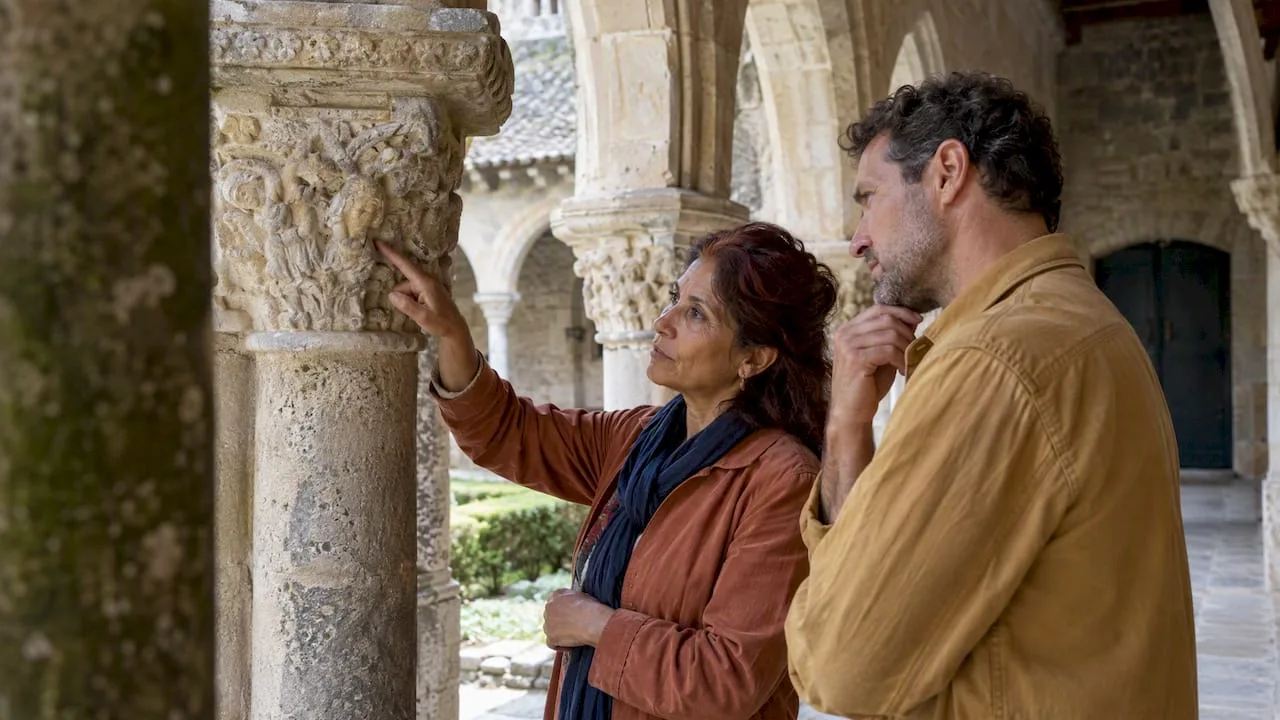
The New York Times describes high-end advisers as consultants and curators who keep direct relationships with local experts. Those relationships make possible things such as private after-hours visits to cultural landmarks that are typically closed to the public.
When you want that kind of experience, there are practical steps:
- Ask who the relationship is with. Access is only as reliable as the person arranging it. Ask whether your adviser works directly with the guide or institution, or through several layers.
- Choose depth over quantity. One site seen properly, with an expert, beats four seen quickly. Pick the landmarks that matter most to you and give each real time.
- Book early for timed and limited entries. Some of the most sought-after sites release a small number of slots, and they sell out well ahead. Our guides to the Last Supper in Milan and the Paris catacombs show how much preparation a single visit can need.
- Pair a landmark with its context. A morning at a monument followed by a meal that reflects the region’s culinary heritage, or an afternoon in a small gallery, turns a sightseeing stop into a story.
If you are choosing where to go, our destination pages cover the cultural highlights of Italy, France, Spain, Egypt, the UAE and Mexico.
Our view: restraint is the real luxury
Luxury is often sold as more: more services, more options, more things to book. We see it the other way around. The best journeys we can imagine have fewer moving parts, because someone has already thought each one through.
That is why we work as a collection of specialist sites, each focused on one area of travel, with a private travel office behind them. It lets us go deep on cultural and historical places, from ticket and pass guidance to private access arrangements, without the noise of generic offers.
We also believe in a single point of contact. Complex plans fall apart when five parties each hold a fragment of the picture. One person who knows the whole itinerary, and who knows you, is what turns a long list of reservations into a calm trip.
Our approach is deliberately personal and restrained. We would rather design a journey of five well-chosen days than a crowded fortnight, and we think discerning travelers feel the difference the moment they arrive.
Sam
What to check when arranging guides, stays and transfers
A beautiful itinerary on paper can still fail on the ground if the practical layer is thin. According to TravelAge West, arrangements should cover details such as guides, accommodation, transfers, activities, emergency contacts and an available on-trip contact. Use that as a checklist, and ask to see each item before you pay.
| Element | What to confirm |
|---|---|
| Guides | Name, specialty, language, and what happens if they are unwell |
| Accommodation | Room type, check-in and check-out times, and any special requests noted |
| Transfers | Who meets you, where, and how the driver reaches you if a flight is late |
| Activities | Start times, duration, meeting point and what is included |
| Emergency contacts | A local number and a home-office number, written down, not only emailed |
| On-trip contact | A named person who answers, and the hours they are reachable |
Two habits make this easier. First, request a single consolidated document with every booking, time and phone number in order of date, so you are not searching across emails. Second, ask what the plan is if a key element falls through. A confident answer names a replacement, not a hope.
Coordination when plans change
Even flawless plans meet delays, strikes, weather and illness. What separates a well-coordinated trip is not that nothing goes wrong, but that the fix happens without you doing the work.
The New York Times describes the central adviser as a strategist and advocate who proactively monitors reservations and manages logistics, resolving problems, rerouting or rebooking in real time so the traveler is shielded from stress. TravelAge West adds that advisors can pivot during travel by relying on on-the-ground partners to rework tours and help with problems.
That suggests a few questions to ask any planner before you commit:
- Who monitors my flights and reservations while I travel?
- Who can I reach, and how fast, if something changes on a Sunday evening?
- Do you have partners at each destination who can rework a day on short notice?
- What is the process if a private visit is cancelled by the venue?
On your side, keep copies of passports and confirmations offline, carry a card that works abroad, and keep the contingency from your budget untouched until you need it.
Work with a private travel office
If you would rather hand the design and coordination to someone, that is what our travel office does. We design tailored journeys around cultural and historical places, arrange private access where it is possible, and stay available as one point of contact while you travel. You can start a conversation about your trip through Noble Voyages.
If you are still deciding on a destination, begin with one of our guides to Italy or Spain, or browse world attractions and landmarks to see where your interests lead.
FAQ
How far ahead should I start planning a luxury trip?
Start as early as you can, especially if your trip includes private access, limited-entry sites or peak-season stays. The best rooms, guides and timed entries are the first to go. Several months ahead is a sensible minimum for a complex itinerary, and longer for a major holiday period.
Is a travel adviser worth it for luxury trip planning?
For complex or high-value trips, an adviser can be worth it because they hold relationships with local experts, monitor your bookings and can rebook in real time if plans change. Whether the value fits depends on how much time you want to spend on logistics. Ask any adviser about their process and on-trip availability before you commit.
How much should I set aside for unexpected costs?
One published guideline suggests holding back 10 to 15% of your total budget as contingency, plus a 5 to 8% margin for currency fluctuations on international trips. Decide in advance what the reserve covers, such as extra nights, private transfers after a delay or replacement activities.
How many destinations should one luxury trip include?
Fewer than most people expect. Choose stops that feel clearly different from one another and leave real time to relax in each. If you are changing hotels more than every three or four nights on a trip of about ten days, consider cutting a stop.
What should I tell a planner so the itinerary fits me?
Share the goal of the trip, who is traveling, your non-negotiables and what would spoil it. Add the personal detail: dietary needs, sleep habits, mobility, preferred room type. The more specific you are, the less the plan relies on generic choices.
Sources
- The Perks and Pitfalls of Planning Ultra-Luxury Travel, TravelAge West
- Smart Luxury Travel Planning for High-End Vacations, Luxury Travel Magazine
- Here’s How One Top Travel Advisor Crafts the Perfect Itinerary, Travel + Leisure
- How the Ultra-Rich Travel, The New York Times