Two Agra Sites,
One Flexible Plan
The Taj Mahal and Agra Fort share a city, not a ticket or a single experience. Give each its own attention, confirm official access separately and keep enough slack for transfers, queues and the day’s conditions.
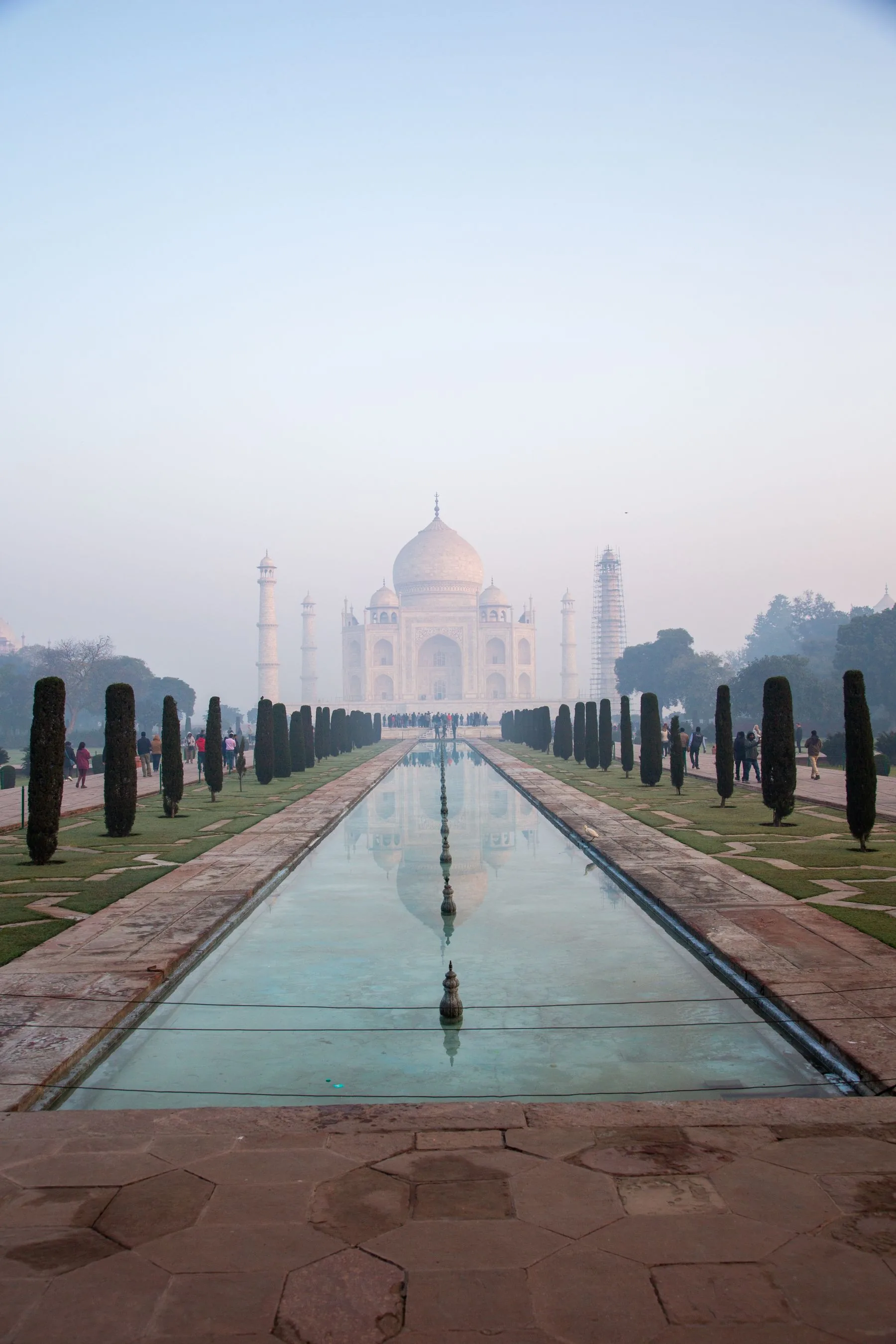
Agra’s most celebrated monuments are often paired in a single travel plan, but the phrase “two sites in one day” can hide the difference between them. The Taj Mahal is a mausoleum and garden complex with its own entry rules; Agra Fort is a vast historic fortification with a different scale, route and admission. Both are UNESCO World Heritage sites, and each deserves time beyond the transfer between gates.
This guide is a flexible framework, not a fixed timetable or transport promise. Site access, travel conditions and queues change. Check the official sources for both monuments and arrange their entry independently: being admitted to one does not include entry to the other. Begin with our Taj Mahal overview and the current visitor information.
Two UNESCO sites with different stories
The Taj Mahal’s carefully composed symmetry, white marble and garden setting encourage a slower, outwardly focused visit. Its defining view unfolds as you approach, while details in stone and inlay become more apparent at close range. The UNESCO World Heritage listing for the Taj Mahal describes its significance and architectural character; our history page offers a visitor-friendly introduction.
Agra Fort invites a different kind of movement. Its monumental walls enclose a layered complex of courtyards, halls and palatial spaces associated with successive periods of Mughal rule. Rather than expecting another version of the Taj’s garden composition, approach the fort as a fortified royal landscape whose scale and sequence are part of the experience. UNESCO lists Agra Fort separately as its own World Heritage property.
It is worth noticing the relationship between the two sites without reducing the fort to a distant-viewing stop. Their histories overlap, but a visit to one does not replace the other. Allocate attention according to your interest and energy rather than trying to fit both into a narrow checklist.
Start with separate entry planning
Confirm each site’s current admission process with its own official authority. The ASI official entry portal is the official entry channel. For the Taj Mahal, consult its ticketing information and visiting rules; the main mausoleum requires an additional ticket, and the monument is closed to general visitors on Fridays. Confirm the current Agra Fort arrangements separately through official sources before travelling.
Do not assume that a tour, transfer or one monument’s ticket covers the other. Review any service’s written inclusions and verify all admissions against the official authority. Queues, gate checks and site rules remain in force regardless of how you move between the monuments. Guides do not replace official tickets or guarantee priority through security.
Build flexibility into the day
- Check that both sites are open to visitors on your chosen date, especially around the Taj Mahal’s Friday closure.
- Arrange and verify each site’s entry separately; do not presume a shared ticket.
- Allow uncommitted time for queues, security, changing transport and rest.
- Choose the order around confirmed access and your priorities, not an assumed transfer duration.
Choose an order that fits your visit
Some travelers want the Taj Mahal to be the emotional centre of the day and prefer to visit it when they have the most energy. Others may plan around the day’s official access conditions, personal mobility or the rest of their travel. The useful principle is not a universal order; it is to confirm the entry requirements first, then leave a realistic margin before making another commitment.
If you place both sites on one day, resist the temptation to prescribe exact blocks of time. The Taj includes gate procedures, queues and open-air movement, while Agra Fort’s scale can make a short walk-through feel incomplete. Take into account weather, companions’ pace, meal breaks and how much of each place you actually want to see. If the schedule begins to feel compressed, consider extending the stay or selecting one site for a more considered visit.
Transport between monuments is not a guaranteed same-day connection with a fixed duration. Traffic, road conditions, pick-up arrangements and waiting time vary. Confirm the specific route and arrangements with your transport provider on your date, and avoid building a tightly timed admission around an optimistic estimate. A flexible itinerary is more useful than an elegant sequence that leaves no room for reality.
A framework, not a timetable
Before travel: check the official access information for both sites, note the Taj Mahal’s Friday closure, and confirm any ticket categories that matter to you. Review the forecast and consider whether heat or rain should change your plans.
At the first site: leave time for entry formalities and spend enough time to understand the setting, not only to capture a familiar view. Keep your next commitment loose until you know how the visit is unfolding.
Between sites: use a transport plan verified for your date, with breathing room for traffic and changes. Take a pause if needed. The second monument should not be reduced to a race against a presumed closing time; confirm current access details before setting out.
At the second site: adjust the visit to the remaining time and your energy. If the day no longer allows a meaningful visit, rescheduling is better than treating either UNESCO site as a box to tick.
Make context part of the plan
Reading a little before arrival helps distinguish the two architectural experiences. Start with our Taj Mahal history guide and compare it with the broader orientation on the monument overview. The UNESCO sources above add formal heritage context. If you want a guide, decide whether interpretation is important to you in our guided or independent visit comparison; for season and comfort, read when to visit the Taj Mahal.
For current practical details, return to visitor information. Our Taj Mahal tours page is a separate overview of guided options, not an official ticket source; inspect provider inclusions carefully. A well-planned Agra day does not depend on squeezing in every possibility. It depends on making clear choices and leaving room for the sites to be experienced on their own terms.
Verify each site before you go
Check official access for both monuments and keep your Agra plan flexible around conditions on the day.
Visitor InformationSources & Verification
Both sites are distinct heritage properties with separate access arrangements. Check dates and requirements with official sources; no fixed transport duration, schedule or shared ticket is promised.
- Taj Mahal official visiting rules, Friday closure and queues
- Taj Mahal official ticketing and mausoleum access
- ASI official entry portal
- UNESCO: Taj Mahal
- UNESCO: Agra Fort
Last Reviewed: 27 September 2026