British Museum Highlights: What to See and How to Plan
The British Museum highlights worth your time: the Rosetta Stone, Egyptian mummies and more, with a 3-hour route, timing tips and a Tower of London pairing.
Published
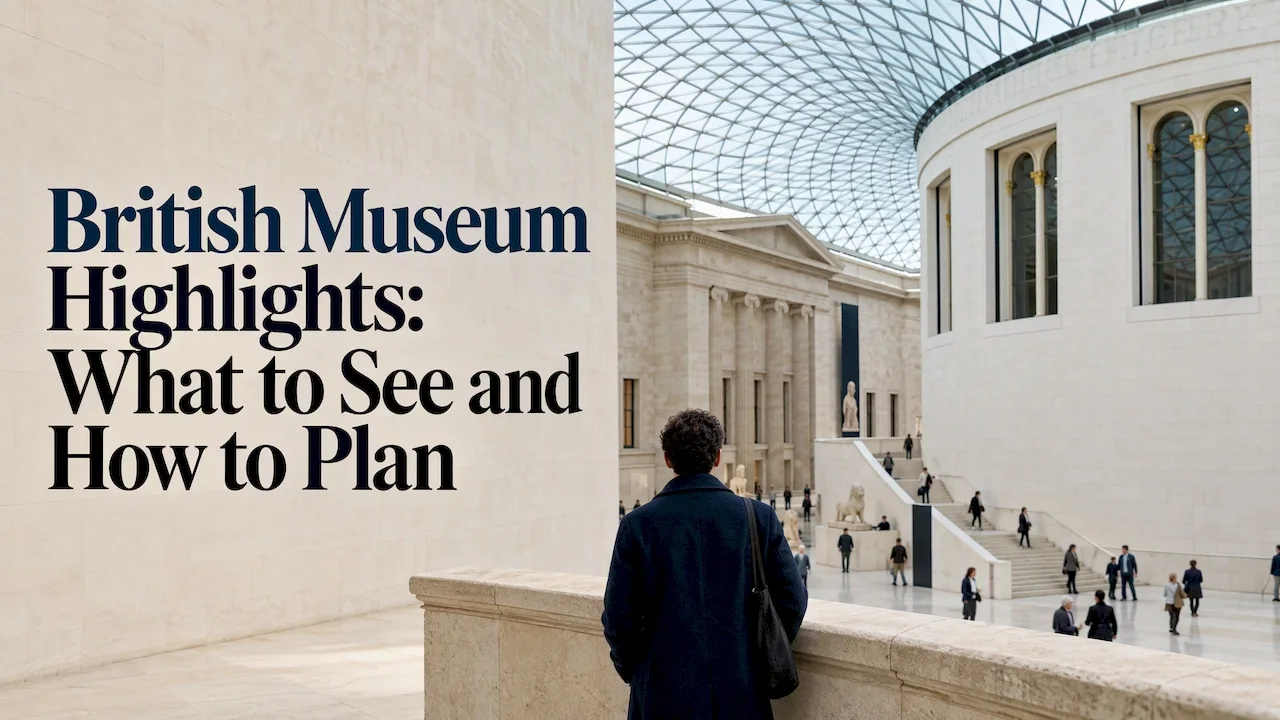
The British Museum holds at least eight million objects, and you will see perhaps one percent of them in a single visit. The highlights worth building a morning around are the Rosetta Stone, the Egyptian mummies, the Parthenon sculptures, the Sutton Hoo helmet and the Lewis Chessmen, plus a few objects that raise hard questions about how museums collect. This guide tells you what each one is, why it matters, and how to fit them into three hours without a wasted corridor.
Key takeaways
- Entry is free, but booking a free timeslot in advance gives you priority entry in busy periods. Walk-ups are admitted subject to capacity.
- Three hours is enough for the major objects if you pick a route and resist the urge to detour. It is not enough to “do” the museum.
- Start with the Rosetta Stone in Room 4, then the Egyptian galleries in Rooms 62 and 63, then choose one further theme.
- On Fridays the museum stays open until 20:30, which is often the calmest time to go.
- Several highlights are disputed. Knowing the argument makes the visit richer, and it is part of the story the museum itself now tells.
How big the British Museum really is
Numbers help set expectations. The museum’s collection fact sheet puts the collection at no fewer than eight million objects, with roughly 80,000 on public display at the Bloomsbury site at any one time. The same document notes that about half of the Bloomsbury site’s floor area given over to storage, counting 194 designated store rooms rather than galleries, is where the rest of the collection sits.
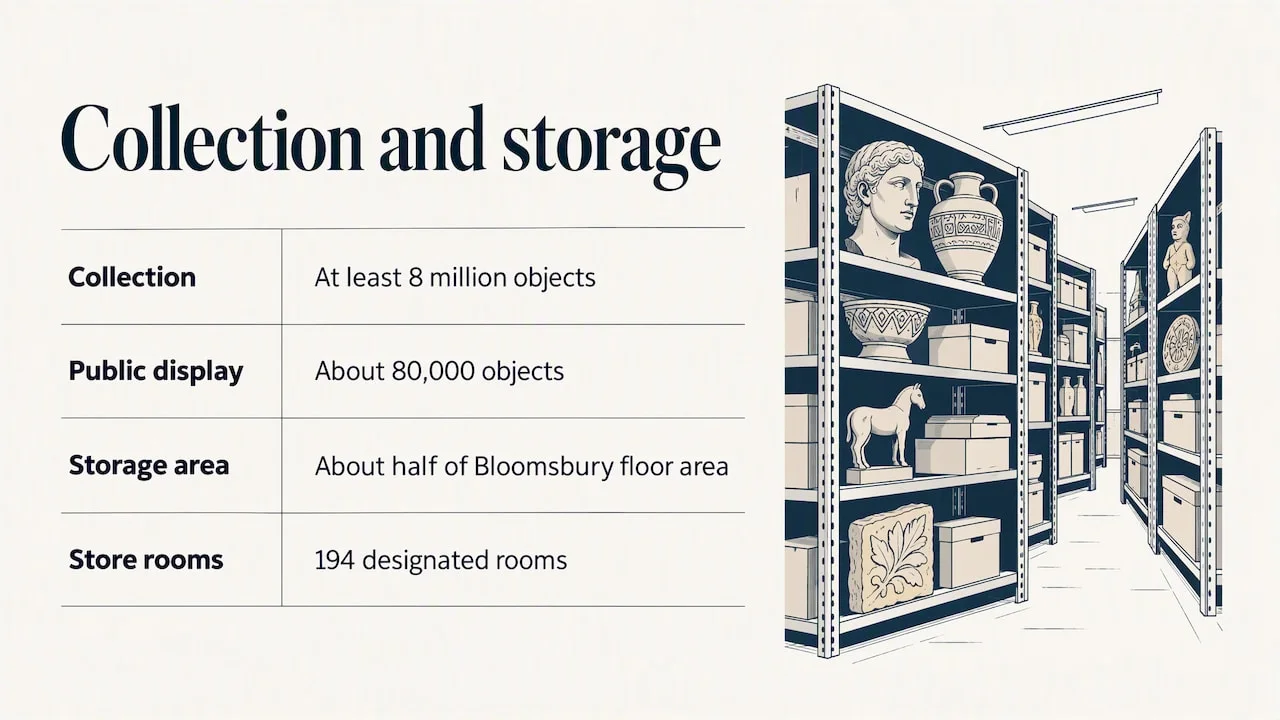
So when someone asks how many artifacts the museum has, the honest answer has two parts: millions in the collection, tens of thousands you can actually walk past. Even 80,000 is far more than anyone can absorb. That is why a short list of highlights, chosen on purpose, beats wandering.
The building is also a maze of rooms numbered across several floors, with galleries arranged by region and era rather than by fame. The famous objects are scattered, and the walk between them is where time disappears. Plan by room number, not by gallery title.
The highlights worth your time
The Rosetta Stone (Room 4)
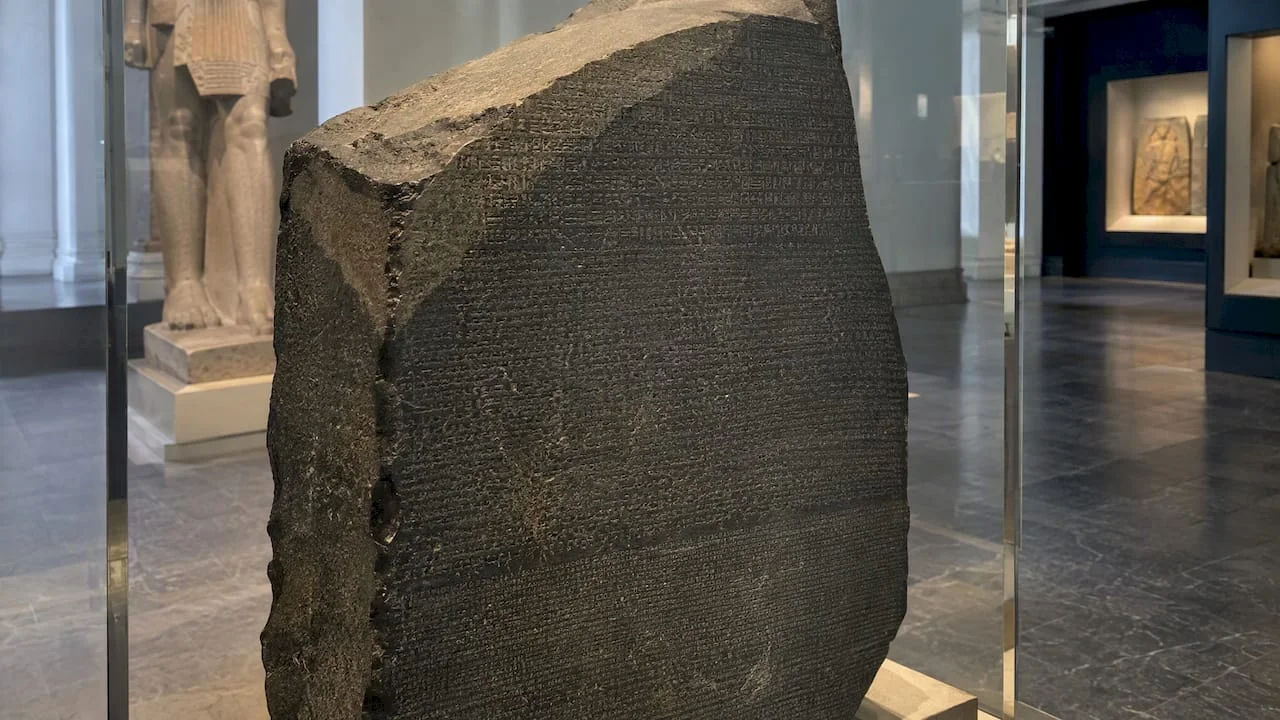
Most visitors head here first, and rightly. The Rosetta Stone is a fragment of an ancient stela, and it became the key that unlocked ancient Egyptian hieroglyphs. It sits in Room 4, close to the main entrance, so you reach it quickly and can see it before the crowds thicken.
It is smaller than people expect, and it is usually surrounded by phones. Stand to one side and look at the surface rather than the crowd: the same text appears in different scripts, and that parallel is what made decipherment possible. If you want context while you look, the museum’s audio app covers the stone and 250 other objects in five languages, according to the same page.
Egyptian mummies and the afterlife (Rooms 62 and 63)
The Egyptian death and afterlife: mummies gallery is in Rooms 62 and 63 on the upper floor and covers roughly 2686 BC to AD 395. It is the gallery most first-time visitors remember afterward.
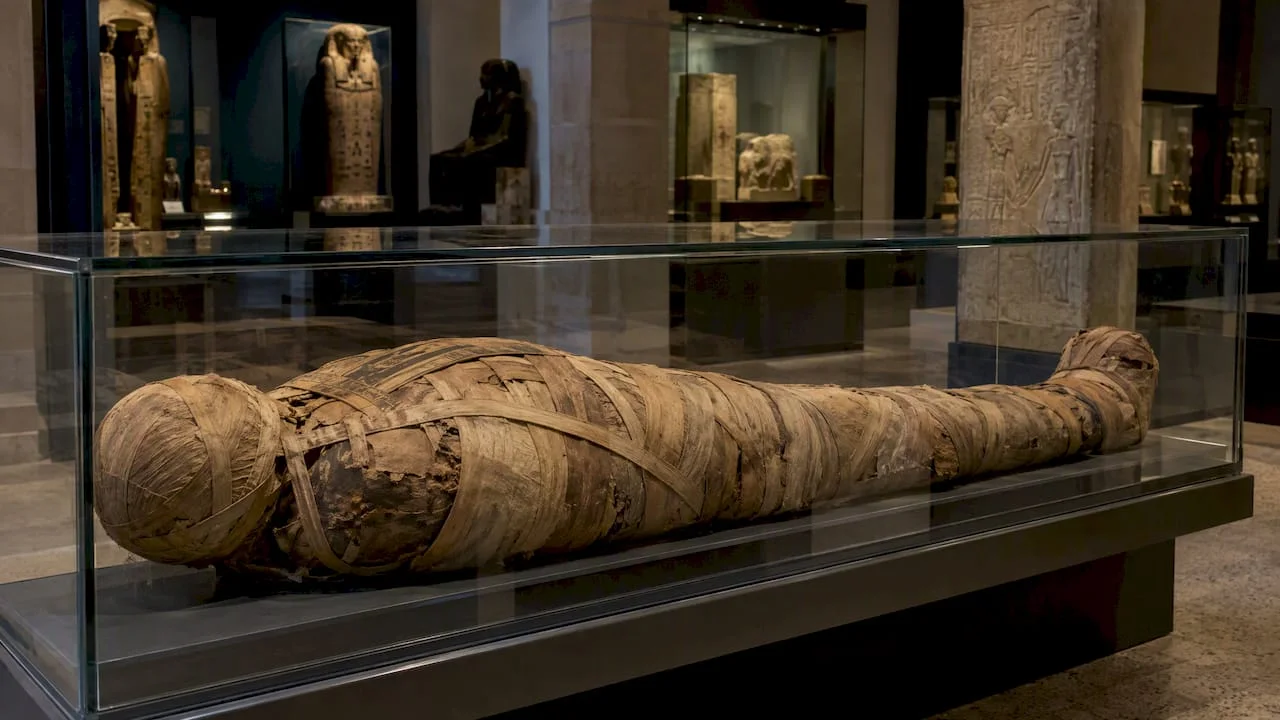
The museum explains that death and the afterlife held particular significance for ancient Egyptians, and the gallery explores mummification, magic and ritual. Its own description of the process is plain and a little startling: most internal organs were removed and preserved in jars, the brain was removed but not preserved, and the body was dried with natural salt, treated with oils and resins, and wrapped in bandages. Read the labels slowly here. This is a room where ten minutes of attention is worth more than forty minutes of walking.
The Parthenon sculptures
The marble sculptures from the Parthenon in Athens are among the museum’s best-known displays, and also its most argued over. They deserve a stop for the sheer scale of the carving and for the way they were designed to be read from below, on a temple high above the city. If you plan to see the monument itself, our guide to Acropolis tickets, official entry or guided visit explains how to approach Athens, and seeing both ends of the story makes each more vivid.
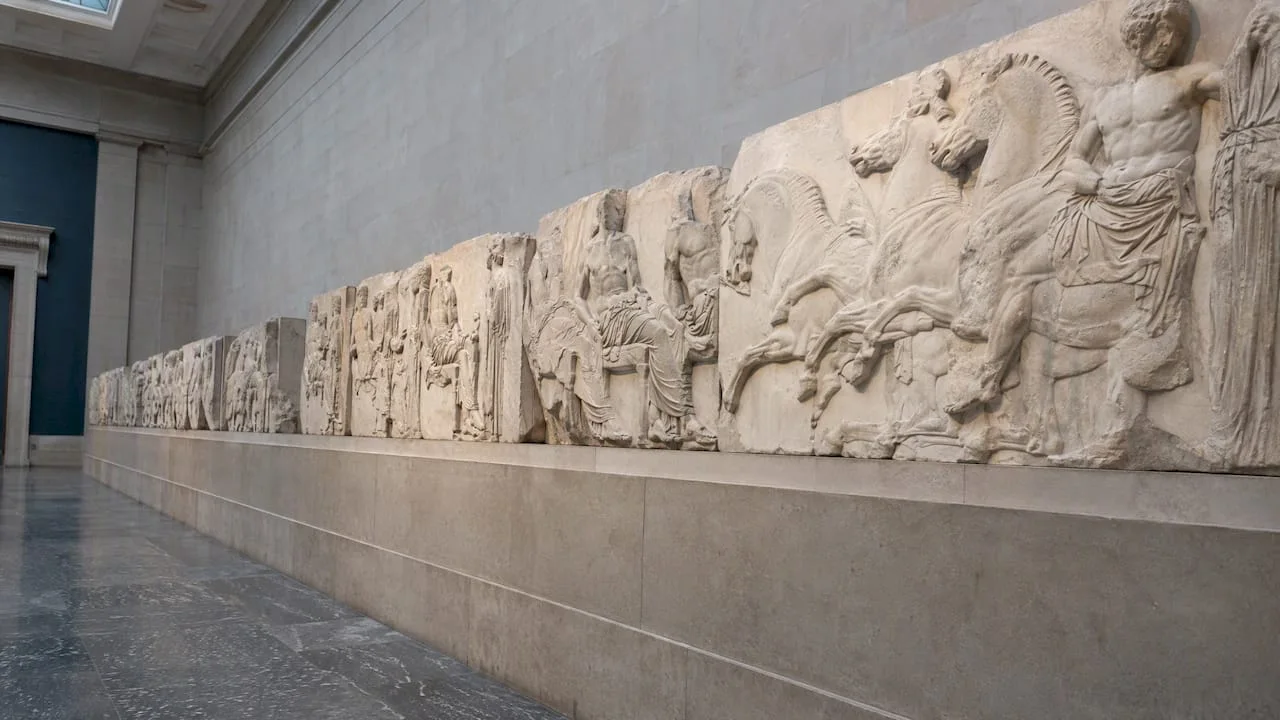
The Sutton Hoo helmet and the Lewis Chessmen
These two give you the British story that the Egyptian and Greek galleries do not. The Sutton Hoo helmet comes from an early medieval ship burial in eastern England, and the Lewis Chessmen are carved gaming pieces found on a Scottish island. Both are small, both are expressive, and both reward a closer look. They often make the shortlist in published British Museum route suggestions alongside the Rosetta Stone, the Parthenon sculptures and the mummies, which gives you a sensible five-object core for a quick visit.
The Assyrian lamassu and the reliefs
If you have time for one more stop, find the colossal winged human-headed guardian figures and the carved palace reliefs from ancient Mesopotamia. They are easy to walk past on the way to somewhere more famous, and they are some of the most impressive objects in the building. Several of the reliefs are tied to the disputes discussed below, so they fit well with a visit that aims to understand how the collection came together.
A three-hour British Museum itinerary
Is three hours enough? For the highlights, yes. The museum’s own three-hour trail through its major galleries is referenced on the Tower of London itinerary page of Historic Royal Palaces, which suggests pairing the two sites. Here is a pacing that works without a trail leaflet.
| Time | What to do | Notes |
|---|---|---|
| 0:00 to 0:10 | Enter, orient in the Great Court, check the map | Do not stop for the shop yet |
| 0:10 to 0:40 | Rosetta Stone, Room 4, then nearby Egyptian sculpture | Audio app if you want commentary |
| 0:40 to 1:30 | Upstairs to Rooms 62 and 63, the mummies | Take your time here |
| 1:30 to 2:15 | Parthenon sculptures, then the Assyrian reliefs | Pick one if you are tired |
| 2:15 to 2:45 | Sutton Hoo helmet and Lewis Chessmen | Small objects, close looking |
| 2:45 to 3:00 | Tea, bench, or the shop | Leave before fatigue sets in |
Three habits improve any route. First, move against the flow: if most visitors turn left, go right, and loop back. Second, choose depth over breadth, since two objects understood properly beat ten photographed. Third, sit down once. The museum has plenty of benches, and a ten-minute pause rescues the last hour.
If you only have ninety minutes, keep the Rosetta Stone, the mummies and one more object. If you have a full day, add the gallery themes that suit you: Greece and Rome, the Middle East, Asia, or the medieval and Enlightenment rooms.
Opening hours, tickets and the best time to go
The museum is generally open daily from 10:00 to 17:00, and later on Fridays, until 20:30, according to its official visit page. Check that page before you travel, since hours change for holidays and special events.
Entry to the permanent collection is free. The museum advises booking a free ticket in advance for a chosen timeslot, which gives you priority entry during busy periods. You can still turn up without one, but admission then depends on capacity. For a visit in school holidays or on a summer weekend, book. Special exhibitions are usually separate ticketed events, so look at the current programme if one interests you.
As for timing, weekday mornings at opening are busiest at the entrance but pleasant once you are inside. Friday evenings are a good alternative if your day is already full, because the late opening spreads visitors out. Weekends and the middle of the day are the hardest.
What is controversial, and why it matters
Anyone searching for the museum’s most controversial objects will find the same names, and it helps to meet them in person with some context. A widely read feature on ten disputed objects lists the Amaravati Marbles from India, the Ashurbanipal reliefs from Iraq, the Akan drum from Ghana, Hoa Hakananai’a from Rapa Nui, the Birdman and Boinayel figures from Jamaica, and objects from the Summer Palace in China.
The same piece quotes an Egyptian Egyptologist who calls the Rosetta Stone a war spoil and says it has never legally left Egypt, and who criticizes the museum’s European colonial perspective in telling its story. That is one viewpoint in a long public debate, and the museum’s own account of the stone’s acquisition is different, so read both.
The wider picture is documented. The New Yorker, in its account of the museum’s recent scandals, notes that the institution has increasingly faced ethical questions about how it amassed its collection, most of which was acquired during Britain’s imperial rule. The museum also describes collaborative work with partners abroad, such as the MOWAA Archaeology Project in Benin City, as a way to improve understanding of historical contexts and exchange knowledge internationally.
You do not need to settle these arguments to benefit from them. Read the labels, ask where an object was made and how it came to London, and let the answer shape what you look at. The visit becomes more than a checklist.
Our perspective: see fewer things, properly
We plan cultural trips for people who care about what they see, and the British Museum is a good test of that. Our view is simple: the museum rewards restraint. Most travelers arrive with a list of twenty objects and leave having glimpsed six, tired and unable to say what any of them meant.
We suggest the opposite. Pick one civilization, one theme or one argument, and let the rest go. If Egypt interests you, spend your time in Rooms 4, 62 and 63 and read everything. If you are curious about contested heritage, choose three disputed objects and follow each one’s history. Then step outside, eat something, and let it settle.
This also changes how you plan a trip. A museum visit sits better beside a site that gives the objects a setting, which is why we like pairing London with a monument day. Our guide to Stonehenge is one example for travelers who want to go from collection to landscape. You can browse more in our world attractions and landmarks section.
— Sami
Pairing the museum with the Tower of London
Many visitors combine the two in one London day, and it works if you accept that each needs about three hours. The Historic Royal Palaces itinerary page is built around exactly that kind of planning.
How timed entry works at the Tower
The Tower sells timed tickets. Historic Royal Palaces says visitor numbers are limited and many dates and timeslots sell out, so it advises booking online in advance to guarantee entry. You can also buy on the day at the ticket office for the next available timeslot, and if a slot is full you are placed in the following one. Once inside, the ticket is valid for one entry with no re-entry, and the Tower recommends at least three hours for the visit.
Tower of London ticket types
The standard categories are adult, child (ages 5 to 15), senior, full-time student and disabled-concession, and children under 5 enter free, per the tickets and prices page. A standard adult ticket costs £38.00 without a donation and £41.80 with one. Prices change, so confirm on the official page before you book.
For a more unusual visit, the Tower has offered an Opening Ceremony experience, which lets you enter before opening, watch the ceremony and skip the admission queue. It is limited to 50 tickets per day, and advance online booking is advised. It runs seasonally, so check the page for the current period.
A practical order: do the British Museum in the morning, when you can book a free slot, and head east to the Tower for an afternoon timed entry. If that feels like too much, split them across two days. Rushing the Crown Jewels is as unsatisfying as rushing the mummies.
Planning help for complex trips
A day in London is easy to plan yourself. A multi-country cultural trip with private access, timed tickets across several sites and a specific theme is harder, and that is where we come in. Our travel design and quiet coordination service puts one point of contact behind the whole itinerary, so the ticketing, sequencing and guides are handled while you concentrate on what you came to see. If Egypt is on your list after meeting the mummies, our Egypt travel page shows how we approach it.
FAQ
What is the best thing to see in the British Museum?
For most first-time visitors it is the Rosetta Stone in Room 4, because it explains how hieroglyphs were deciphered and is close to the entrance. The Egyptian mummies in Rooms 62 and 63 come a close second. If you only see two things, make it those.
Is 3 hours enough for the British Museum?
Yes, for the major highlights, provided you plan a route. The museum has roughly 80,000 objects on display, so three hours covers a fraction of it. Choose four or five objects or one theme, and accept that you will leave things unseen.
How many artifacts are in the British Museum?
The collection holds at least eight million objects, according to the museum’s fact sheet. Around 80,000 are on public display at the Bloomsbury site at any one time. The remainder are stored and studied rather than exhibited.
What are the most controversial items in the British Museum?
The Parthenon sculptures and the Rosetta Stone are the best known, with Hoa Hakananai’a from Rapa Nui, the Amaravati Marbles and the Ashurbanipal reliefs often named too. The disputes concern how and when the objects left their places of origin. Reading current coverage before you visit gives you the strongest context.
Do I need a ticket for the British Museum?
Entry is free, but booking a free timeslot gives priority entry in busy periods. Walk-up visits are possible subject to capacity. Special exhibitions may need a separate paid ticket.
Sources
- Visit | British Museum
- Explore the Rosetta Stone | British Museum
- Egyptian death and afterlife: mummies | British Museum
- British Museum collection fact sheet
- Tower of London itinerary | Historic Royal Palaces
- Tower of London tickets and prices
- Tower of London Opening Ceremony experience
- The True Stories of 10 of the Most Disputed Objects at the British Museum | VICE
- The British Museum’s Blockbuster Scandals | The New Yorker
- MOWAA Archaeology Project: Benin City | British Museum
- British Museum London visit guide | Art Visit Guide