When to Visit
the Taj Mahal
Agra’s seasons shape the comfort, clarity and character of a visit. Think about heat, haze, daylight and the calendar—but treat crowd levels as variable, not something a date or hour can guarantee.
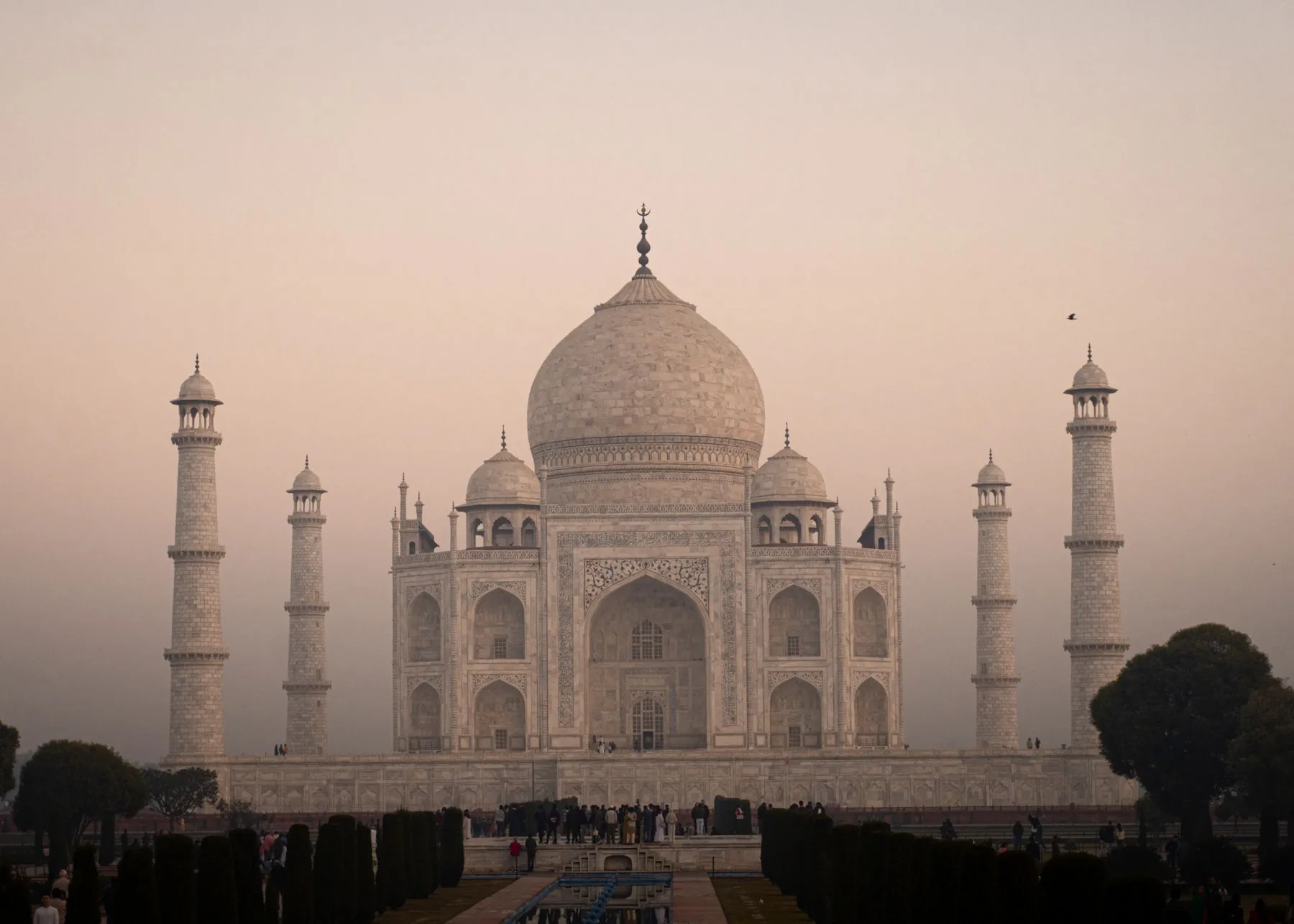
There is no single best day to see the Taj Mahal. Agra’s weather, the quality of the light, your tolerance for heat and the movement of visitors all influence how the complex feels. A good plan starts by deciding what matters most to you, then checking current official access information for the date you can travel.
The seasons offer different trade-offs rather than a dependable formula. Cool-season dates can feel more comfortable for walking, but haze may soften distant views. Hotter periods can mean more demanding conditions and intense sun. The monsoon can bring cloud, rain and changing reflections. None of these conditions can be promised in advance. For a practical starting point, see our Taj Mahal visitor information and site overview.
Cooler months: comfort and possible haze
For many visitors, the cooler part of the year is easier for extended outdoor walking than the hottest season. The complex involves open-air movement through the gardens and courts, with limited shade along parts of the route. Comfortable temperatures may make it easier to take time over the approach, look closely at the marble and pause for the changing views.
Cool-season mornings can also bring atmospheric haze or mist, which may soften the distant edges of the composition and alter the way the white marble reads. Haze is not a guaranteed effect, nor does it always lift on a predictable schedule. If clarity is essential to your photography or view, accept that conditions vary by day and visibility can change during the visit.
Shoulder periods around the cooler season can offer a balance, but a calendar label is not a forecast. Check weather and air-quality information close to travel, and build your expectations around the possibility of clear, hazy or overcast skies.
Hot weather: plan around exposure
Agra’s hotter months can make a long outdoor visit physically demanding. Sun exposure, warm surfaces and the amount of walking matter as much as the temperature shown in a forecast. If you travel during this period, consider your personal heat tolerance, hydration needs and whether companions may need extra rest. Follow site rules on what you can carry, and check current visitor guidance rather than assuming a particular facility is available.
Early or later parts of a day may feel different from the strongest sun, but no particular arrival time guarantees comfort or a short queue. Use the official visiting information for the current access window and entry conditions; do not rely on a fixed schedule copied from an old guide. If heat affects your health, it may be wiser to choose a different season than to force a rushed visit.
Monsoon skies and changing light
Rain and cloud can transform the visual mood of the gardens and marble. Overcast light may reduce harsh contrast, while a break in the clouds can bring reflections and shifting highlights. Rain can also affect comfort, visibility and the practical pace of walking. The monsoon is not a promise of dramatic skies or empty grounds; make room for weather changes and keep a flexible plan for the rest of Agra.
Light changes the monument’s appearance throughout a day as well as across seasons. Warm low-angle light can emphasize relief and fine surface work; brighter light can make the façade feel more graphic and symmetrical. Weather, haze and your viewing angle all mediate the result. Enjoy the actual scene rather than measuring it against an idealized image.
Build a plan with room to adapt
- Choose a season according to comfort, not a promise of perfect visibility.
- Check weather and haze conditions near your date, and prepare for them to change.
- Use the official site for current access rules and Friday closure information.
- Allow time for gate procedures and queues; no arrival time guarantees a quiet visit.
Crowds depend on more than the season
Visitor levels vary with holidays, school breaks, weekends, tour patterns, weather and the flow of people through the site. A day that seems less popular on paper can still have busy periods, and a quieter gate does not guarantee an uncrowded interior or garden. Narrow passages, entry checks and separate queues can shape the pace regardless of when you arrive.
Rather than trying to find a guaranteed low-crowd window, set expectations for sharing the space. Be ready to pause, follow staff instructions and leave a margin in the rest of your itinerary. If photography is important, plan for other visitors to be part of the scene and be considerate of everyone’s experience.
Friday closure and official access
The Taj Mahal is closed to general visitors on Fridays, according to the official visiting hours and rules page. Check the current official schedule for your date before arranging travel; special circumstances and site notices are for the authority to confirm. The same page describes gate rules and separate queues, so allow time for the access process and follow the instructions in effect on arrival.
Ticketing is separate from questions of season and light. The official ticketing information notes that access to the main mausoleum requires an additional ticket. Check the official entry portal and the monument’s current guidance directly. For a deeper context on what you will see, explore our history article.
Make the visit worthwhile in any season
Think about what you hope to notice: the frontal composition, changing light across the marble, the relationship between garden and tomb, or the history behind the design. A misty morning and a sharply clear afternoon are different experiences, not a ranking of success and failure. Bring suitable clothing for the forecast, leave enough time for checks, and keep the rest of your day adaptable.
For an interpretation-focused visit, read our guide-versus-independent comparison. If you are planning further than the monument, the Agra itinerary guide considers how to combine it with the separate Agra Fort visit. For practical current arrangements, return to visitor information; our Taj Mahal tours page addresses guided options separately and is not a substitute for official entry details.
Check conditions close to travel
Confirm official access and Friday closure, then match your plan to the season and forecast.
Visitor InformationSources & Verification
Seasonal conditions and visitor levels vary. This article makes no promises about crowds, fixed hours or weather; verify current access arrangements before travel.
- Official visiting hours, Friday closure, gate rules and queues
- Official ticketing and main mausoleum information
- ASI official entry portal
- UNESCO World Heritage listing
Last Reviewed: 27 September 2026