Best Time to Visit Angkor Wat:
Weather, Crowds & Sunrise
Navigating the demands of the Cambodian climate and the rhythms of international visitation to find the most evocative moments among the ancient temples.
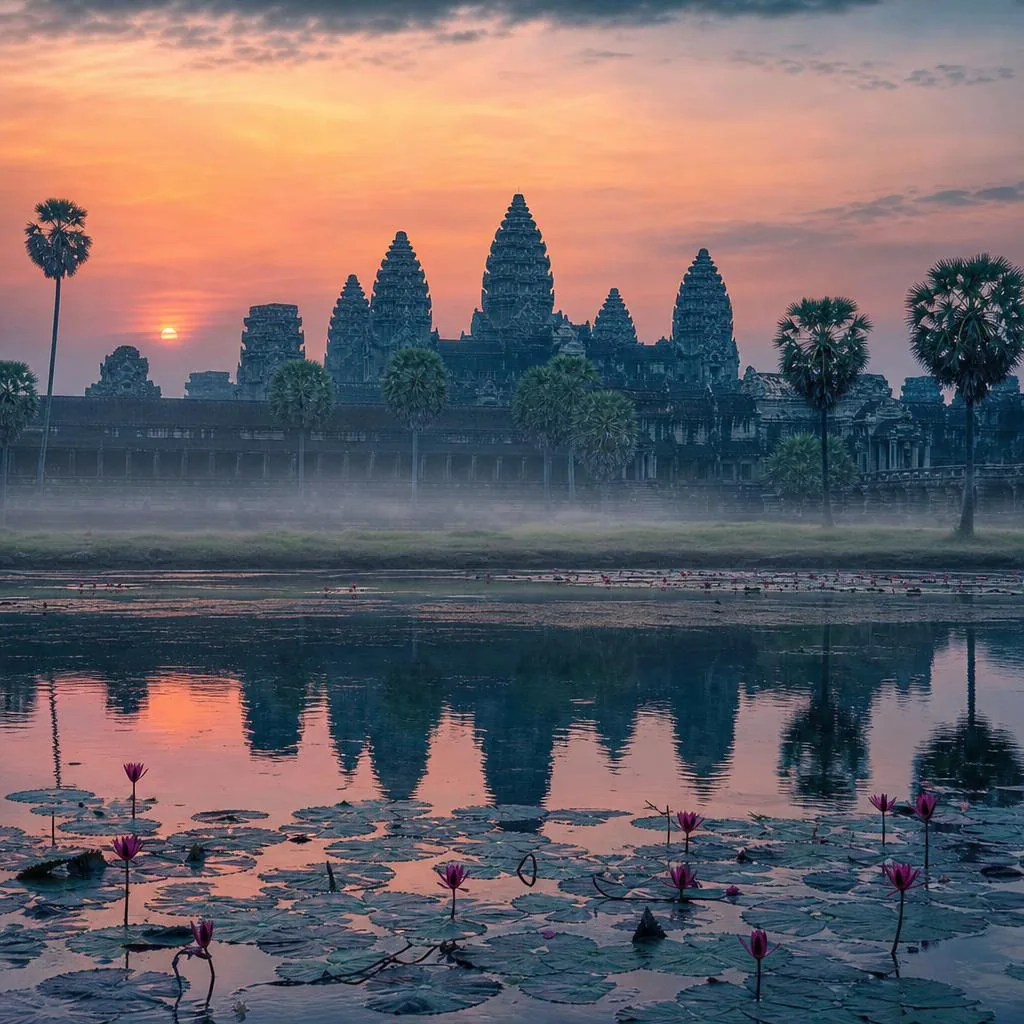
Experiencing the Angkor Archaeological Park is a profoundly physical endeavour. Your impression of the ancient Khmer capital will be inextricably linked to the heat of the stone, the density of the surrounding jungle, and the volume of other travellers navigating the narrow corridors alongside you. Choosing when to visit requires a careful negotiation of these elements.
There is no singular, perfect moment that guarantees absolute solitude and flawless weather. Instead, the "best" time depends entirely on which compromises you are most willing to accept: the higher humidity of the wet season, the intense heat of April, or the heavy footfall of the winter months.
Seasonal Patterns: Dry, Hot, and Wet
Cambodia’s climate dictates the tenor of exploration. Understanding the three distinct phases of the year is the first step in planning.
The Cool and Dry Season (November to February)
This period offers the most forgiving weather, with lower humidity and slightly cooler ambient temperatures. Consequently, it is undeniably the peak season for international visitation. The major temples on the Small Circuit will be dense with groups, and securing unhindered photographs requires patience. The tradeoff for comfortable weather is sharing the space with the maximum number of people.
The Hot Season (March to May)
Temperatures in these months can climb to severe levels, radiating fiercely off the massive laterite and sandstone blocks. Exploring during the middle of the day becomes an exercise in endurance rather than appreciation. However, the intense heat deters many, meaning those willing to rise extraordinarily early or endure the late afternoon sun may find the temples significantly quieter.
The Green Season (June to October)
Often dismissed simply as the "wet season," these months offer a radically different aesthetic. The surrounding moats fill, the forest canopy turns a brilliant, saturated green, and the lichen on the stones thrives. Rain generally arrives in heavy, predictable afternoon downpours rather than day-long drizzle. For those equipped with waterproof gear and a flexible multi-day pass, the diminished crowds and atmospheric skies make this a deeply rewarding time to visit.
The Daily Rhythm: Managing Time
Regardless of the month, structuring your day intelligently is paramount to preserving your energy.
The standard, and highly advised, approach is to bisect the day. Begin in the pre-dawn darkness to catch the morning light, explore until the heat becomes oppressive by late morning, and retreat to Siem Reap for rest and shade. Return to the park as the light softens and temperatures marginally dip in the late afternoon. Attempting an unbroken eight-hour shift among the ruins often leads to exhaustion and temple fatigue.
The Reality of Sunrise
The image of the sun cresting the lotus towers of Angkor Wat, reflecting perfectly in the northern library pool, is one of the most coveted photographs in global travel. It is a spectacular visual moment, but one that is inherently communal.
If you choose to participate, manage your expectations regarding solitude. You will be sharing the darkness with hundreds, sometimes thousands, of others. Arrive early, secure a position, and observe. Once the sun breaks and the immediate spectacle concludes, the vast majority of visitors depart for breakfast. Remaining at the main temple during this brief window often provides a surprisingly quiet hour to explore the central bas-relief galleries.
It is also worth noting that sunrise is not strictly confined to Angkor Wat. Watching the morning light illuminate the massive faces of the Bayon or the encroaching roots of Ta Prohm offers a different, often calmer, atmosphere.
A Note on Official Hours
Opening hours for specific temples—particularly early access for sunrise at Angkor Wat and late access for sunset at sites like Phnom Bakheng—are strictly regulated by the APSARA National Authority and can change. Always verify the current permitted access times with your accommodation or directly through official channels before setting your alarm.
Making the Decision
If prioritising comfortable weather is paramount, target the dry winter months and accept the accompanying crowds. If you seek atmosphere, lower numbers, and lush photography, the green season provides a magnificent, if humid, alternative. Ultimately, a flexible approach to the daily schedule and the right duration of entry pass are your best tools for capturing the haunting beauty of the Khmer empire's legacy.
Prepare for Your Visit
Once you have determined the optimal season for your travel style, review the official access requirements to secure your entry to the park.
Sources & Verification
This planning guidance is constructed to provide an atmospheric and meteorological overview of the region. Specific sunrise times, exact temperatures, and rigid daily schedules are excluded to maintain utility regardless of minor annual variations.
Last Reviewed: 22 September 2026