Luggage Forwarding: Japan Rules, Timing, and What Not to Pack
Learn how luggage forwarding works, compare airport and hotel options, plan delivery timing, avoid restricted items, and follow Japan's rules.
Published
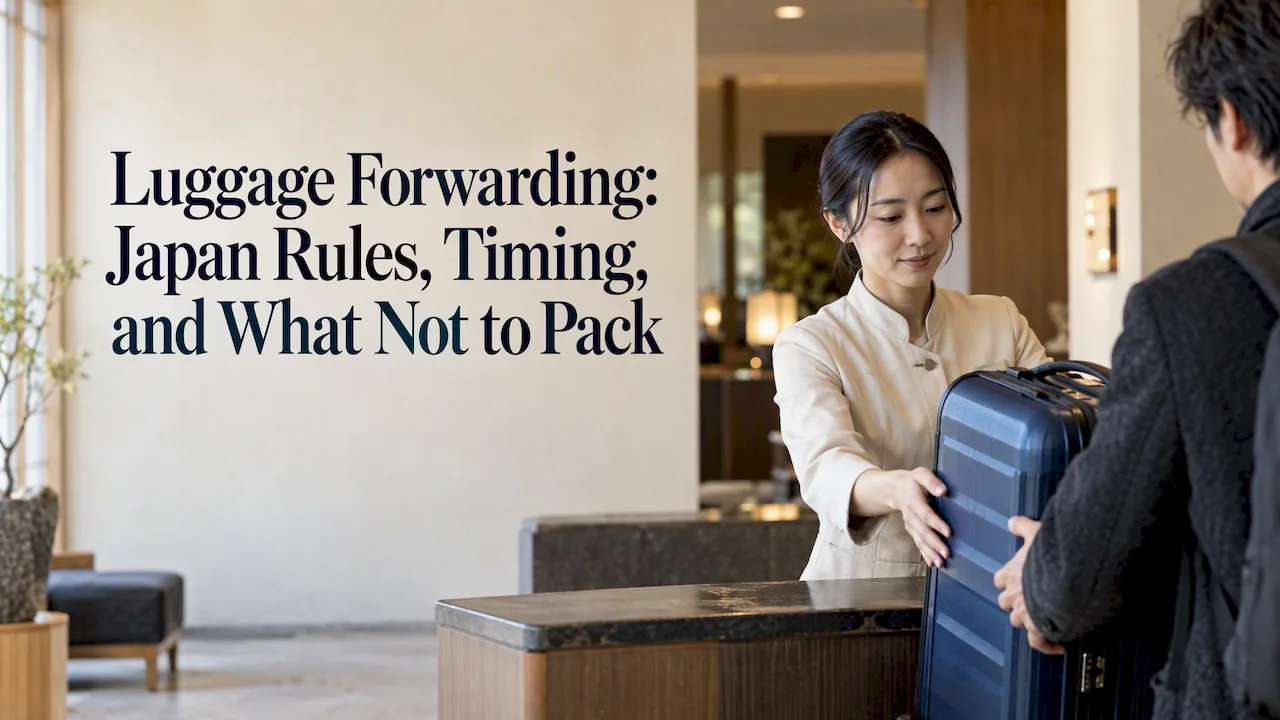
Luggage forwarding delivers your checked bags between airports, hotels, and addresses so you can travel hands-free. It covers airport-to-hotel runs, hotel-to-hotel moves, and bags sent ahead of your arrival, and it can sidestep airline transfer problems on mixed-carrier itineraries. Delivery can be same-day on a few select routes, while longer or international routes may take longer.
Key Takeaways
Luggage forwarding offers a convenient, time-saving service that transports checked bags between various locations, making travel easier and reducing transfer risks.
| Point | Details |
|---|---|
| Different forwarding options | Choose from airport-to-hotel, hotel-to-hotel, door-to-door, or counter-to-counter services based on your itinerary and destination. |
| Plan ahead with buffers | Send your bags early according to carrier cut-offs and add a buffer day to prevent delays and ensure timely arrival. |
| Understand cost factors | Pricing depends on size, route, speed, and pickup or delivery points; confirm possible extra charges like customs or remote-area fees. |
| Secure valuables and documentation | Keep essential items in your carry-on and photograph your luggage and labels to prevent loss or mishandling. |
| Noble Voyages offers travel coordination | We can integrate luggage logistics into your travel plan, ensuring seamless handling and peace of mind. |
How does a luggage forwarding service work?
Every forwarding job follows the same arc: someone takes your bag, it moves through a carrier’s network, and someone signs for it at the other end. What differs is who handles each handoff.
In a door-to-door flow, a driver collects the bag from your home or hotel and delivers it to a named address. In a counter-to-counter flow, you drop the bag at an airport desk or hotel front desk, and it is collected from a matching desk at the destination. In some countries, a convenience-store drop-off is also possible for the outbound leg. The receiving party matters: a hotel clerk, an airport counter agent, or a resident who signs for the package.
Most shipments pass through the same milestones:
- Pickup or drop-off confirmation: you get a receipt and a tracking number.
- Hub scan: the bag is logged at a sorting facility while in transit.
- Customs clearance: only for international shipments, where the bag may be opened for inspection.
- Delivery attempt: the carrier tries the address or hands the bag to the receiving desk.
- Delivery confirmation: a signature or scan closes the job.
Forwarding is also a practical fix when an itinerary has separate tickets or carriers with no interline agreement, because your bag never enters the airline’s transfer system. You collect nothing at a connecting airport and recheck nothing. The trade is that you must plan the timing yourself, which the next sections cover.
Which luggage forwarding options fit your route?
The right service type depends on where your bag starts, where it ends, and who can legally and practically receive it.
- Airport-to-hotel: your bag goes from an arrival or departure counter to your lodging, or the reverse.
- Hotel-to-hotel: useful on multi-stop trips where you want to move between cities with only a daypack.
- Door-to-door: pickup at a residence or office and delivery to another address, including a home address at the end of the trip.
- Counter-to-counter: drop-off at a staffed desk and collection at another desk, common near airports and rail hubs.
- Same-day versus scheduled: same-day exists only on limited routes, while scheduled service runs on published transit days.
Coverage is the part travelers underestimate. Not every airport has a forwarding counter, and plenty of small hotels, guesthouses, and vacation rentals will not accept incoming luggage. Some services use partner counters or convenience stores as drop-off points, which widens outbound options but does not guarantee the delivery end will cooperate. Always confirm that the receiving property has agreed to hold the bag before you ship it.
Regional norms differ sharply. Japan is the clearest example: its airports and many hotels run staffed delivery counters, and the Japan National Tourism Organization describes hands-free travel counters that offer delivery services, limited same-day routes, and multi-lingual support. In many other markets, forwarding is an app-booked courier service with no counter network, so coverage depends more on the provider’s partners than on infrastructure at the airport.
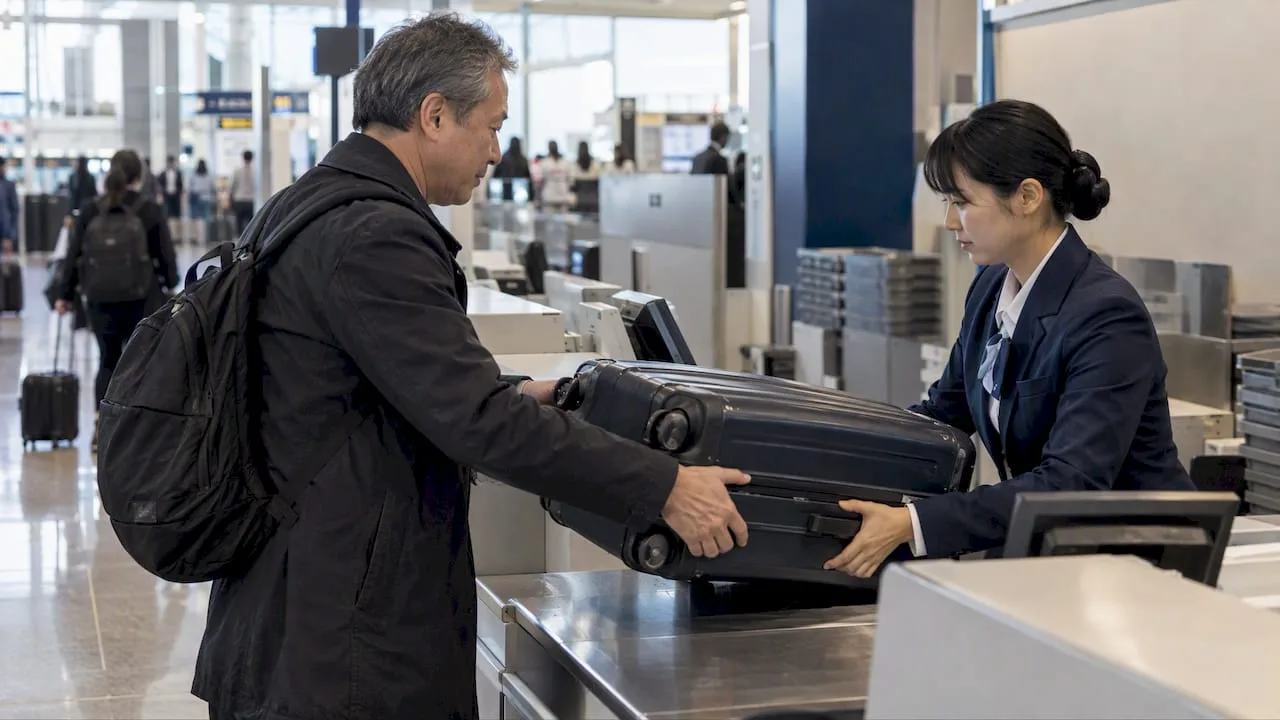
How early should you send your bags?
Two clocks govern every shipment, and travelers often track only one. Transit time is the number of days a bag spends moving. The cut-off is the daily deadline for handing it over so it counts as that day’s pickup. Miss the cut-off by an hour and your transit clock starts tomorrow.
Use these rules of thumb to build a buffer:
- Hotel-to-hotel: check the carrier’s cut-off times and send the bag early enough for the route. Longer routes may need more lead time.
- Airport departure counters: on some routes the bag must reach the counter well before your flight, so confirm the cut-off before planning a drop on departure day.
- Same-day service: treat it as an exception. It exists on select routes only and usually requires an early cut-off, so confirm both before you count on it.
- Add a spare day: a practical planning note from Navitime’s Japan travel guide says Yamato typically asks that hotel-bound bags be sent two days before check-in, and three for longer distances, which is why a buffer day prevents arriving without your gear.
If plans change after you ship, contact the carrier right away with your tracking number and the new delivery details. Redirects are easiest before the bag reaches the destination hub. Keep a change of clothes and toiletries in your carry-on in case the bag is delayed.
What does luggage forwarding cost?
Prices vary too widely to quote one number, so focus on what drives the quote and what gets added later.
The main pricing factors:
- Size and weight: heavier and bulkier bags cost more, and many carriers set hard limits.
- Route: domestic moves cost less than international ones, which add customs handling.
- Speed: same-day and express options carry a premium over economy service.
- Pickup and delivery points: a hotel desk is usually cheaper than a residential doorstep, and remote addresses cost more.
Extra charges to confirm before you pay:
- Airport counter fees
- Customs brokerage on international shipments
- Remote-area surcharges
- Oversized or overweight fees
Declared value deserves a close look. Many providers include a baseline level of protection and sell higher coverage for an added fee. One provider’s help center explains value protection and notes that complimentary levels are commonly around $500, with on-time guarantees often excluding delays caused by customs or traveler error.
Check the exclusions, not just the headline coverage: a guarantee that sounds airtight usually carves out customs holds, wrong labels, and anything outside the carrier’s control.
Ask for the carrier’s liability limit in writing before you book, and compare it with what is actually in your bag.
How do you book a luggage forwarding shipment?
Booking takes a few minutes if you have the right details on hand.
- Choose the pickup type: hotel, airport, counter, or residence.
- Enter the delivery address: include the property name, a contact name, and a phone number the carrier can reach.
- Add flight details: if the bag is tied to an arrival or departure, give the flight number and time.
- Pick the delivery date: work backward from the cut-off and your buffer day.
- Label the bag: attach the shipping label, and for soft-sided bags put a duplicate label inside, since external labels can be torn off during handling.
- Keep your paperwork: hold on to the drop-off receipt and tracking number until the bag is back in your hands.
- Monitor tracking: watch for the hub scan and delivery attempt, and contact the carrier early if a milestone stalls.
If the schedule shifts, change delivery details through the provider rather than the receiving hotel, so the carrier’s record matches reality. When a problem needs escalation, go to the provider first with your tracking number and receipt, and keep every message for any later claim. For larger or international shipments, documentation matters more: the Federal Maritime Commission advises getting receipts that identify the carrier and asking providers whether they handle customs services and what they charge.
What should you never put in forwarded luggage?
Forwarding is built for clothes and gear, not for anything you cannot replace. The U.S. Department of Transportation says critical items such as prescription medicine, travel vouchers, and business papers should stay in your carry-on, since forwarding and third-party insurance often exclude essentials and carry limited liability.
Keep with you:
- Prescription and over-the-counter medication
- Passports, tickets, and other travel documents
- Jewelry, cash, laptops, and other valuables
- Anything you would be stuck without if your bag is delayed
Liability works the same way across most providers: a modest complimentary baseline, an option to buy more, and a cap on what the carrier will pay. Read the limit, compare it with the value of your contents, and buy extra coverage if the gap is real.
Packing habits that prevent trouble:
- Do not lock the bag on international shipments, because customs may need to inspect it.
- Put an internal label in a pocket or inside a soft bag, in case the outer tag is torn off.
- Remove old airline tags so scanners and drivers are not confused.
- Photograph the bag and its contents before sealing it.
Pro Tip: Take a photo of the packed bag, the label, and your receipt together, so one image proves what you sent, when, and under which tracking number.
International shipments add a customs layer. Japan’s customs guidance, for instance, explains that unaccompanied baggage requires declaration forms, and pre-registering through Visit Japan Web can smooth arrival procedures.
How does luggage forwarding work in Japan?
Japan is the model many travelers point to, because delivery is built into everyday infrastructure. You can hand a suitcase to delivery companies at staffed hotel front desks, airport counters, and some convenience stores, and ordinary forwarding typically takes a day or two.
- Hotel handoffs: front desks pass bags to the carrier, and some providers ask for the bag two days before check-in.
- Airport counters: arrival and departure desks accept bags for next-day delivery.
- Same-day options: these exist only on limited routes, so check availability first.
- Receiving rules: incoming bags generally cannot be left at convenience stores for pickup, according to Afar’s shipping guide. The receiving point must be a transport branch, a hotel that accepts pre-authorized packages, or a residence.
Counter and store locations make the outbound leg easy, but the inbound leg depends on your hotel saying yes. Confirm acceptance before you send anything.
What should your luggage forwarding checklist include?
Run through this list before and after every shipment:
- Keep medication, documents, and valuables in your carry-on.
- Photograph the bag, its contents, and the label.
- Confirm in writing that the receiving hotel will accept the bag and note its cut-off time.
- Save the receipt and tracking number until delivery is confirmed.
- Pack essentials in your carry-on in case your bag is delayed.
For last-minute changes, call or message the carrier with your tracking number and the new delivery details, and use same-day service only where it is actually offered.
If a bag arrives late or damaged, contact the carrier first, before the hotel or your insurer. Keep every receipt, photo, and message, and file the claim promptly, because many providers set short claim windows.
When is forwarding worth the money?
My view: forwarding earns its fee on multi-stop itineraries, on trips where easy movement matters more than saving a few dollars, and on routes where airline transfers are risky. You trade cost and some liability limits for time and freedom, and that is a fair deal when your schedule is tight. It also works best when planned with the rest of the trip, not bolted on at the airport.
— Sami
How can we coordinate luggage forwarding for your trip?
Our work at Noble Voyages is travel design and quiet coordination, and luggage logistics sit comfortably inside that. We can arrange the pieces that trip you up when you book alone:
- Travel logistics considered as part of your itinerary
- Planning around your itinerary’s accommodation details
- Coordination around your flights and check-ins
You get one point of contact who watches the details so you do not have to. If you want your bags handled as part of a carefully built itinerary, contact us at Noble Voyages and tell us where you are headed.

FAQ
How can you send luggage for cheap?
Choose economy service over express, ship between hotel desks or counters instead of to a doorstep, and keep the bag light. Send it early enough that you do not need same-day delivery, which carries a premium.
What should you look for in a luggage forwarding provider?
Look for clear liability limits, tracking with milestone updates, confirmed pickup and delivery points, and a stated process for claims. Ask what the on-time guarantee excludes, since delays from customs or labeling errors are often carved out.
Is luggage forwarding reliable in Japan?
Japan’s counter network and available same-day options make it one of the smoother systems to use. The Japan National Tourism Organization notes compensation schemes for damaged or lost items, but you still need to confirm that your hotel will accept the bag.
Can you lock your suitcase when shipping internationally?
No, leave it unlocked. Customs may need to inspect the contents, and a locked bag can be delayed or opened by force.