Karnak and
Luxor Temple
Two major temples anchor Luxor’s East Bank, but seeing both is best approached as a day with breathing room—not a race between monuments or a single assumed admission.
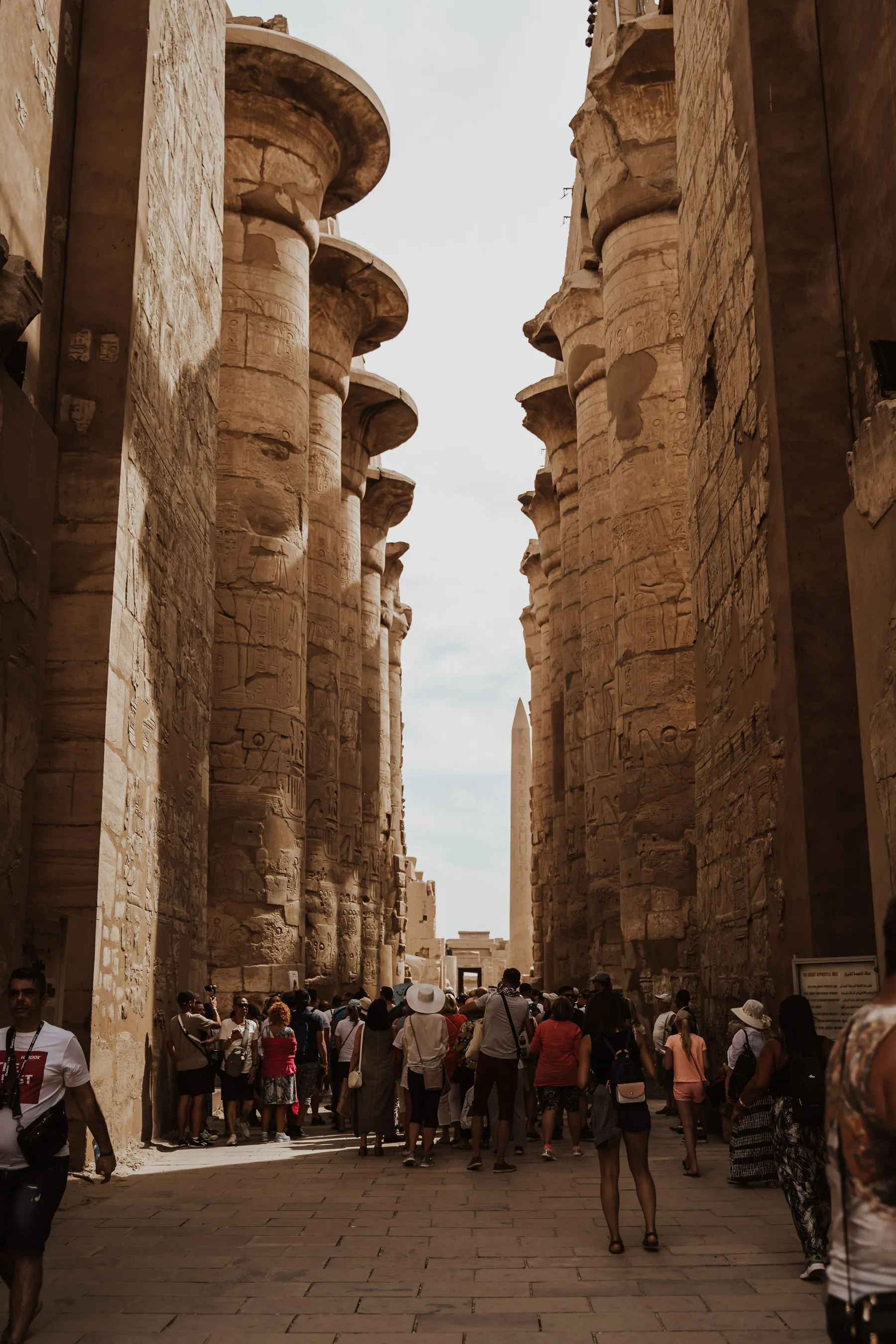
Karnak and Luxor Temple are both part of Ancient Thebes, the UNESCO-listed World Heritage property, and together make a compelling East Bank day. Their scale and detail deserve time. This itinerary is deliberately flexible: the order, transport and time spent at each place can adapt to heat, access conditions and your energy.
Karnak is a broad complex centred on the precinct of Amun, with the 134-column Hypostyle Hall among its best-known spaces. Luxor Temple has its own distinct setting within the modern city. They are separate visits, and this route does not assume shared admission, a fixed walking time or a particular means of getting between them.
Start with the larger landscape at Karnak
Give Karnak the first substantial part of the day if you want to experience its broad ceremonial setting and linger in the Hypostyle Hall. Begin by taking in the approach and monumental gateways, then let the route through the complex unfold at an unhurried pace. There is more to notice than any short checklist can capture, from the contrast between open courts and dense colonnades to carved surfaces that invite a closer look.
It is an outdoor site with considerable walking, so check the local forecast and pace the visit for the conditions. Make room for water and rest breaks, particularly in warm weather. A guide can offer a connected interpretation; independent visitors may prefer to read a little beforehand and pause where they wish. Our guide-versus-independent comparison explores those different approaches.
Pause before the second temple
After Karnak, take a real break rather than treating the transfer as an automatic continuation. Sit down, have a meal away from the monument, or return to your accommodation if the day’s heat or walking calls for it. The length of this pause can be short or substantial; it is what makes the rest of the plan adjustable rather than exhausting.
The two temples are on Luxor’s East Bank, but the actual route between your starting and ending points depends on where you are, which streets are accessible and how you choose to travel. Check a current map or local transport advice on the day. Walking, a vehicle or another local option will suit different visitors; no fixed distance or transfer duration is necessary to plan a comfortable outing.
Visit Luxor Temple on its own terms
Luxor Temple makes a natural second stop, but it is not simply an extension of the Karnak grounds. Allow yourself to arrive with enough energy to look around, and check its own current access and admission conditions before you go. The city setting gives the temple a different relationship with its surroundings, making a slower contrast with Karnak more rewarding than trying to visit every space at speed.
The UNESCO record describes Ancient Thebes as including both Karnak and Luxor among a much wider collection of monuments. Keep that broader context in mind without trying to fit the entire World Heritage property into one day. A focused East Bank pairing can be enough.
Three ways to pace the day
- Unhurried: focus on Karnak, take a long pause, then visit Luxor Temple if you still have energy.
- Balanced: give each temple a considered visit with a proper rest and flexible transfer between them.
- Low-key: choose one temple as the main visit and keep the second as an option rather than a commitment.
Treat admission as separate planning
Confirm the official admission arrangements for each site independently. The government’s Karnak page lists Mut Temple separately and describes Open Museum terms by ticket category; do not assume every area is included by default. A tour or transport arrangement should not be assumed to include admission unless its own terms say so. The official e-ticket FAQ also notes that tickets are non-refundable, so check details before purchase.
Current Karnak e-ticket information is available through EgyMonuments. The official FAQ also identifies the Experience Egypt app and on-site purchase. See our official Karnak admission information for links to those resources, and check official information for Luxor Temple separately. For practical details, use our Karnak visitor information and history guide.
Stay flexible through the day
Start early or later according to current access information and how you handle the climate; this itinerary intentionally gives no fixed hours. Revisit your plan if the weather, crowds or your energy differ from expectations. Leaving one temple for another day is a sensible choice, not a failed itinerary.
Begin with our Karnak overview and use the seasonal planning guide to think through comfort. These pages are independent editorial guidance; official sources remain the authority for current admission, conditions and access.
Prepare before your East Bank day
Check current official admission information for Karnak, then give both temple visits room to change with the day.
Sources & Verification
This itinerary is a flexible suggestion, not a timed route. Distances, transfer method and duration depend on your precise route and conditions. Karnak and Luxor Temple should be treated as separate visits, with each site’s current admission and access terms confirmed independently.
- Karnak — Egyptian Ministry of Tourism and Antiquities
- Karnak Temple — EgyMonuments
- Official Karnak date selection
- Official e-ticket FAQ
- Ancient Thebes with its Necropolis — UNESCO World Heritage Centre
Last Reviewed: 27 September 2026