Cultural Festival Calendar 2026: Heritage Dates and Planning
A 2026 cultural and heritage festival calendar with dates from official sources, what each festival celebrates, and how to plan access and timing.
Published
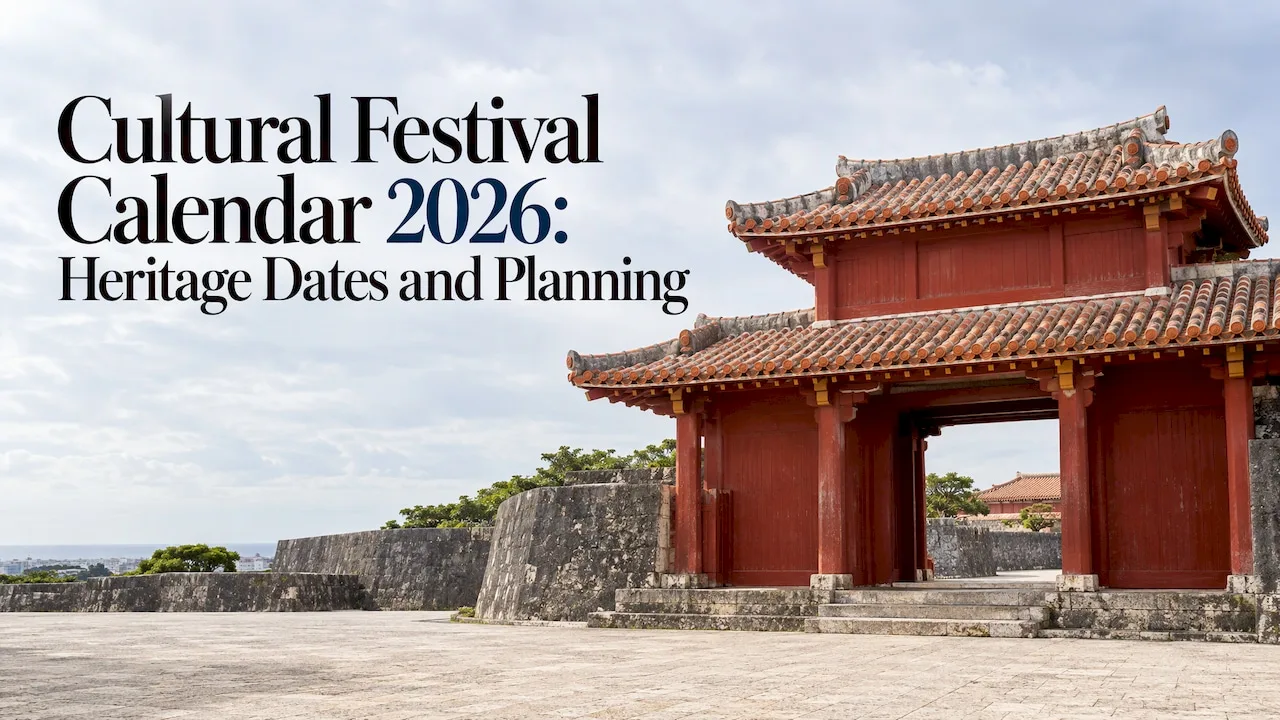
The best cultural festivals of 2026 are the ones tied to a place with real history: a royal tomb, a castle, a village, a Georgian town. This calendar gathers festivals with dates published by organisers and tourism bodies, explains what each one commemorates, and shows how to turn a date on a list into a trip that works. Most of these festivals recur every year, so treat the 2026 dates as the pattern and confirm the next edition on the organiser’s page.
Key Takeaways
- A festival worth travelling for combines a date, a place and access: the 2026 editions in Korea, New Zealand, Japan and Northern Ireland all pair programs with guided or behind-the-scenes entry to historic sites.
- Only a small share of published festival dates are confirmed by organisers. One 2026 agenda counts 2 confirmed editions out of 264, with the rest calculated from each festival’s usual pattern.
- Fixed-rule festivals such as carnivals and Oktoberfest are predictable. Local-community festivals can shift by days, so book refundable arrangements until the organiser publishes its program.
- Complex multi-city festival trips depend on coordination: tickets, guided access, transfers and rooms all have to land in the same week.
Why a Festival Calendar Needs More Than Dates
Search for a festival list and you mostly find ticket marketplaces and music line-ups. That is a different trip from the one a culture enthusiast or history buff wants. A heritage festival is usually a few days or weeks when a town opens places that are otherwise closed, restores a procession, or lets visitors take part in a ritual instead of watching it.
The calendar below is organised by season, then by what each festival offers a traveler who cares about depth. Because we are writing in November 2026, several of these dates have passed. They stay in because the festivals return annually, and the editions already held show you what to look for next year.
The 2026 Calendar at a Glance
Dates are as published by each organiser or tourism body for 2026.
| When | Festival | Where | What it centers on |
|---|---|---|---|
| 10–14 January | Uttarayan kite festival | Ahmedabad, Gujarat, India | Kite flying along the Sabarmati Riverfront, organized by the state tourism corporation since 1989 |
| 14–17 January | International Festival America Without Borders | Traiguén, Chile | Folk traditions from across the Americas |
| 13–17 February | Carnival Traditions Fašank | Strání, Czech Republic | Carnival customs |
| 27 February–8 March | International Folk Festival | Kathmandu and Pokhara, Nepal | Folk music and dance |
| 13–15 April | Songkran | Thailand | Thai new year water festival |
| 30 April–10 May | Vallarta Azteca International Folk Festival | Puerto Vallarta, Mexico | International folk groups, 20th edition |
| 25–26 July | WOMAD (23–26 July) | Neston Park, Corsham, England | World music and arts |
| 11–20 September | Jane Austen Festival | Bath, England | Regency-era costume and literary heritage |
| 9–18 October | Cheltenham Literature Festival | Cheltenham, England | First held in 1949, described by the BBC as the world’s oldest literature festival |
| 9–25 October | World Heritage Festival Andong | Andong, South Korea | Four UNESCO World Heritage sites |
| 1–3 November | Shuri Castle Reconstruction Festival | Okinawa, Japan | Ryukyu Kingdom culture and castle restoration |
| 20–22 November | Mountain Mandarin Festival | Roseville, California | Food, music and mandarins, 30,000 to 35,000 visitors expected |
| 26–29 November | Armagh Georgian Festival | Armagh, Northern Ireland | Georgian-era heritage |
Several festivals follow the religious or lunar calendar, so their dates move each year. The Horniman Museum lists Diwali’s main celebration on 8 November 2026, the Chinese Mid-Autumn Moon Festival on 25 September and Loy Krathong on 25 November. Lunar New Year fell on 17 February 2026 in Hong Kong and China, per the Perth Airport festival guide.
Heritage Festivals That Open Doors
If you want guided access rather than a crowd, these are the 2026 festivals built around historic places.
South Korea: royal tombs and World Heritage villages
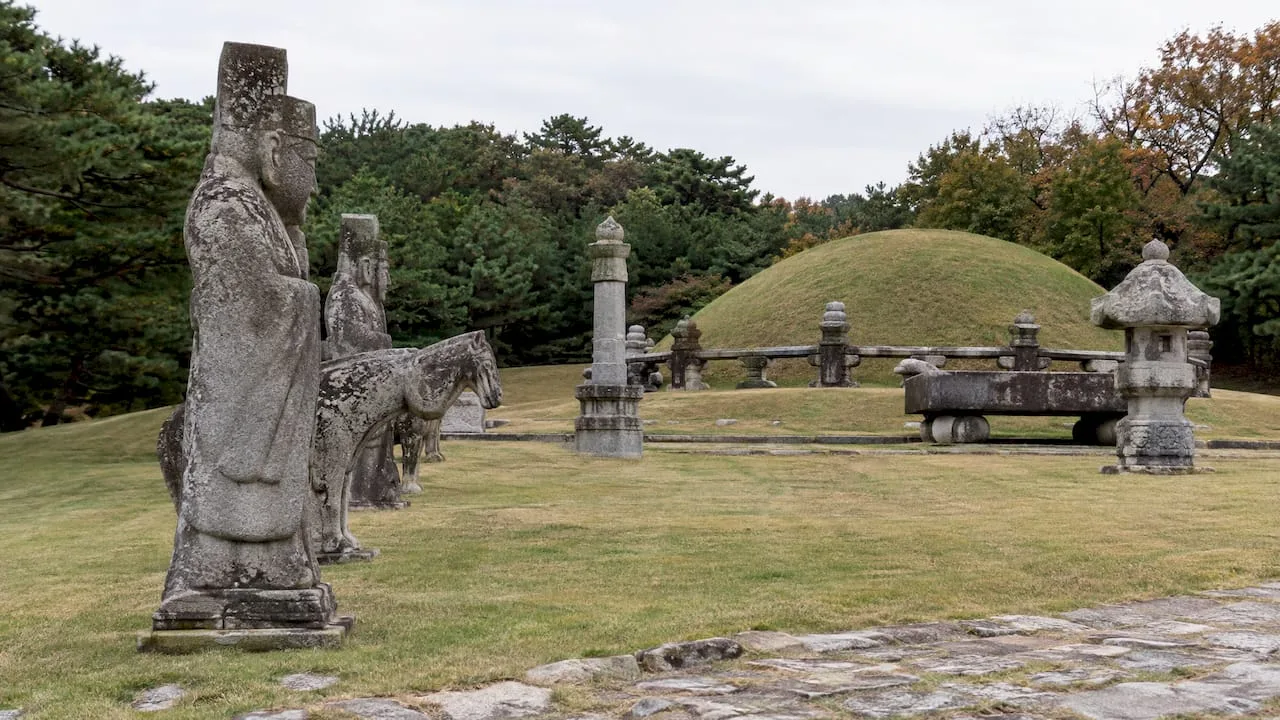
The 2026 World Heritage Joseon Royal Tombs Festival offers a hands-on ancestral rites experience rooted in over 600 years of tradition, plus an exclusive guided tour inside the sacred royal tomb area that is usually closed to the public. In Andong, the World Heritage Festival ran 9–25 October across Hahoe Village, Byeongsan Seowon, Dosan Seowon and Bongjeongsa Temple. Programs included rope fireworks, an ancestral rite experience at Byeongsan Seowon on 19–20 October, and meditative walking at the thousand-year-old temple.
Japan: Shuri Castle after the fire
Okinawa’s Shuri Castle Reconstruction Festival ran 1–3 November 2026. It honors the ongoing restoration after the 2019 fire, with the Ryukyu King and Queen appearing at Hoshinmon Gate, a royal court procession of more than 450 participants and guided restoration tours of the main hall.
New Zealand: 165 community-led events
The Wellington Heritage Festival runs 24 October to 15 November 2026. Its 165 events include behind-the-scenes access to the Wellington Cable Car winding room and an exclusive tour of the National War Memorial’s Hall of Memories and Carillon Tower.
Northern Ireland: a Georgian town for four days
Armagh’s Georgian Festival, 26–29 November 2026, pairs walking and ghost tours with mock trials at Armagh Courthouse, guided gaol tours, tours of the Archbishop’s Palace and a Georgian light show.
India: Goa’s walks and workshops
Goa’s third Heritage First Festival runs 14 November to 6 December 2026, with 47 guided walks and workshops across Panaji, Old Goa, Mapusa and Margao, from petroglyphs to Kunbi saree weaving.
Cyprus: village festivals
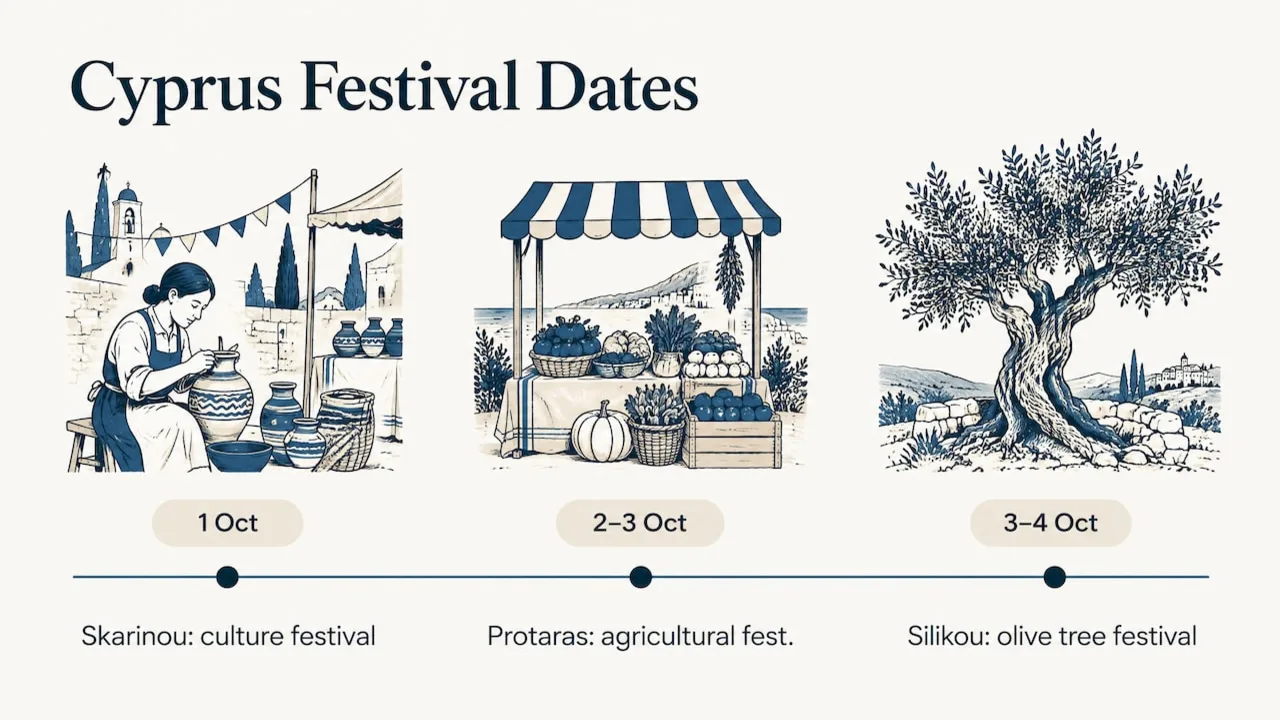
Visit Cyprus’s 2026 village festivals guide lists the Festival of Culture and Tradition in Skarinou on 1 October, the Agricultural Festival in Protaras on 2–3 October and the Ancient Olive Tree Festival in Silikou on 3–4 October. Three festivals in four days, in three different regions, is the kind of cluster that rewards a planned route.
What the Festivals Commemorate
A date tells you when to arrive. The history tells you what you are looking at.
- Maroon Fest, Jamaica. Held each 6 January by the Accompong Maroons, descendants of enslaved Africans who escaped plantations and settled in the mountains. UNESCO describes it as a commemoration of the 1738 peace treaty with British colonial authorities and a tribute to Captain Cudjoe, with ancestral rituals, drumming, dance and storytelling.
- Ati-Atihan, Philippines. Held on the third Sunday of January in Kalibo, Aklan, it is an ancient tradition of the people of Aklan with indigenous origins that came to honor the Santo Niño, with participants wearing soot and tribal finery, according to the Philippine tourism calendar.
- Back to Batoche Days, Canada. Begun in 1970 at the national historic site of the 1885 Battle of Batoche in Saskatchewan, it is a four-day Métis celebration of fiddling, jigging, storytelling, food and language, with about 10,000 people attending, per the Métis Gathering site.
- Día de los Muertos, Mexico. A UNESCO Intangible Cultural Heritage tradition in which, per Lonely Planet, families clean and decorate graves, hold vigils and build altars for departed loved ones. It falls on 1–2 November each year.
- Goroka Show, Papua New Guinea. Each September, according to the same Lonely Planet piece, more than 100 Indigenous tribes gather for three days of dance and ceremony.
The common thread is that these are living observances, not performances. Arrive knowing what is being marked and you will behave, and see, differently.
Confirmed Dates Versus Estimated Dates
This is where calendars mislead. A festival listing can look authoritative and still be a guess. The Festival Style Guide agenda for 2026 is open about it: of 264 editions, 2 were confirmed by organisers and 262 were expected dates calculated from the usual pattern, typically accurate within a week and exact for fixed-rule events like carnivals. Choose.place applies a clear rule: a date appears only when the organisers published it, otherwise it shows the usual weekend.
A practical way to read any calendar:
- Fixed by rule: carnival, Oktoberfest, Día de los Muertos. Plan with confidence.
- Fixed by tradition: Maroon Fest on 6 January, the Ati-Atihan third Sunday of January. Plan, then confirm the weekend program.
- Set by the organiser each year: most heritage festivals. Wait for the official page before paying for anything non-refundable.
The same logic applies to transport. A group moving between festival venues should read a charter booking timeline before the dates are final, since vehicles and drivers are limited in festival weeks.
What to Check Before You Go
Official schedules come first. Dates, opening hours and prices vary widely, from free community festivals to expensive major events, and accommodation tends to rise in peak festival periods, so early booking matters. Beyond that:
- Which program days carry the access. In Andong the ancestral rite experience ran on two specific days of a 17-day festival. The royal tomb tour in Korea and the restoration tours at Shuri Castle are program items, not open entry all week.
- Whether the event is a procession or a participation. Back to Batoche includes a Sunday processional to the cemetery led by Métis veterans, a solemn moment rather than a photo opportunity.
- Dress and conduct. Cemetery vigils, temple walks and ancestral rites call for quiet, modest behavior. Ask the organiser or your local contact before photographing rituals.
- Hours. Even a straightforward event has set hours: the Mountain Mandarin Festival lists Friday 10am–5pm and Saturday 9am–5pm.
- Neighbouring dates. Cheltenham’s literature festival, Bath’s Jane Austen week and WOMAD sit within weeks of each other in England, which makes a single trip across them possible with good sequencing.
From a Date on a List to a Working Itinerary
A calendar answers when. It does not tell you that the tour you want is on day four, that the nearest rooms are two hours away, or that two of your festivals overlap. For a traveler combining a festival with a historic site visit, the work is sequencing: confirm the organiser’s dates, secure the guided or private entry, and fit transfers around it.
If your festival travels lead through Mexico, our Mexico destination guide is a place to begin, and our world attractions and landmarks pages cover the cultural sites that often sit beside a festival. The travel journal collects our cultural attraction guides.
Planning a Festival Trip With Noble Voyages
Noble Voyages designs travel around cultural and historical sites, with a single point of contact for complex plans. Our travel design service builds the itinerary around the festival you choose, and our quiet coordination service handles the arrangements so that you spend the trip at the festival rather than on the phone. Tell us the festival, the places beside it you want to see, and who is traveling.
Start your travel design with Noble Voyages
Our Perspective
A festival is the one time a place explains itself. A tomb that is normally closed opens for a guided tour. A castle under restoration invites you in to watch the work. A town rebuilds its eighteenth-century streets for four days. These are not experiences you collect from a ticket page.
We design travel around that idea. Our approach is personal and restrained: fewer stops, carefully chosen, with the access and the context that make a landmark mean something. A festival calendar is a good starting point, and the next step is deciding which two or three events deserve your days.
When plans are complex, a festival in one city, a historic site in another and a private visit between them, one trusted point of contact keeps everything in step. That is the work of our travel design and quiet coordination, and it is why we put the itinerary before the checklist.
Sam
FAQ
Which cultural festivals are happening in 2026?
The year runs from Uttarayan in India in January to Armagh’s Georgian Festival and Goa’s Heritage First Festival in late November. The table above groups the main heritage dates. A worldwide calendar from vacant.day counts 160 cultural festivals across 63 countries in 2026, covering every month.
How do I know a festival date is confirmed?
Look for the organiser’s own page or a tourism board listing, such as the Visit Cyprus and WellingtonNZ pages cited here. Calendars often show a usual-weekend estimate until the organiser publishes. Fixed-rule events like carnivals are reliable well ahead.
Which festivals offer guided access to historic places?
The Joseon Royal Tombs Festival in South Korea, the Shuri Castle Reconstruction Festival in Okinawa, the Wellington Heritage Festival in New Zealand and Armagh’s Georgian Festival all include guided or behind-the-scenes tours. Details are in the heritage section above.
Will the 2026 dates repeat next year?
Fixed-rule festivals will return on their rule, and many others return in the same season. Exact dates change, so check the organiser’s page for the next edition. Lunar and religious festivals shift each year.
Sources
- CIOFF Festival Finder
- Lonely Planet: 12 unforgettable festivals around the world
- Cultural Festivals 2026 worldwide calendar
- Visit Cyprus: village festivals 2026
- Mountain Mandarin Festival
- World Heritage Festival Andong programs
- FIDAF Calendar 2026
- Horniman Museum: autumn festivals around the world
- National Geographic: festivals to add to your bucket list
- BBC: 2026 festival guide
- Perth Airport: festivals around the world in 2026
- Choose.place festival calendar
- Festival Style Guide: 2026 agenda
- UNESCO: Maroon Fest
- Philippine festivals calendar
- Métis Gathering: Back to Batoche
- 2026 World Heritage Joseon Royal Tombs Festival
- WellingtonNZ: Wellington Heritage Festival
- Visit Armagh: Georgian Festival events
- Japan Airlines: Shuri Castle Reconstruction Festival
- Heritage First Festival Goa
- Festivals: global guide, practical information
- Charter bus booking timeline