Blue Badge Guides: What the Badge Means and When to Hire One
What a Blue Badge guide is, how the UK qualification works, when hiring one pays off, plus Japan dining and temple etiquette for travelers.
Published
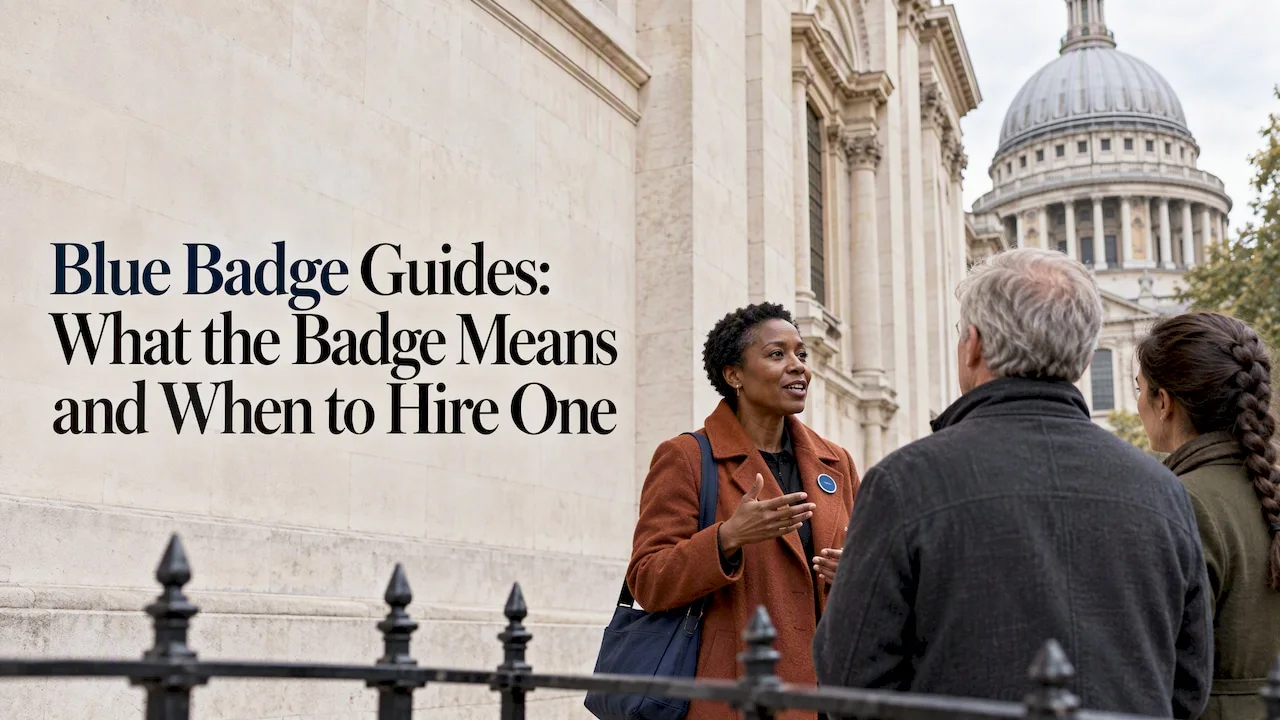
A Blue Badge guide is a tourist guide who has passed the United Kingdom’s top professional guiding qualification. The badge tells you the person has been trained and examined on a region’s history, sites and the craft of leading visitors. If you are planning a trip to Britain, it is the clearest signal of a guide worth paying for. This article explains what the badge involves, where it applies, how to choose a guide, and what to do when your itinerary also takes you somewhere with a very different set of customs, such as Japan.
Key Takeaways
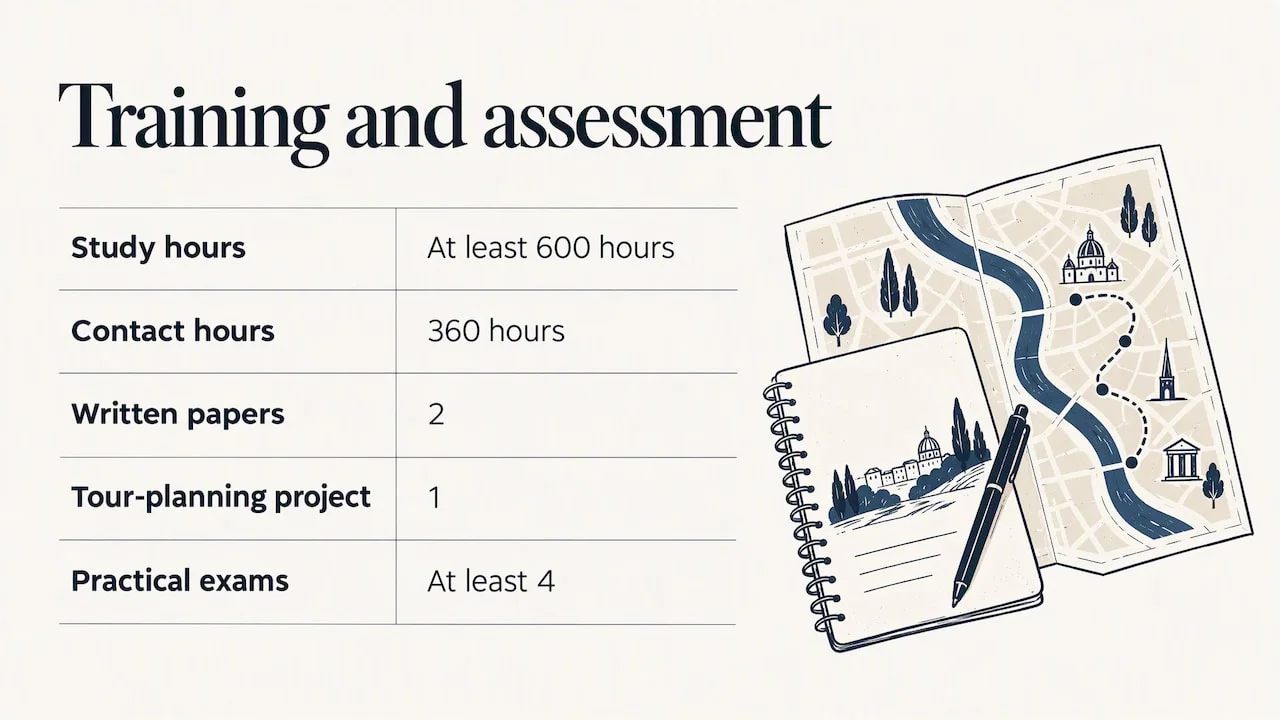
- A Blue Badge is a UK qualification, awarded for a specific region or city after a course of at least 600 study hours and several practical exams.
- It is a mark of accredited knowledge and guiding skill, not a guarantee that a guide suits your style. Match the guide’s specialty to your trip.
- Blue Badge guides are often the only outside guides allowed to lead groups inside certain major British sites, so it matters most at famous, regulated places.
- Outside the UK the badge does not apply. Every country has its own guiding customs, and etiquette in Japan is a good example of why local expertise matters.
- Good coordination matters as much as a good guide: timing, access and transport decide how a day feels.
What a Blue Badge guide is
The Blue Badge is the formal accreditation for tourist guides in the United Kingdom. Guides wear it as a visible mark that they are qualified for a given area. The Scottish association describes its version as a recognized mark of quality and professionalism trusted by tour operators and agents around the world.
Two things are worth knowing straight away:
- The badge is regional. A guide qualifies to work in a particular region or city. The professional body for the Heart of England, for example, describes its guides as qualified for a specific area, with both walking and coach tours.
- It is not the same as the Green Badge. The national guild represents both Blue and Green Badge guides, and Green Badge guides are qualified for more local areas.
You may also hear the term “Blue Badge” in a completely different context: the disabled parking permit used in the UK. The two have nothing to do with each other.
How Blue Badge guides are trained
The qualification is demanding, which is the reason it carries weight. According to the Institute of Tourist Guiding, Blue Badge courses require at least 600 study hours, including 360 contact hours, with the rest made up of private research. Assessment covers two written papers, a tour planning project and at least four practical guiding exams.
The practical side is the part many visitors undervalue. Candidates lead walking tours, guide at sites of interest and work on different forms of transport across a region or metropolitan area. In other words, they are examined on doing the job in front of people, not only on recalling dates.
In Scotland, the programme is an 18-month course built from three integrated modules: Core Knowledge, Regional Studies and Professional Skills. The same body states that its courses are accredited by the World Federation of Tourist Guide Associations to the EN15565 standard, a European benchmark for tourist guide training.
The British Guild makes an observation that explains why training is only half the story. It says guiding is not all about facts: it is the art of delivering knowledge while looking after and entertaining clients. That matches what travelers report from good tours. The facts are available in any guidebook. The skill is in the pacing, the selection and the judgment about what your group cares about.
Why the badge matters at famous sites
At heavily visited British landmarks, access rules can shape who may speak to a group. Guides who hold the badge are often the only external guides allowed to lead groups inside certain top attractions. If you are traveling with family, a school group or a client party and want someone to speak inside rather than outside the gates, ask the guide or the booking office how this works at your specific site before you rely on it.
There is a practical reading of this too. The badge is a shortcut to trust. The guild says it represents over 1,000 qualified and internationally recognized Blue and Green Badge guides across London and the rest of the UK, so the pool is large enough that you can choose by specialty: medieval history, royal London, art, architecture, food, or a particular day trip.
Sites where a good guide changes the day
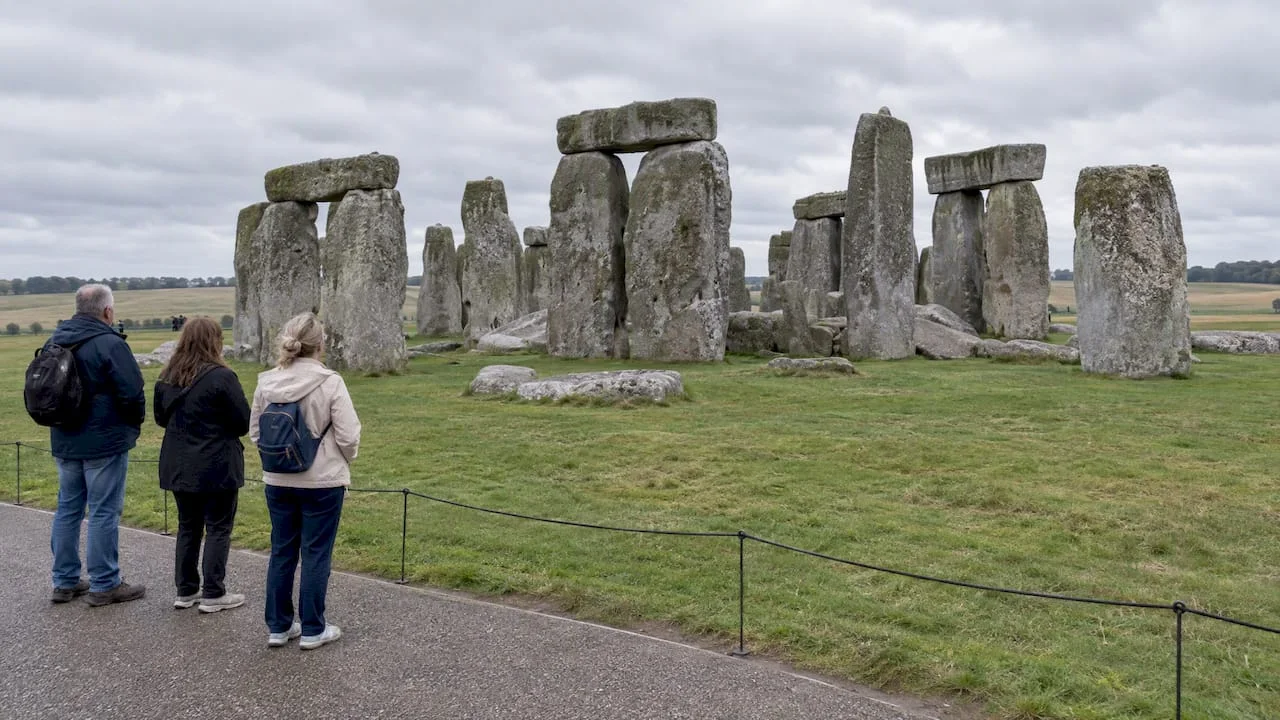
Stonehenge is a useful example. The monument is open and rewarding on its own, but arrival logistics, ticket types and timing affect the visit more than most people expect. Our Stonehenge visitor information page covers the site and access, and the Stonehenge tickets and tours comparison sets out the options so you can decide whether you want a self-guided visit or something more structured.
How to choose the right guide
Holding the badge is the baseline. After that, these criteria separate a good fit from a merely competent one.
| Question | Why it matters |
|---|---|
| Which region is the badge for? | A guide qualified for one area may not be the best person for another. |
| What is their specialty? | A military historian and an architecture specialist will give you different days. |
| Walking, coach or private car? | The course covers all three, but guides develop preferences. |
| Group size and pace | Small groups allow questions. Large coach parties favor a tight script. |
| Languages | Check the guide can work in the language your group actually speaks. |
| Entry arrangements | Confirm who buys tickets, and whether timed entry is required. |
Ask for a short call before you commit. A good guide will ask about your interests, your mobility, the ages in your group and what you have already seen. If they only recite a standard itinerary, keep looking.
Perspective: why we think about guides the way we do
At Noble Voyages we design trips around cultural and historical sites, and we see the same pattern again and again. Travelers rarely regret paying for a knowledgeable guide. They regret a day in which the guide was excellent but the logistics were not: a long queue, a missed entry slot, a transfer that ate an hour.
So we treat the guide and the coordination as one piece of work. The best guiding is calm and unhurried because someone has already handled the tickets, the timing and the route. That is what we mean by quiet coordination: a single point of contact, fewer moving parts, and more attention left for the place itself.
We also believe a badge or a credential is where your questions begin, not where they end. Ask what the guide loves about the place. Ask what they would skip. The answers tell you more than a brochure does.
— Sam
When your trip goes beyond Britain: Japan etiquette
The Blue Badge stops at the UK border, but the principle behind it travels well: local knowledge makes a visit smoother and more respectful. Japan is a destination where many readers go looking for etiquette advice, so here are the basics, drawn from the Japan National Tourism Organization.
The tourism organization encourages visitors to respect local environments and people and to learn basic protocols, such as removing shoes indoors. It frames this as being a responsible traveler, which protects destinations and enriches your own experience.
Dining etiquette in Japan
A few habits will serve you almost everywhere:
- Say itadakimasu before eating and gochisosama-deshita afterward. These are the standard phrases of thanks, as set out in the official manners guide.
- Wait until everyone is served before you start, and try not to leave leftovers.
- Slurp your noodles. At ramen, udon and soba shops, slurping is widely accepted, and visitors are advised not to criticize locals for it.
- At a sushi counter, dip only the fish in soy sauce, not the rice. The same guidance advises against mixing wasabi directly into the sauce, especially at nicer establishments.
If you are booked into a formal restaurant, tell the person arranging your trip about any allergies or dietary restrictions well ahead of time. Do not leave that to be explained at the table.
Temple and shrine etiquette
Japan’s tourism organization distinguishes between shrines and temples, and the rituals differ. At shrines, visitors can purify themselves at a temizuya, the water basin near the entrance, and follow the prayer ritual. At temples, you can make an offering and pray silently with joined hands.
The same guidance asks visitors to:
- Heed photography signs, since some buildings and areas do not allow it.
- Keep your voice low.
- Be ready to remove your shoes inside temple buildings. Wear socks you are happy to be seen in.
- Walk slightly to the side at a Shinto shrine entrance, because walking through the center of the path is traditionally avoided.
Other practical notes for Japan
If your plans include modern attractions, the etiquette shifts to rules about lockers, weather and queues. Our guides to getting from Shibuya Station to Shibuya Sky and Shibuya Sky weather, lockers and rooftop rules cover that side. For teamLab, see how to get to teamLab Planets and what to wear. If you are moving between cities with a lot of baggage, read our note on luggage forwarding in Japan before you pack.
Planning a guided trip with us
If you would like a knowledgeable guide, timed entries and a smooth day without assembling it yourself, our travel design and quiet coordination services are built for that. We plan itineraries around cultural and historical sites, arrange access and keep one person responsible for the details. Start with our travel design and coordination page, or look at our destination pages for France, Italy and Spain.
We do not publish prices for these services, so the quickest way to learn what is possible is to get in touch with our private travel office and describe the trip you have in mind.
Frequently Asked Questions
What is a Blue Badge guide?
A Blue Badge guide is a tourist guide who has completed the UK’s highest guiding qualification. The course involves at least 600 study hours and several written and practical exams. The badge is awarded for a specific region or city.
Is a Blue Badge guide worth the cost?
For first visits to complex places, usually yes. You are paying for examined knowledge, route planning and experience handling groups. For a site you can enjoy with a printed map, a self-guided visit may be enough.
Can a Blue Badge guide work outside the UK?
The badge is a UK qualification and applies to UK regions. In other countries, look for the guiding credentials and customs of that country. In Japan, for instance, you should also learn local etiquette for meals and sacred sites.
How do I find a Blue Badge guide?
The British Guild of Tourist Guides runs a find-a-guide service for its members, and regional associations such as those in Scotland do the same. Search by region and specialty, then ask for a short call before booking.
What should I avoid doing at a Japanese temple?
Avoid loud talking, ignoring photography signs and walking into temple buildings in shoes. At Shinto shrines, avoid walking down the center of the entrance path.
Sources
- Blue Badge tourist guide (overview)
- Blue Badge Guide Course, Scottish Tourist Guides Association
- Blue Badge, Institute of Tourist Guiding
- Training FAQs, British Guild of Tourist Guides
- British Guild of Tourist Guides
- Understanding and Mastering Japanese Manners and Etiquette, Japan National Tourism Organization
- Japanese Manners Do’s and Don’ts, Japan National Tourism Organization
- Shrine and Temple Visits: Best Practices, Japan National Tourism Organization