Best Time to Visit Shibuya Sky: Daylight, Sunset or Night?
The best time to visit Shibuya Sky depends on the view you want, not on a single universally perfect entry slot. Daylight makes the street plan legible, sunset changes the skyline’s colour, and night turns the railway lines and crossings into moving light. Decide which experience matters most before building the rest of your Shibuya day around it.
By Noble Voyages Editorial · Reviewed
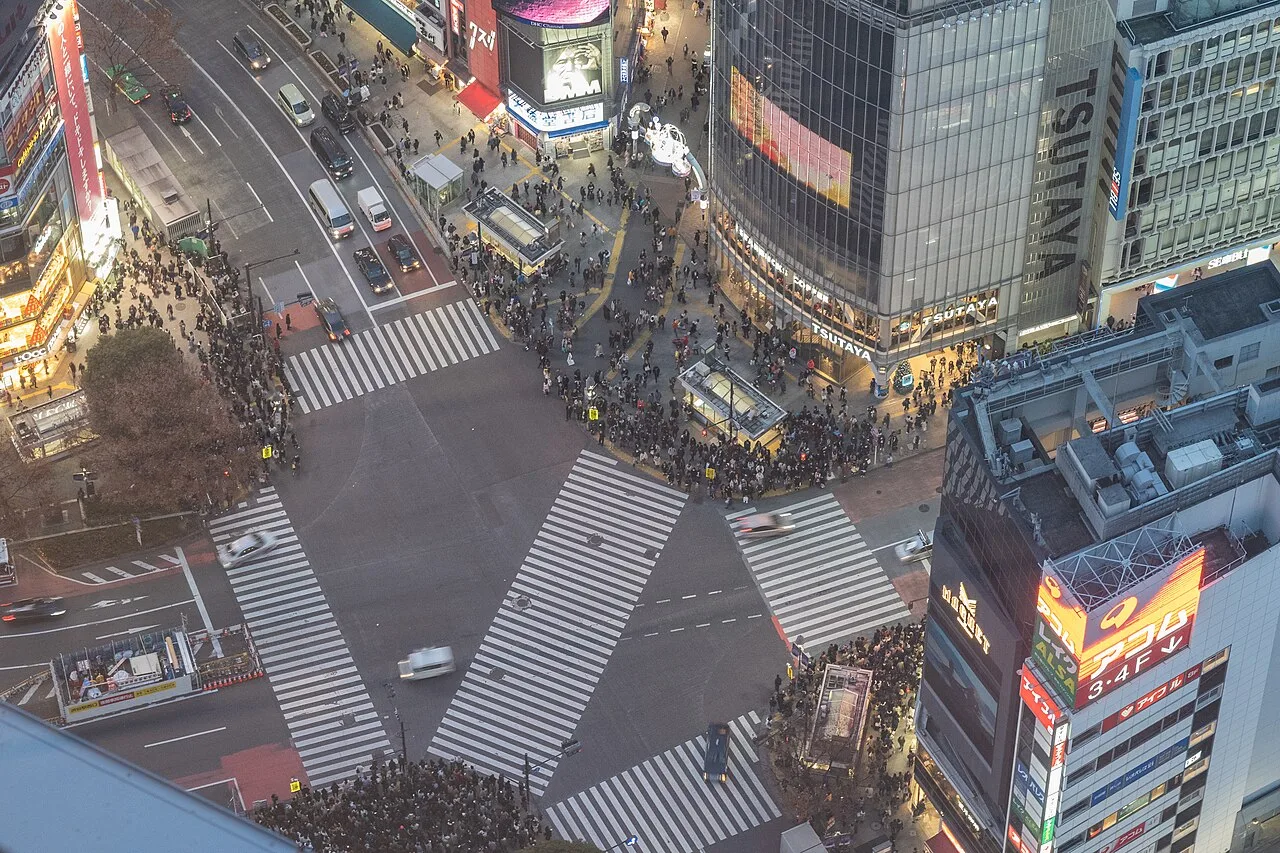
Choose daylight if you want to understand the city
In daylight, it is easier to pick out the crossing, nearby streets and the scale of the railway junction below. This is a useful choice when you want the observatory to help you make sense of Tokyo rather than simply take a skyline photograph. It also gives you a clearer view of nearby building details than a visit after dark.
A daytime slot can leave an evening free for dinner or another neighbourhood. The operator currently charges a lower adult online rate for entry through 14:59 than for entry from 15:00. That is a pricing boundary, not proof that earlier visits are empty or that every later visit includes sunset.
Work backward from sunset on your actual date
GO TOKYO suggests entry roughly 30 minutes before sunset, with extra time for queues. Treat that as a planning starting point rather than a guarantee: you still have to reach the entrance, go through admission and put restricted items in a locker before stepping outside. Book a time you can realistically reach without racing across Tokyo.
Sunset shifts substantially across the year. GO TOKYO puts it at around 16:30 in early December and around 19:00 in late June and early July. An entry time that works for a summer sunset will miss the winter transition completely. Check the date-specific sunset rather than copying another traveller’s clock time.
Consider night as a different view, not a consolation prize
After dark, the attraction is the illuminated city: movement at the crossing, lit windows and roads extending into the distance. A night visit makes sense if you care more about Tokyo’s lights than spotting distant mountains. It can also fit naturally after an afternoon exploring Shibuya on foot.
Check the current last-admission time before arranging dinner. The official visitor information reviewed for this guide lists closing at 22:30 and last admission at 21:20, but temporary hours and events can change the plan. Do not assume that arriving just before closing is enough to be admitted.
Separate clear views from comfortable rooftop weather
A bright forecast is not a promise of distant visibility. Haze and cloud can obscure the horizon even when it is pleasant at street level. Mount Fuji is a possible sight on a clear day, not an inclusion that any ticket seller can guarantee. Keep the closer skyline as the main reason to go.
The opposite problem is a clear but windy day. An open-air observatory has safety limits that an indoor viewing room does not. Check the operator’s roof status close to the visit and again before entering; the roof may close even while indoor areas remain accessible.
Keep a second acceptable time in mind
Choose a first-choice experience and an acceptable alternative before looking at the calendar. If sunset is unavailable, decide whether you would genuinely enjoy a daytime or night visit, rather than paying for a bundle you do not want because its wording sounds scarce. Check that every visitor in your party has the same entry window.
The current operator calendar runs up to two weeks ahead. Recheck the release window on your booking channel, and distinguish a date that has not opened from one with sold-out inventory. Do not rely on the counter to rescue a sold-out adult slot: the operator says those tickets are unavailable there too.
Build the rest of the day around the view you chose
Leave a flexible block immediately before admission. Shopping, a café or a nearby walk is easier to shorten than a timed museum visit on the other side of the city. Put luggage storage before this block, not between your ticket time and the roof.
For a sunset visit, avoid a tightly timed restaurant reservation immediately afterward. Time for the indoor gallery, lockers and the trip down can make the visit longer than expected. The aim is an unhurried change of light, not a timetable that makes you watch the exit.
Frequently asked questions
- Is sunset always the best time to visit?
- No. Sunset suits a changing skyline, daylight suits seeing street detail, and night suits city lights. Weather and the rest of your itinerary can make a different time the better choice.
- Will I see Mount Fuji from Shibuya Sky?
- Only if visibility allows it. Clear conditions can reveal Mount Fuji, but haze, cloud and weather mean that no time slot guarantees the view.
- Does entry after 15:00 guarantee a sunset visit?
- No. The price boundary is fixed, while sunset changes with the season. Compare the booked time with sunset on the actual day.
Sources
- Official Shibuya Sky tickets, prices and rooftop restrictions
- Official Shibuya Sky FAQs
- Official access information
- GO TOKYO: Shibuya Sky visitor guide
- Klook Shibuya Sky listing and voucher instructions
Reviewed
Image credits
- View from Shibuya Sky by Wei-Te Wong. Source, licensed CC BY-SA 2.0. Resized and converted to WebP; display crops may apply.
Noble Voyages is an independent guide, not the operator or a ticket issuer.